The Wrong Melon

Today, I turned a corner in the car and spotted a tall seagull walking toward me. “I’ll have to stop and get a picture of that bird,” I thought. But when I got closer—it was not a tall bird. It was an extremely short woman with white hair, wearing a white woolly hat on her head, a white shawl around her shoulders, and a long grey coat. Perceptions are often faulty.

When we first moved to Dunoon, our old car did not pass the annual MOT, and it would have cost too much to fix it. Our rescue collie, Angel Joy, had developed severe spinal problems and was on a daily regimen of pain medication. Thus Alan went across the water by himself to purchase a used car. He bought one and made arrangements for delivery. With excitement, he told me it was melon colored. Now I grew up in the South U.S. where everyone who has a garden grows melons—watermelons and cantaloupes. Since Alan said the car wasn’t red, I pictured our new car as being orange. I was proud of my conservative husband for splashing color into our lives by purchasing an orange car. But when the car arrived, I was hugely disappointed. It was white. At least it looked white except when it was parked next to a white car. I now know that cantaloupes are not popular here in Scotland. To Scots, melons are white inside—not orange. Perceptions are often faulty. My image was the wrong melon.

When I left home and married Luke’s dad, it was to escape from my father’s sexual abuse and death threats if I told anyone. One of my earliest and scariest childhood memories was seeing him grab a medium-sized fluffy white dog by the hind legs and beat it to death against a concrete curb. He said it bit him. Not long after that, he left my pregnant mother and my two siblings behind in California and spirited my grandmother (his mother) and me away at night. He drove all the way across the U.S., finally stopping beside a lagoon in the Florida Everglades wilderness. We camped there for months, eating pancakes my grandmother cooked over an open fire three times a day. It was all we could afford. For a five-year-old child, it was a great adventure. As I grew older, I realized my father had fled from a crime he committed. I suspect murder.

The good thing about Luke’s dad, I thought when I married him, was his wit and sense of humor. It was only after I became a Christian that I realized his wit and humor actually belittled and mocked other people. His off-color jokes weren’t funny—they were cruel. Perceptions are often faulty. He was the wrong melon.

That’s one benefit of becoming a Christian and reading the Bible. It helps us pick the right melon. “For the fruit of the Spirit is love, joy, peace, longsuffering, kindness, goodness, faithfulness, gentleness and self-control.” Galatians 5:22.

Perceptions are often faulty—and the wrong melon is easy to pick.

Amazon.com: Stephanie Parker McKean: books, biography, latest update
Possums and Snakes – Oh, My!

One thing I miss living here in Scotland is the smell of possums.

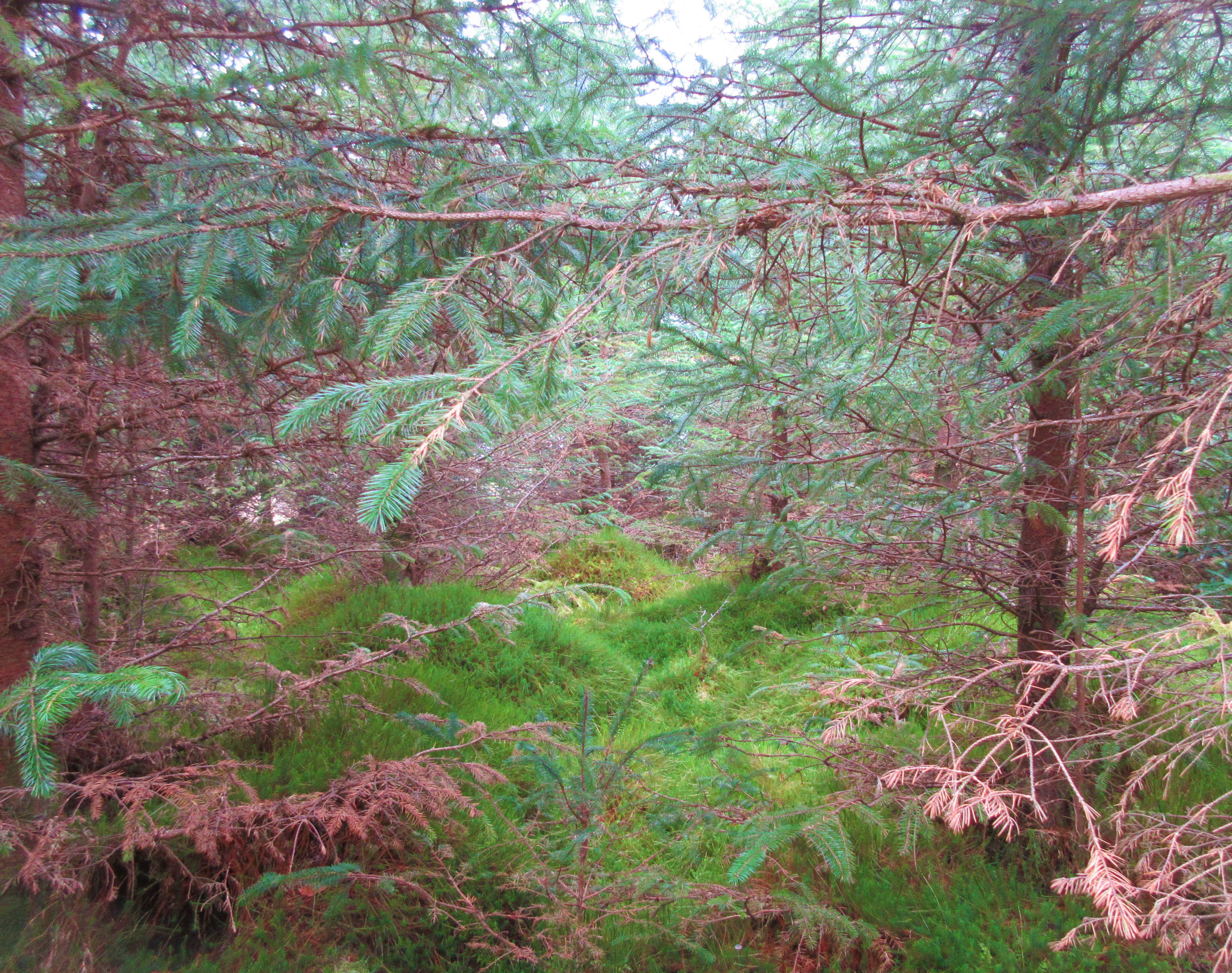
There are no opossums in the Scottish woodlands. Nor are there snakes (except rare elusive adders) armadillos, raccoons, bobcats, turtles, porcupines, cougars, lizards, ringtails…a long list of are nots. They are not here in Scotland. But it is the smell of opossums that I miss most.

When we were kids growing up in Georgia, the Hesters were next-door neighbors—living some distance away up a long steep hill. Billy and Bobby were my age and their brother Ronnie was my sister Leslie’s age. The five of us spent almost every day outside of school hours together adventuring through the woods. One thing that made me a favorite with Billy and Bobby was that I could smell opossums. They couldn’t. Their father would send them off into the woods with possum traps so they could catch a varmint for dinner. I would follow my nose to a possum hollow and they would catch their meal. Then, before the hapless animal could be killed—I would race down the hill to my house and beg my parents—who were almost as broke as the Hesters—for a couple of quarters so I could buy the possum and turn it loose on our property. Mr. Hester didn’t care if he had a possum for dinner—or enough money to buy something else more palatable. I think he was rather fond of my possum-sniffing nose.

Billy and Bobby also depended on me to steer them clear of poisonous snakes. I took herpetology as my 4-H project and went to the state level with my project on how to identify poisonous and non-poisonous snakes. I lectured the Hester boys on the importance of not killing harmless snakes because they were good rodent catchers. Whenever they found a corn snake or milk snake in the barn, they sought me and asked if it was a harmless or poisonous. Expecting me to be an expert on anything was hitching their wagons to a falling star. I wasn’t a Christian back then and did not know even one Bible verse—like Proverb 16:18 for instance; “Pride goes before destruction, and a haughty spirit before a fall.”

One Saturday I appeared on the 4-H channel on TV demonstrating how to tell the difference between harmless and poisonous snakes. On Sunday, I chased a snake in our pond. I wanted to catch it so I could identify it. I caught it. It was venomous. It was a water moccasin. It bit me. So the Sunday afternoon after showcasing myself on TV the day before—I was in the hospital receiving treatment for the water moccasin bite.

Perhaps it’s a good thing there are no snakes in Scotland.

Amazon.com: Stephanie Parker McKean: books, biography, latest update

And Then Along Came JW Jennings

He was a thorn in my side. The most aggravating person I had ever met and a total enigma. Some folks laughed at him, mocked him, made fun of him. I totally got that.

I was an atheist. I believed my mission in life was to turn Christians away from God—a God I didn’t believe existed. For the first time in my mediocre academic career I had excelled in college and made it to the Dean’s List. That unexpected success was twofold; I hadn’t taken math yet, and two of my teachers were avowed atheists and gave me top marks in their classes for handwriting (before computers) 30-50 page diatribes on, “Does God Exist—It Doesn’t Matter—Just Live a Good Life.” And then along came JW Jennings.

Lack of finances ended my short college career and I wound up in the Texas Hill Country shacked up with the first guy who ever noticed me—one who rescued me from the sexual abuse I suffered at home. His name was Larry and he was stubborn. He thought he was a Christian. My arguments about how I could prove God did not exist did not move him. He grew up in a Christian home. His momma and daddy told him that God was real—therefore God was real.

The two of us started a sign company. We borrowed extension ladders and a wide plank, went to San Antonio and bought sign paint, and went back to Bandera and began painting billboards. And then along came JW Jennings.

Larry had a strange way of painting signs. We drove out into pastures and set up the ladders and hung the plank on the ladder racks…then Larry went to town for coffee and left me painting. And then along came JW Jennings.

Larry and I painted billboards on ranches all over the county. How that man found out where we were working is a mystery. I would be standing on a plank some 10 feet off the ground painting and enjoying glimpses of the abundant wildlife—curious deer, shuffling armadillos, capricious raccoons, soaring golden eagles—and then along came JW Jennings scaling barbed wire fences and maneuvering through prickly pear cactus and over rocks to where I was working. JW stood there ignoring me ignoring him as he told me about Jesus. The dude really believed God was real. He wanted me to believe, too.

Having atheists as parents and having had zero exposure to anything Christ-like, I didn’t understand JW Jennings’ words. I thought the dude was crazy.

But what I did understand about JW Jennings is that for some reason—he thought he had the answer to salvaging my life—and he thought I was worth salvaging. JW didn’t care that I couldn’t sing. He didn’t care that I couldn’t do math. He didn’t care that I was broken and compromised from childhood sexual abuse. He didn’t care that I was shacked up with a guy outside of marriage. He cared about my soul. He believed in Jesus so passionately that he wanted to share Jesus with me.

Sad to say, I didn’t understand enough of what JW said to accept God into my life. The words were too strange to me. But what I did understand was—then along came JW Jennings, someone who cared enough about me to climb over barbed wire fences and tramp through cactus and over rocks to bring eternity to me. And eventually, JW’s words gained traction in my soul. I understood. I opened up my heart to Jesus and eternity. And for the next 50 years and counting I’ve survived divorce, the loss of a spouse, the loss of my son, lost employment, countless moves and starting over—even moving to another country—and have written 41 Christian cozy mystery-romance books. All because, and then along came JW Jennings.

Every person needs a JW Jennings in their life; a person who will climb over barbed wire fences and through desert vegetation to meet the person where they are and lead them to safety.

“I will lift up my eyes to the hills—from whence comes my help? My help comes from the LORD, Who made heaven and earth.” Psalm 121:1.

God is our help. Sometimes he comes in human form, climbing over barbed wire and cactus.

Sometimes God sends someone like JW Jennings.

Amazon.com: Stephanie Parker McKean: books, biography, latest update

Splendid Failures

I can’t sing. Really.

When I was in sixth grade, my grandmother made a gorgeous yellow dress for me to wear at our school’s Easter program. Then I learned that I was to be excluded from the Easter program because…I can’t sing. When the song leader saw the tears of disappointment weaving down my cheeks he said, “You come to the program. You wear that dress your grandmother made. You stand up on the stage with your class. You open and close your mouth. But don’t let any sound come out.”

So I wore my lovely yellow Easter dress and stood proudly on the stage opening and closing my mouth—doing my best not to let any noise escape. Years later in college, our drama professor’s wife, who held a doctorate in music, told me, “Stephanie, everyone can sing. I have never met anyone who can’t sing. I’ll work with you for one hour a day for the next week. You might not be good enough to get the lead in one of the musicals, but you can at least be in the chorus.”

On the first day, Mrs. Estes worked with me for thirty minutes. She stopped. She looked as confused as a blind dog in a sausage factory. “Stephanie,” she finally said, “I don’t know what’s wrong with you, but I can’t help you. You really can’t sing.”

And I still can’t sing. It’s one of the many splendid failures in my life. Splendid, because I am about to publish book number 41. If I had been able to sing—the count would never have reached even one. I would have been pouring myself into singing and performing the way I pour myself into writing. I would like to believe that God has allowed me to use the life experiences—joys, sorrows, disappointments, achievements—and weird, unusual things like getting tossed to the ground and bitten by a lion—to write books that entertain folks who my life would never have touched if I had lived my dream of singing.

“All things work together for good to those who love the Lord.” Romans 8:28.

Amazon.com: Stephanie Parker McKean: books, biography, latest update
Stopping at Roadblocks

My father was an atheist. His code of life? If it was good for him, it was right. If it didn’t benefit him, it was wrong. Because money was tight, he ignored the State of Georgia’s traffic laws. He did not have our vehicles safety checked. Like our family, they were so dysfunctional they would not have passed.

One day when I was selling magazines to raise money for our senior class, I stopped at a house along a minor road. A man with an unbuttoned shirt and boxer shorts answered the door, an attractive blonde woman some ten years younger hanging on his arm. He curtly informed me that he did not want magazines and he didn’t appreciate his Saturday being interrupted by a panhandler. I made a few more stops along that road before turning onto the main highway. Oops! There was a Georgia State Trooper roadblock about a mile ahead.

There was only one dirt road between me and the roadblock, so—I took it. A highway patrol car left the roadblock and drove to the entry of the dirt road. The trooper sat in his car watching me. Attempting to hide the fact that I was quivering like pudding, I parked the car, got out, walked boldly to the door of the house and knocked. The man in the boxer shorts, still adorned with the blonde on his arm stared at me in disbelief before he bellowed, “You were just at my front door. Get out of here and don’t ever come back.”

I chanced a look back to the end of what I now realized was a long driveway—not a road. Yup. Highway patrol car still there. I gulped. “Do you mind if I go around the side of your house?”

“I don’t care how you go—just get!”

So I drove up a bank, across rocks, through a flowerbed and around to the front of the house to the main road and drove home watching the rearview mirror all the way.

Had I stopped at the roadblock, perhaps the old Cadillac I was driving would have been off the road before the frame broke in four places and the car fell down on the tires in downtown LaGrange when I was on my way to college.

Had our vehicles passed Georgia’s safety inspection, perhaps the brakes on the VW Beetle I drove after the death of the Caddie would not have failed at a traffic light causing me to jump the sidewalk and drive uphill into someone’s yard to keep from having an accident.

Then there was the tie rod end that broke at highway speed on the truck that replaced the Beetle. I wasn’t a Christian at the time and didn’t know that Jesus had saved my life, but the driver in the oncoming car did. He stopped and said, “Girl, someone up there really loves you. You could have been killed.”

Then there was the car that replaced the truck. It lost one front wheel—the entire wheel—at highway speed when I was taking my grandmother home from shopping. Flames shot up into the air over the roof of the car as it careened down the road on a metal rim. Poor Grandmother, who must have been in her seventies at the time, had to walk home with me—two miles on a dark road along a narrow shoulder.

There is usually a good reason for the roadblocks in our lives. It pays to stop.

Roadblocks direct relationships, too. After my husband’s cancer death, I fell in love with a man 10 years younger than me. We enjoyed being together so much that he hired me to travel around Texas with him selling merchandise. He proofread my second book. I went to his church. He went to my church. I met his family. They loved me. I loved them. When his dad—who was in his eighties—died, he would receive more than one million dollars. We discussed marriage. I told him I had to marry him—he was one of the few men I knew who didn’t say, “ain’t.” We sat down and disclosed everything about our pasts that might prove a roadblock. I told him about the childhood sexual abuse I had endured from my father and explained that as a writer—I might need to go public. That bothered him, but it wasn’t a roadblock. He still wanted to marry me. Then he admitted that he smoked pot regularly. I was shocked. He had never used it around me. That roadblock stopped me. While we were together, I had completed two books which were not yet published.

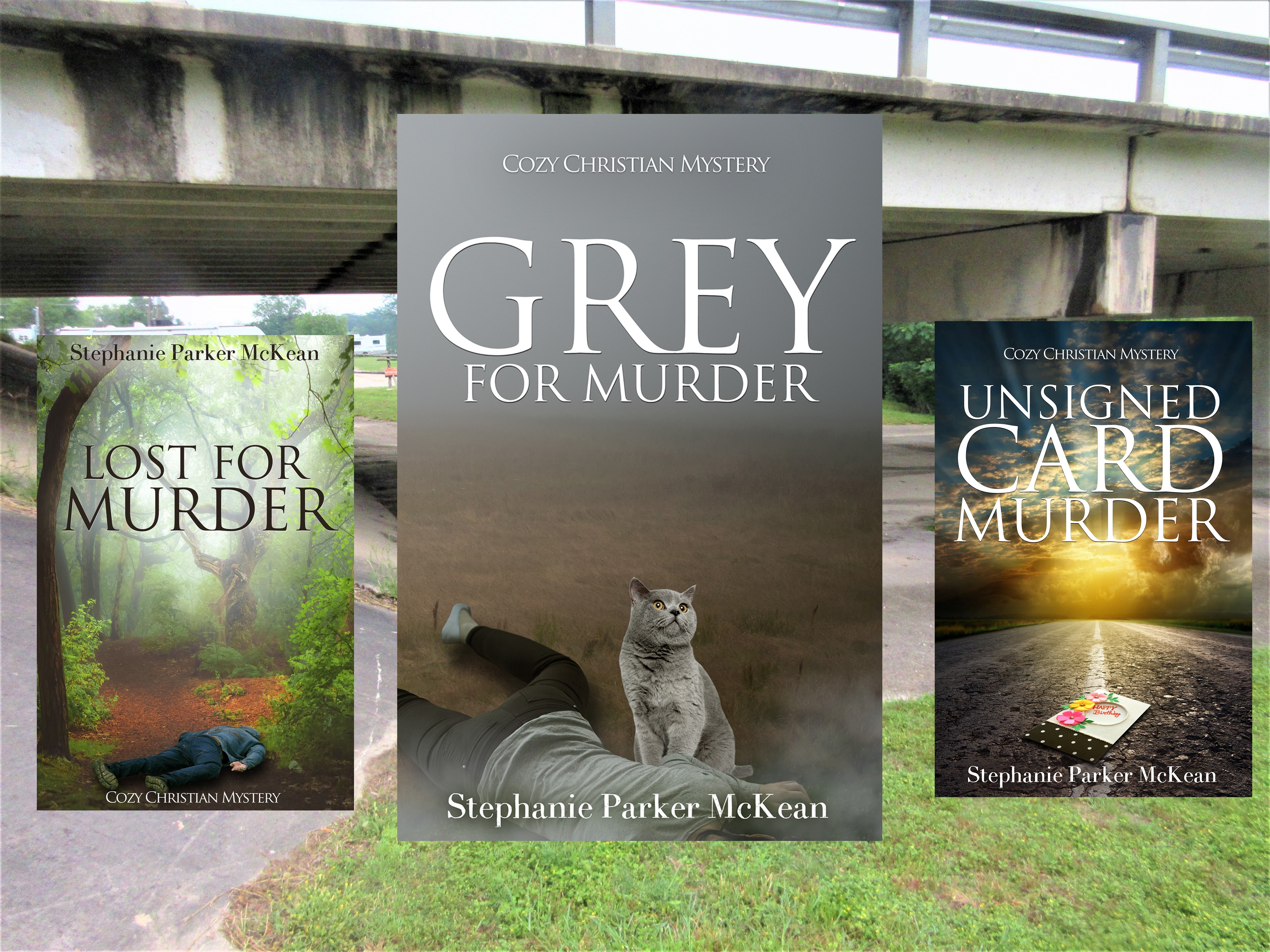
After we parted at the roadblock and I met my husband Alan and moved to Scotland, the first two books were published. I have now written 35 more and re-written the first two so I could self-publish them. That would never have happened on the road in Texas with the man who—however briefly—flung stars into my night sky and painted sunrises and sunsets in vivid colors. Quite a few of the books including the soon-to-be-published “Grey For Murder” are set in Scotland.

There is usually a good reason for the roadblocks in our lives. It pays to stop.

“For this is God, our God forever and forever, He will be our guide even to death.” Psalm 48:14.

Sometimes He guides with roadblocks.

Amazon.com: Stephanie Parker McKean: books, biography, latest update

Hero Tree

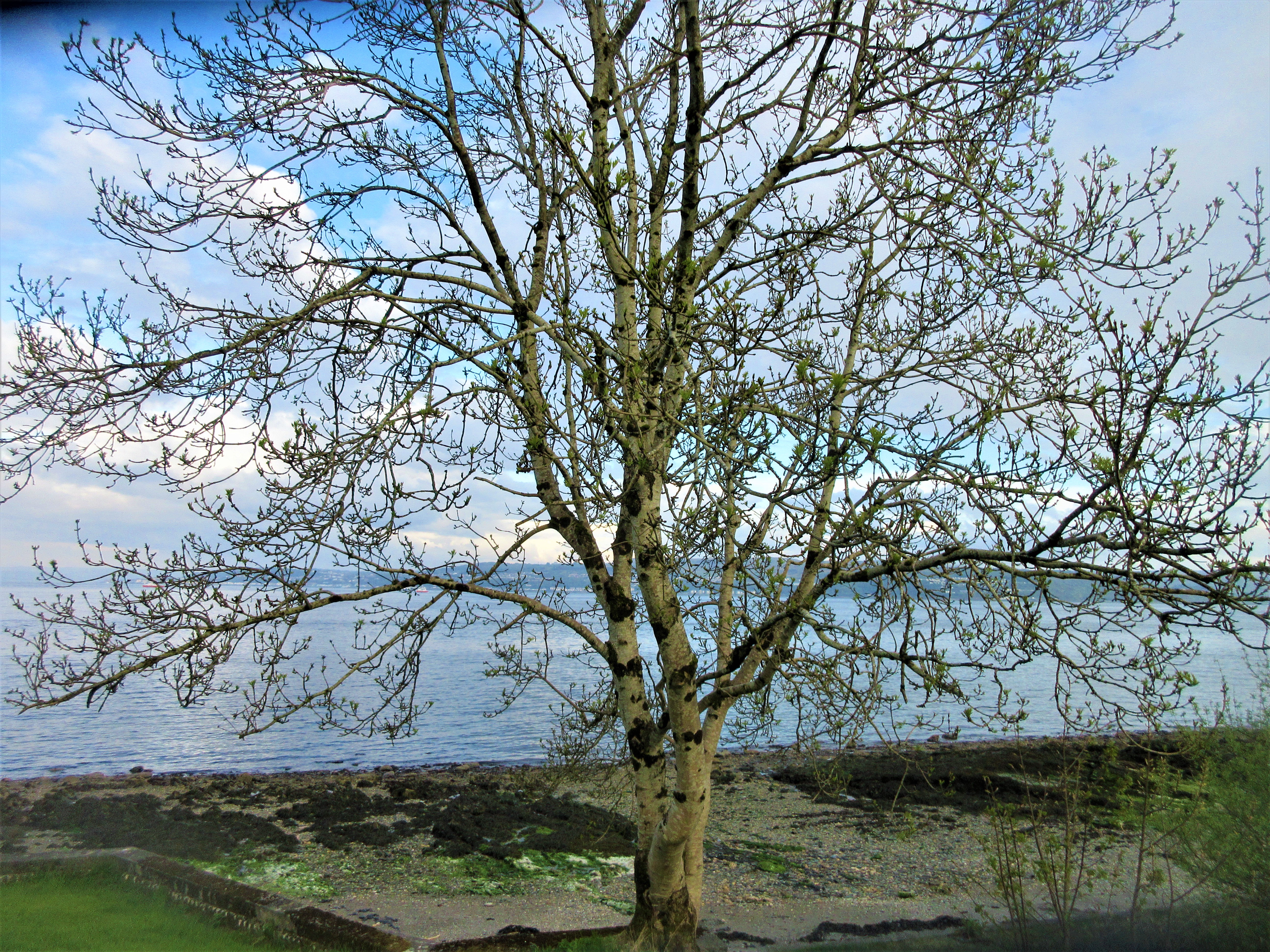
To those who don’t know the history of this tree—it may seem ordinary, perhaps even…ugly? Don’t be fooled. This is a hero tree.

Two years ago, this tree blew over during a strong gale. There it lay on the ground, roots sticking up in the air. There it stayed for months until someone came along and whacked off all the branches, leaving the tree and its frame flat on the ground with the roots still exposed. There it lay for another year.

For some strange reason—since it wasn’t replanted—someone lifted the tree back up and stuffed the exposed roots back into the shallow hole which had once cradled them. The tree is not straight. Its roots are still exposed. Whoever lifted the tree back up and stuck it back into the hole didn’t bother to cover the roots with dirt.

This hero tree is starting to grow again. After two years of abuse, abandonment, and struggle, the tree is putting on new growth.

We humans get hit with gales. We go down. Battering and circumstances beyond our control keep us flat. As we heal, we are faced with two choices: get up and draw from the hard place we’ve been to put on new growth, or remain inert and withdraw from life.

The more years I live the more I realize that no one is gifted with an easy problem-free life. No matter how far inland or how deeply planted along the shore one is, nothing can guarantee that we won’t be battered by the hard winds of adversity. When we are, recovery and success depends on the choice we make; withdraw or start growing again.

Fortunately, we have Someone who will come along beside us and give us the strength we need for whatever storms we face.

Let us therefore come boldly to the throne of grace, that we may obtain mercy and find grace to help in time of need. Hebrews 4:16

“So we may boldly say, ‘The LORD is my helper; I will not fear; what can man do to me?” Hebrews 13:6.

“Behold, God is my helper.” Psalm 54:4.

The best news: when life knocks us down and God picks us up again—He covers our roots, too.

Amazon.com: Stephanie Parker McKean: books, biography, latest update

Vantage Points

I truly enjoyed reading an autobiographical book written by a Texas friend of many years and many seasons, “Struggling Against the Wind: Living With NF1,” written by educator Dan Zavorka. Dan’s diligent work with students and his dedication to teaching has resulted in Bandera decathlon team winning clear up to the state level against much larger high schools year after year.

The journey that Dan, wife Sheila, and daughters Sara, Gina, and Dana have shared is amazing, heartwarming—and at times—scary and heartbreaking. Shelia, Gina, and Dana all battle the genetic condition neurofibromatosis. They not only fight a private medical battle against NF, but reach out to teach others about it and spread awareness.

Additionally, “Struggling Against the Wind” is inspirational. Dan discovered and fell in love with one word early in his life: providence. Dan’s recounting of his family’s life experiences illustrate Divine Providence and the rewards of putting God first.

Dan is not the first author in the family. Daughter Gina has written a children’s book, “Andy’s Moustache.” Sara illustrated it.

Dan grew up on a farm in Wyoming and can look into a cow’s face and identify its breed. Using humor, Dan illustrates the problem with standardized tests for all students. When the word “taxi” hit him on a test, Dan had no idea what it was. He and his dad—who survived getting struck by lightning and later falling from three stories—knew about tractors and cattle, but city taxis were alien to them.

I related to that. I remember a visit to an upscale Dallas, Texas Restaurant many years ago. Like Dan, I was a country girl. When I went to use the restroom, I couldn’t get the toilet to flush. Embarrassed to leave the toilet without flushing it, I finally opened the door to the stall anyway. The toilet flushed and my long skirt, which was still trailing over the seat, got soaked.

Next the sink. I tried to get soap on my hands to wash them, but no soap came out. I pushed, prodded, shook, and tried desperately to get soap. Zip. Zilch. None. But when my hands came off the soap container and slipped under it as I was looking for the water—soap poured out and covered the countertop. Next was the water. Zip, Zilch. None. Then, when I bent down to look more closely at the facet (I had to have water—my hands were coated with soap), water poured out and wet my forehead. I jumped back from the streaming water and heard a “rumph, rumph, rumph” noise beside me. In horror, I found paper towels pouring out of the automatic dispenser and filling up my purse. By the time I got back to the table with my boss…I was a nervous wreck.

Country folks like Dan and I might get “caught out” in different situations, but the God we serve is never caught by surprise. “The heavens declare the glory of God, and the firmament shows His handiwork. Day unto day utters speech, and night unto night reveals knowledge. There is no speech nor language where their voice is not heard.” Psalm 19:1-3.

Amazon.com : Dan Zavorka

Huh?

Praise the Lord, my husband Alan is finally home after five months in the hospital. Have you ever heard the expression, “If it ain’t broke, don’t fix it?” For five months, I took the passenger ferry from Dunoon to Gourock and then took a taxi up to the hospital to visit him. So simple, so easy. Just purchase a ticket right on the ferry from one of the friendly workers. Then for whatever reason—the ferry company changed their ticket purchasing system and suddenly—it was no longer simple, nor was it easy. It was impossible. For the last three days that Alan was in the hospital I traveled on the ferry for free because the new ticketing system was broken. For the last two of those days—everyone coming back on the ferry traveled for free. The friendly ferry workers didn’t even bother coming around the cabin with their “new improved” payment machine that didn’t work. The company “fixed” something that wasn’t broken.

Today I walked Savannah down to see about getting a jump start for our car which had a dead battery. My next stop was the grocery store. By the time I had walked that far and waited for the lunch hour to end at the garage, and then reached the store, I needed to use to the bathroom—but the door was locked. I went to the cashier and waited in line to get the key. She looked around and said someone must be in the bathroom because she didn’t have the key. So I went back and checked the door again. It was still locked. I waited outside the door for quite a few minutes, but no one came out and I didn’t hear any noise inside. I knocked on the door. There was no answer. I went back to the cashier and waited in line again for the key. She searched a second time and assured me that someone must be in the bathroom because she couldn’t find the key. “Knock harder,” she suggested.

I marched back to the bathroom and knocked on it as decisively as I had recently heard a police officer knock on someone’s front door. No answer. Back to the line to wait again. The cashier rolled her eyes. “Someone must have pocketed the key and gone home with it,” I told her, “because it’s still locked and no one answers.”

The lady in line ahead of me—who had just unloaded a full cart of groceries and put them on the counter—turned to us nonchalantly and said, “Oh, the bathroom key? I have it. I’ll give it to you after I get through using the bathroom.”

Huh?

Some things just don’t make sense.

One thing in the world never fails and always makes sense. “And this is the promise that Jesus has promised us—eternal life.” 1 John 2:23

Amazon.com: Stephanie Parker McKean: books, biography, latest update
Enough, Already!

Twice in two days I’ve been called out at the hospital for using the word “handicapped,” instead of “disabled.” I’m sure my lack of respect for political correctness offended the walls. There were no people—handicapped or not—within hearing distance—only walls.

The U.S., where I’m from and where I grew up, passed the Americans With Disabilities Act in 1990, but signs remain intact for handicap parking. The only complaints seem to be about non-handicapped folks being lazy and inconsiderate and parking in handicapped spaces, and these folks are so thoughtless that they would treat a “disabled” sign the same way.

My car is disabled when it won’t run. It is totally unable. I was never disabled when I spent two years on crutches—but I was handicapped by the challenges of going up and down steps, etc.

If I needed to choose between the words handicapped and disability for one of my books, I would write, “She was handicapped by her small size and lack of height.” I would not write, “She was disabled by her small size and lack of height.” She’s not disabled, for heaven’s sake—she just can’t reach the top shelf!

Handicap: disadvantage, challenged.

Disability: incapacitated, impaired.

I don’t find the word handicapped offensive; I find the word disabled offensive. Handicapped means it’s difficult; disabled means it’s impossible.

And I especially find political correctness offensive.

People need to get real. They need to sail out of their comfort zones each morning with an attitude of doing something to make the world a better place even if it’s just smiling—rather than creeping out to look around warily and discover what offends them today.

Enough, already! Handicapped, disabled. They are just words. Words are what people make them. Only God’s words are eternal.

 Proverbs 30:5 in the Bible promises, “Every word of God is pure.”

People muck them up.

Amazon.com: Stephanie Parker McKean: books, biography, latest update

Safety

My parents would have failed a health and safety course. Perhaps because there were seven of us. If one child was lost, there were six others to replace him or her. Whatever the reason, they were an epic fail in the safety department.

They let us throw chicken bones to wild alligators we found in the ditches along Florida highways. Alligators can run 35mph. A few chicken bones would not have satisfied a huge reptile’s hunger with a tasty morsel like a child standing in front of it within easy reach.

For my eighth birthday, I got a baby alligator as a pet. Alligators are not petable regardless of their size. The power of their bite depends on the species and their size, but they can exert up to 3,700 pounds per square inch when their jaws snap shut. For comparison, humans exert 150 to 200 pounds per square inch in their bite. News headlines like the following are not uncommon: “Florida officials search for alligator that ate man,” “Crocodile eats man in front of his family.”

I am currently reading and enjoying Beth Haslam’s newest book, “Fat Dogs and Welsh Estates.” Although I love fiction, and fiction is what I write, I get every book that Beth or Valerie Poore write. As I read this book, I am fascinated by the closeness of Beth’s family and the kindness and nurturing of her parents. Like our family, their family surrounded itself with animals. But not alligators like my birthday “pet,” and not half-grown African lions like our Ebenezer who could easily have eaten one of my younger brothers when my father brought him home in the back of a station wagon. By the time Eb left us, he weighed 450 pounds and had pinned me down on the ground and bitten my stomach.

When school was out for the summer, Mom rarely knew where I was. With the choice of a bicycle or a horse to ride, or exploring the woods on foot—I roamed miles from home and didn’t get back until dark. Once when I crossed a newly cut tree across a stream, a horrifying roar split the air and a black bear rose up from under the leafy section of pine. I ran away so fast that when I hit our property fence, I flipped over it and ripped both jeans and skin on three strands of barbed wire. Mom was furious about the riddled jeans, but less sympathetic about the slashes on my legs because she thought I was being careless and lied about the bear. My bear story was not believed until months later when we watched a black bear munch blackberries from the thicket behind our pond.

Except for the once-a-year week-long tent camping vacations to Florida, my family never went places together. There were too many of us and we didn’t have enough money. My mother took us shopping. We kept our hands clasped behind our backs and were not allowed to touch things. She also took us to the library. We all loved reading and won the county-wide library sponsored reading contests for the most books read every year. Other than that, we mostly went our own separate ways except when I—being the oldest—talked the others into risky adventures like climbing up and down the 150-foot cliff left by the highway department when they built the interstate. When a rock dislodged under my foot leaving me hanging, it took the quick intelligence of my sister, fellow author Leslie Garcia, to save me. She instructed our neighbors Billy, Bobby, and Ronnie to get down on the ground and form a human chain to grab me and haul me back up. Her job was to cry. My parents never knew about that misadventure, or many others. We simply weren’t as connected as other families.

When I look back at the dysfunction of my childhood (without even revisiting the sexual abuse), I am amazed that at age 71—I am still alive. I can’t credit my safety-unaware parents for this miracle. Even before I knew Him, God had my back.

Perhaps this is why from childhood—long before I knew God or understood the Bible—Psalm 27 was my favorite Psalm. “When my father and my mother forsake me, then the Lord will take care of me.”

My parents did not intentionally forsake me—they just made a lot of mistakes. We all make mistakes. Some are potentially deadly. Whether we know it or not, we owe our next breath to the Lord God who made us. He has our backs.https://www.amazon.com/stores/Stephanie-Parker-McKean/author/B00BOX90OO