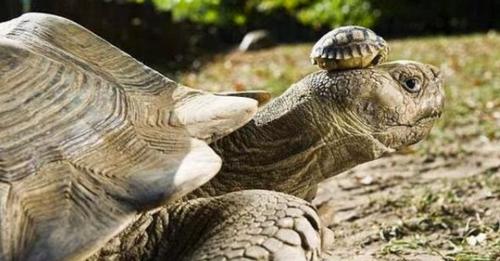
No wonder a 150-year-old tortoise can have babies. They don’t watch the news.
When fear confronts a tortoise it pulls its head into its shell and makes the world go away.
When danger confronts a tortoise it pulls its head into its shell and rests in the safety of its shell. A tortoise shell can withstand the pressure of 200 times its weight.
Tortoises could have coined KISS…Keep it Simple Stupid. They have one answer for every hazardous circumstance in their lives. Ignore it. Don’t focus on it. They even bury their eggs in the ground.
Abide in God. Focus on Jesus. I can’t promise that you will have children at age 150—but you will have a depth of peace and joy that outward circumstances can’t steal.
“And let the peace of God rule in your hearts.” Colossians 3:15
When I took pictures for son Luke’s baby book I thought I was making a book of memories for me. The memories fell short. Time flew past relentlessly—as time does. My purse got snatched. The camera was in it. Work on the baby book ended. As a single parent, there was never enough extra money to buy another camera. Luke loved his baby book. He never got tired of looking through the pages and reading the things I had written to him and about him. When he left for heaven seven years ago—the baby book lived at his house. I wish I had known how important it was to my son. I would have found a way to take more pictures and made time to write more memories. I wish I had known.
When Luke called in early November 2013, and asked if I could join him for Christmas, I wish I had said “yes” immediately. Instead, I hesitated. I was in Scotland. He was in North Carolina. I would be leaving a husband and a dog behind. Even over the phone and in spite of all the miles that separated us—I could feel the hurt my non-answer caused. I wish I had known that he would leave this earth for heaven just a few weeks later. My immediate “yes” would have blessed us both, even though Luke didn’t have Christmas on earth that year. I wish I had known.
When I called Luke on Saturday, November 26, 2013, and got his voice mail saying he would be out of town the next day—I wish I had called back. His plane went down the next day and he flew out of my reach and straight into the arms of Jesus. I wish I had known.
My “wish I had knowns” list is long. I wish I had known how important spelling was when I was in school. Computers have spell checks—but my spelling is sometimes so whacky that the spell check goes, “Huh?” Then I hold the torn cover and loose pages of my dictionary and thumb through the letter section for the word I want because it is simply the best word and the only word that will work. Writers are like that. We wrap words and phrases around us, spin them into an inky cocoon, and live inside them. You may have guessed. I misspelled “cocoon,” but it was close enough that the spell checker managed. The frustrating thing about looking up a word in my fragmented dictionary is that if I don’t get the first two letters right—I must go word by word, page by page, until I find it. And on rare occasions, it doesn’t even start with the letter I thought it did. I wish I had known how important spelling was when I was younger.
A “wish I had known” list is long, sometimes poignant (Wow! Got that one right) and sometimes funny. Probably everyone on planet earth has a different list. But that’s okay, because God fills in the gaps. He knows. He always knows.
“O LORD, You have searched me and known me. You know my sitting down and my rising up; You understand my thought afar off. You comprehend my path…I will praise You, for I am fearfully and wonderfully made.” Psalm 139.
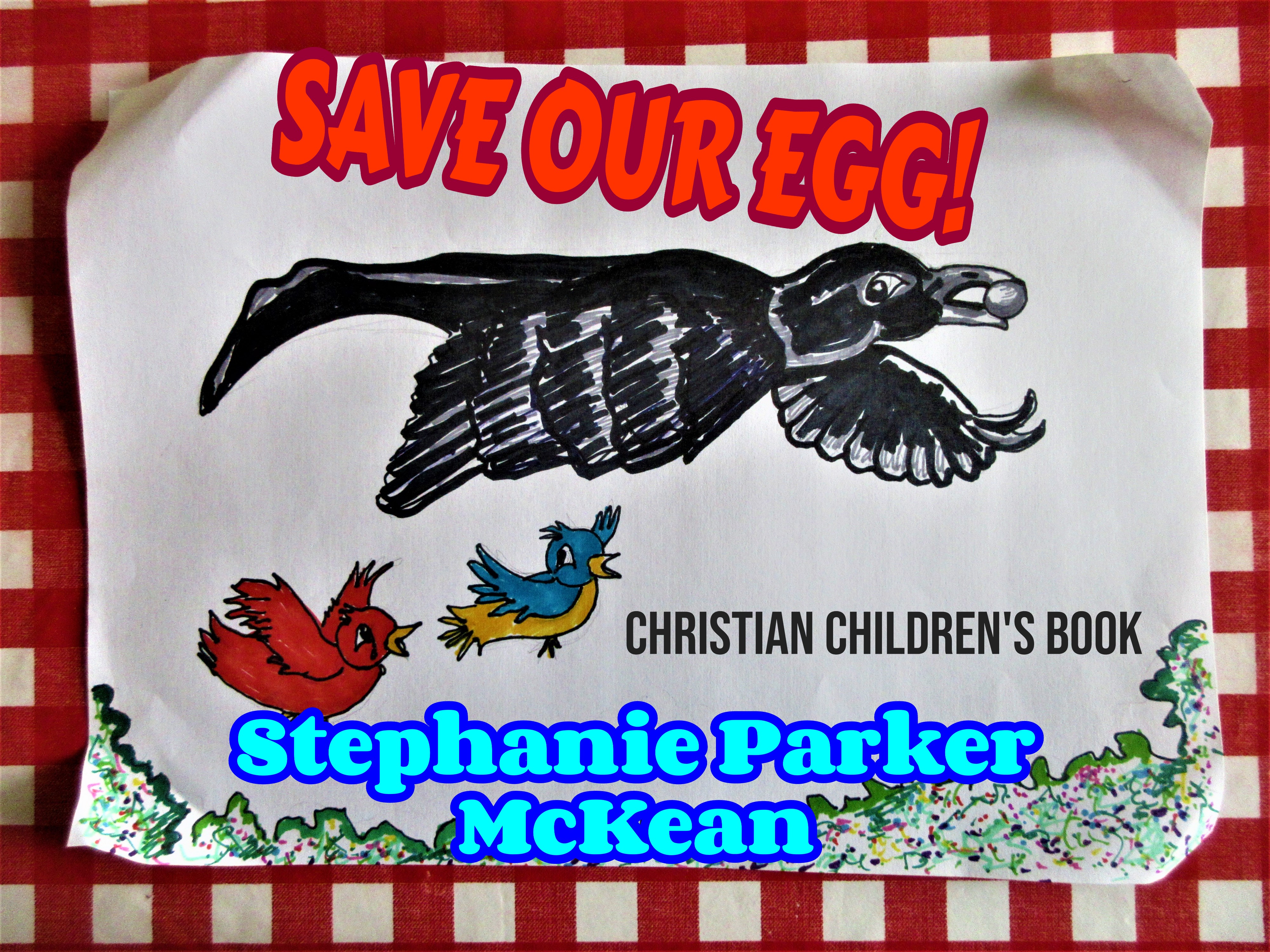
When I was five, I found an injured bird, caught it, and took it home. It wasn’t injured. I had unknowingly approached its nest too closely. It pretended to have a broken wing to lead me away. It offered its life in place of its young. That memory inspired me to write my children’s book, “Save Our Egg.”
BA…meaning Before Arthritis, I used to run. I liked to run around the fenced track at the school. There was no hard surface and the grass made running difficult, but because it was a mile—it was easy to keep track of distance. One day—running it proved hazardous. Neighborhood seagulls were teaching their babies to fly and had positioned them in the middle of the field. They considered me a threat. Their angry squawks and repeated dive bombing sent me back to the pavement.
When son Luke was eleven, we rescued and raised a baby raven. Rap followed Luke everywhere—even when he was riding his bike. Unlike our collie puppy who liked everyone, Rap was a guard dog. He loved Luke’s best friend, but when people he didn’t know entered our driveway—Rap attacked. He never bothered neighborhood kids in their own yards—just in “his” yard. When the ranchers took a break for lunch in the barn, Rap joined them, walking up and down the long table to accept whatever tidbits they were willing to share.
Recently, a pigeon knocked on our glass door at the back of the house. I opened the door and the bird walked in and settled under one of the kitchen chairs. It was raining, so I gave the bird some seed and water and let it spend the night. The next morning, the pigeon began following me around the house and I put it back outside. Birds are intelligent. Calling someone a “bird brain” is actually a compliment.
Jesus said, “Look at the birds of the air, for they neither sow nor reap nor gather into barns; yet your heavenly Father feeds them.” Matthew 6:26. Jesus also said that not even one sparrow falls to the ground apart from the Father’s will, and adds, “Do not fear therefore; you are of more value than many sparrows.” Matthew 10:31.
When I was around 13 or 14, I used profanity in an effort to fit in with my friends. That never happened. I’ve never “fit in,” and probably not just because I have big feet. Then I started reading Moody Bible books and met the Sugar Creek Gang and kid characters like them. I wasn’t a Christian. I didn’t read the Bible. I didn’t go to church. Conversation around our table at meals consisted of my father telling us that God didn’t exist.
The clean living characters in those mystery/adventure books resonated with me and I vowed that I would never use profanity again. I haven’t. Not even in my books. I want my book characters to be like my son Luke, who made it from enlisted to major before a plane crash changed his address from earth to heaven. While Luke was still a captain in the USMC, one of his enlisted men wrote in the platoon newsletter: “We can’t make Captain Parker swear no matter what we do to him.” I want my characters to set good examples—not by preaching it, but by living it.
Readers also will not find people smoking, using drugs, drinking alcohol, or having gratuitous sex in my books, because the Bible tells us that our bodies are God’s holy temples and that we are not to do anything that destroys them.
One of my friends is dying of lung cancer right now. I used to work with her. I begged her to quit smoking. So did a lot of other people. She was smoking long before I met her. But just suppose that she had fallen in love with a character in one of my books and started smoking because my character made it seem so “cool.” How devastating would that be?
“You were bought at a price; therefore glorify God in your body and in your spirit, which are God’s.” 1 Corinthians 6:20.
There are some folks who want to pass a law prohibiting dog owners from walking their dogs in hot weather.
Insane is the new normal. Legislating every area of human life is the new freedom. Put a bird in a cage and it will never experience life on the other side of metal bars—but it will be safe from predators.
Most dog owners I know are intelligent and love their pets. They have enough common sense to know how and when to walk their dogs. They don’t need legislation. Imagine being prohibited from walking your dog when unrelated people—some of whom don’t even have dogs themselves—arbitrarily decide it is “too hot.” Further imagine you live somewhere (like where we live) without a yard or garden. I suppose the resulting dog elimination fluids and solids all over the house wouldn’t be a health concern?
Oh, but I forgot. These legislation happy folks are smarter than the rest of us. They know what’s best for our dogs—and for us.
If this bill becomes law, find the back door of your house and practice exiting and fleeing. Because they’re coming for your ice cream next. Instead of the prize patrol, it will be the calorie-counting patrol. They’re at your door—they’ve made it inside—they are heading for your freezer. Run!
We’ve all heard the positive sound bites: reach for the clouds; dream big; touch the stars, everything is possible if you try.
Not true. However, learning to separate the possible from the impossible is hard. I can’t learn to sing. It’s impossible for me. I’ve heard all the jokes about folks who can’t carry a tune in a bucket. Seriously? I can’t even find the tune to get it into the bucket.
God created each one of us with a plan and a purpose and gave each of us unique talents. With God everything really is possible—if it coincides with His plan for us, and the gifts He gave us. God didn’t create me to sing—He created me to write.
We like to believe that we are in control of our lives. Not true. There are things we simply cannot control regardless of how much we want to. Ultimately, God is in control. That is a hard thing to learn.
Learning is hard. The toddler falls repeatedly before learning to walk. When a baby bird is pushed out of the nest and forced to fly—it is hard.
Our rough collie Savannah is a consummate bee hunter. She has learned to chase—not catch bees. It was hard. It was painful. She pounces at bees and watches them fly. Then she leaps into the air in an attempt to fly herself. Possible for bees—impossible for her. God did not create rough collies to fly—not even intelligent ones.
“Hard and learn. Perhaps they should be spelled the same way.
“And let our people also learn to maintain good works.” Titus 3:14. Maintaining good works takes work. A Biblical example of hard learning.
I met negative neighbor again today. “I love your dress,” I said truthfully.
“It’s not a dress. It’s a skirt and top.”
“Well, it’s beautiful.”
“It’s old.”
“Well, you couldn’t buy anything new that is any prettier.”
“I’d like to try. I’d like to go shopping. This stupid lockdown has messed everything up.”
“The lockdown is easing,” I said, “A lot of stores are open again already.”
“I can’t go shopping now. I’d be afraid of getting covid.”
Moment of silence. Couldn’t get away from her. She blocked my escape route. “How are your mom and dad?”
“Fine, thanks to me. They take a lot of looking after.”
“But I’m sure you’re glad to still have them. So many people have lost their parents.”
“Looking after them takes up all my time.”
“They are fortunate to have you.”
“My dad wants to get a dog.”
“Dogs are wonderful companions.”
“I’m the one who would have to take care of it. I don’t like dogs.”
Still blocking the escape route…
“And Mum wants me to do more in the garden.”
“Well, it’s been lovely, warm weather for working in the garden.”
“It’s too hot. It hasn’t rained enough. I have to water everything. It’s hard work.”
“Well, it’s good exercise.”
“I hate exercise. Mum won’t do her exercises. She would be better if she did. She would be easier to look after. I hate exercising, but I do mine.”
“I’m sure you set a good example for your mom. She might decide to do what you do.”
“She won’t. She’s stubborn.”
Me: edging toward what I hope is an escape route.
“I also play the organ for two different venues.”
“How lovely that you have musical talent. Playing beautiful music must lift your soul.”
“It makes my back hurt.”
Me: edging closer to the car next to mine that has me trapped in the parking lot and hoping I can make it around her. Escape foiled. She moves directly in front of me.
“And now they have other instruments joining in with the organ. I have to practice a lot.”
“God created music. All musical instruments glorify Him. God must be pleased by the lovely praise.”
“It’s more like the instruments are talking to each other than it is like music.”
“But the final outcome is still praise to God.”
“With all those different noises? It’s confusing. I don’t like confusion.”
I push around her and run for the store—forgetting that I can’t run because of my knee replacement and the hip that still needs replacing. Sometimes fleeing negativity is the best answer. Especially when the negative person missed the Bible reading on the day it focused on 1 Timothy 6:6, “Godliness with contentment is great gain.”
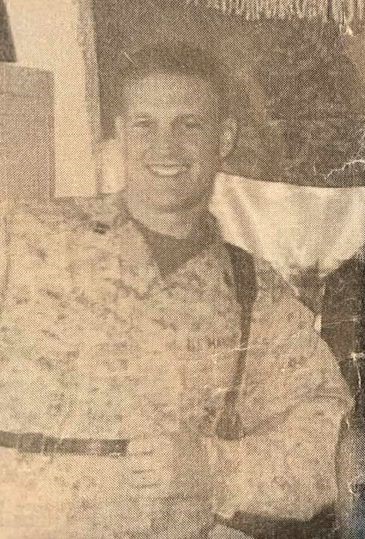
My son Luke, known by some as U.S. Marine Corps Major Luke Parker, left this earth on November 27, 2013, at the age of 45. He left behind love and memories in the hearts of friends and family. He also left behind: a spanking new truck with all the extras; a WWII Jeep he restored; a two-story house near the beach; a Stetson hat and western boots and apparel; one of the last 19 remaining Focke Wulf airplanes in the world (which crashed with him), and even the Bible he carried with him everywhere—a tattered and underlined Bible that sits next to me at my desk.
At age 45, after achieving the rank of Major in the USMC, graduating from Stephen F. Austin, learning to pilot an airplane, and fathering a lovely and intelligent daughter—Luke left it all behind. Unexpectedly. Unplanned. Abruptly. In the blink of an eye, Luke passed from earth to heaven taking with him only the spirit that God breathed into him at his conception.
I see commercials on TV begging for funds to help people who have been traumatized by covid 19 and the resulting lockdowns. These traumatized people don’t need money, they need the assurance that comes only from God; that we are strangers and pilgrims passing through this world on our way to an eternal life where there will be no illness, no death, no pain, no sorrow, no suffering, no lack of any good thing.
They need to look around them at everything they own and realize that it is temporary. When they leave this earth, it won’t go with them. They will leave it all behind—just like Luke did.
My mother actually cringed every time some well-intentioned friend sent her a pink card for a special occasion. My mother hated pink. For all the years we lived at home, the three of us girls never had anything pink hanging in our closets. We still don’t. But who would know?
People who know me know I love chocolate. But with increasing age and girth—I’ve become selective about chocolate. Other than my favorite chocolates, I rarely eat sweets. If I’m going to intake extra calories I want it to be from something that I really enjoy.
However, I appreciate gifts of kindness regardless of what color or flavor they are. It really is the thought that counts. Kindness looks good in any color and is sweet on any tongue.
God is kind in every language, and to every person and creature.
God knows everything about us—right down to our color preferences. He even knows our secret flaws and failures—and yet—He loves us anyway. “O LORD, You have searched me and known me; You know…You understand…” Psalm 139:1
“We love Him because He first loved us.” 1 John 4:19.
Alan and I have been married for ten years. I just found out that he hates Chinese food. We’ve been eating Chinese food for ten years.
Alan and I have been married for ten years. I just found out that he likes watching Scottish football. Last night was the first time he switched on a football game in the ten years we’ve been married.
I’ve heard judgmental folks say, “How can someone marry someone and not realize that they are alcoholics, or drug users, or spouse abusers, or… It happens. It really happens.
Before Alan and I married we tried to be totally honest with one another. I told him that I do not iron, and I do not sew. I love walking and working outdoors and if I’m going to sit—it’s going to be in front of the computer writing books. He told me he had diabetes.
There is a reason typical marriage vows include the clause, “in sickness and in health.” The day before our wedding, Alan took a photo of me hoisting up an 85-pound bag of cement. I didn’t warn him about my future physical ailments—I didn’t know I had any. Ten years later, I have arthritis. I’ve had back surgery, a knee replacement, and need a hip replacement. And Alan has recently received a diagnosis of Parkinson ’s disease.
One of the songs in the Rodgers and Hammerstein musical “The King and I” is “Getting to Know You.” “Getting to know you. Getting to know all about you. Getting to like you. Getting to hope you like me…” But can we ever really know all about someone? Isn’t it comforting that God knows all about us—the good, bad, beautiful, and ugly—and still loves us.
“For You formed my inward parts; you covered me in my mother’s womb. I will praise You, for I am fearfully and wonderfully made.” Psalm 139:13.
When we got married, Alan knew I loved animals. He told folks that being married to me was like being married to Dr. Doolittle. But I’m sure he never envisioned me opening up the glass door in the kitchen and inviting a wild pigeon to walk in and spend the night after it knocked on the door.
And I never expected to find my husband of ten years sitting in front of a football game on TV.





 Stephanie Parker McKean