Over the past six years, I’ve had major back surgery, a knee replacement, and a hip replacement. The replaced hip became infected, so it had to be taken out and replaced again…followed by three months of hospitalization while it healed. I spent four of those six years on crutches waiting for surgeries. All those things hurt.
My thumb hurts. I don’t need a doctor’s appointment. I don’t need a surgery. It’s a small cut on the outside of my right thumb going down into the nail. But it hurts. It hurts to open Alan’s pill bottles—and between the blood cancer and the Parkinson’s disease he takes a lot of pills five times a day. It hurts to fasten my jeans, to wash my hair, to type (hitting the space bar), to cook, and to clean. And when I accidentally hit it on something—ouch!
How often, I wonder, do we unknowingly judge others because we feel they have never suffered the same things or suffered as much as we have? How often do we think or say, “that person is so filled with self-pity—and they haven’t even experienced all the bad things I have.” Yes, that might be true. But give them a break. Their thumb hurts.
All on the same day, my husband in Texas got sent home in an ambulance to die; our lovely sheepdog died; my mother died and I couldn’t plan on going to her memorial service because I had to stay home and take care of my dying husband, and my truck caught on fire in downtown San Antonio. It hurt. But I try not to judge anyone else who hasn’t been through all those same things—especially all in one day—because now…my thumb hurts. It’s not as major or intense as the other painful things that I’ve experienced—but the pain is just as real.
If you meet someone who lacks Christmas cheer this holiday season; someone who is a bit dour and apathetical—forgive them. Overlook the fault. Their thumb might hurt.
All I ever wanted to do in life since about the age nine was to write books. Ironically—and with much humor—the two things that constantly got me into trouble at school are the two things that have sustained me throughout my entire life: doodling and daydreaming. Doodling because some of my life has been spent painting signs to purchase time to write, and daydreaming because it feeds my writing.
The fuel for my writing comes straight from the heart of God. When the prophet Jeremiah was ordered to quit telling others about God, Jeremiah said, “But His word was in my heart like a burning fire shut up in my bones; I was weary of holding it back, and I could not.” Jeremiah 20:9.
And so it is with my writing. I live to write. I write to live.
Other writers—especially Christian writers—will understand this statement, but sadly others will think it false humility: I did not write my newest book, “Body, Be Gone.” (Not yet released—but should be out within a week.) God wrote, I typed. Often, I had a hard time keeping up with Him. The old laptop I use had a hard time keeping up with both of us.
For writers and non-writers, the encouragement contained in this blog is the truth that God put “Body, Be Gone” together. He is the best ever at putting things together. He created us. He created the world in which we live. You don’t need to be a writer to trust God to put things together in your life. He loves you. He is infinitely able to put thing together for you no matter who you are or what you have or have not done in life thus far. Even if you hate writing and have never written anything. God is the author of your life. He is writing it for you.
Folks sometimes battle depression during the Christmas season. Should you be feeling melancholy and blue—just remember that God is building your life. The dark places and dark times are as important as the silver and gold threads holding it together. In the end—your life will be beautiful and as unique as you are.
Joy to the world, the Lord has come—with all the tools needed to equip and complete us for getting through this life. Beautifully.
When friends of ours from Texas came to visit us here in Scotland they rented a B&B that they were somehow able to find. We, on the other hand, got lost.
Ironic that friends who had never been to Scotland before found the idyllic guest house, and we—with our six-year background of living in Dunoon—got lost. Our poor little car survived the experience of falling into such deep potholes in the road that it bottomed out and stalled. We survived the experience of being lost on a winding, wooded wilderness dirt road in the dark. And—out of that experience was born Christian cozy mystery-romance-suspense book number 43, “Lost for Murder,” which has found its way to 32 ratings and a 4.5 rating.
Often in my life, circumstances that seemed difficult or impossible have actually been God’s hidden blessings. When son Luke was four, we were walking around Carson City, Nevada, and an ugly black dog started following Luke. When we went into a restaurant to eat and came back out again, the dog followed Luke. When we started to drive away—the dog ran down the street after the truck. My impulse was to gun the engine and outrun the irritating critter, but Luke became hysterical. “Mom, stop! A car will hit him.”
We stopped and took him with us. I put up posters and ran an ad in the paper to let his owner know we had the dog. I penned the ad something like: Found: ugly short long-bodied male black dog with white star on chest and bat ears…Call…
No response. Carson was one of the stupidest dogs ever. He couldn’t learn anything. He got loose one day, ran down the street, tackled a Doberman, and came home dragging a back leg. The vet set the broken bone, but it didn’t heal and subsequently, the vet removed it. When we were driving home from the vet with our three-legged dog, Luke suddenly burst into tears. “Mom, we have to get another dog. There isn’t much left of Carson.”
About a year later, I moved to Great Falls, Montana. The area had such a depressed economy that even college professors who went to our church and taught in Luke’s Christian school worked two to three jobs to support their family. As a single parent—I had three jobs, one of them an all-nighter in a restaurant. It was nearly impossible to rent a place that allowed dogs. But one duplex owner looked at our three-legged dog and said, “Well, I guess I’ll make an exception for that one—no one else would want it.”
I didn’t want Carson either, but I couldn’t get rid of him. Praise the Lord for that. I had to leave Luke alone at night while I waitressed. I couldn’t afford a babysitter. The people on the other side of the duplex opened the connecting door when I left for work in case anything bad happened—but they wouldn’t watch Luke. Carson accepted the role of babysitter. Even though he was a small, totally worthless dog who wouldn’t have attacked any danger—except a Doberman (or buffalo—he chased a herd of buffalo once causing a stampede and sending tourists fleeing for the safety of their cars)—he made Luke feel safe enough to stay alone.
Sometimes lost becomes found.
A couple of years after our brief stint in Montana, I moved back to Lovelock, Nevada, during a blizzard to help friends of mine who owned a gold mine in the desert 40 miles from town. One day they sent me into town to pick up the mail. I parked in front of the post office and the gear shift fell through the floorboard and landed on the pavement. The truck wouldn’t move. A man from the church we attended came and fixed the truck. Some weeks later we were married. When Luke, Carson, and I moved into my new husband’s home, his large grey cat streaked down the hall and tackled Carson, sending him rolling across the floor. Four years later, Carson still would not venture any further in the house than the front room where the cat blitzed him. Two years after the cat died, Carson still refused to leave the front room.
We moved home to Bandera, Texas, Carson still in tow. When that stupid little dog died—it messed with my eyes and they watered for hours.
Many times in my life what I thought was loss and lost have actually been God’s hidden blessings. One reason my favorite Bible verse is: “All things work together for good for those who love the Lord.” Romans 8:28
He’s not the same man I married who would grab my hand and run up and down steps with me, camera in hand as he stopped to shoot the best possible angle or photograph a memory. Now he sits in his chair, and I do the running—get the shoes, get a glass of water, get a snack, bring the mail, get clean clothes—again. It must be love.
He’s not the same man I married who wrote five books in the first five years of our marriage. Now he asks me five times a day what day it is, and I attempt to respond patiently and gently five times a day—plus answer the same number of questions about what we are having for lunch, for dinner, and what the names are of family members across the water. It must be love.
He’s not the same man I married who used to walk along the firth with me collecting firewood to collect and take home to cut up for the fireplace. Who used to walk our dog while I fixed meals. Who took the trash and recycle out to the bin and drove into town to get groceries. He hasn’t driven in two years now and he can’t walk. I take out the trash and recycle, walk the dog several times a day, drive into town to pick up groceries and prescriptions. It must be love.
He’s not the same man I married who helped vacuum, dust, and even washed dishes occasionally. Now I do all the vacuuming, cooking, cleaning, dog-walking, shopping—plus all the new things that need to be done for a spouse who is unable to walk or do anything for himself. It must be love.
He’s not the same man I married who took me to visit hidden gems around Scotland, looked for the Loch Ness Monster with me, planned to take me to Rome, looked forward to vacations, decorated for Christmas. Now we can’t decorate for Christmas because there is not enough room to add decorations with the mobility equipment he needs. Now we stay at home and I plan and schedule doctor visits for him and make sure he gets his pills on time every time—five times a day. It must be love.
He’s not the man I married who enjoyed the intimacy of marriage. Now his body is bent over like a capital ‘C,’ and his knees have folded into frog legs and kissing him is a challenge because he can’t straighten up his head. It must be love.
Doctors call it Parkinson’s Disease. They call it myeloma—blood cancer. But I say—it must be love.
Love is not a mushy, gushy feeling with heart pounding, hands sweating, eyes sparkling. Love is being there. Love is putting the other person first.
Love is what the Bible says it is in 1 Corinthians 13: “Love suffers long and is kind; love does not envy; love does not parade itself, is not puffed up; does not behave rudely, does not seek its own, is not provoked, thinks no evil; does not rejoice in iniquity, but rejoices in the truth; bears all things, believes all things, hopes all things, endures all things. Love never fails.
My late brother Gregory Potter with our lion Ebenezer.
I’m different. So are you.
God created each of us as unique individuals with unique talents and abilities. Not everyone runs marathons. Not everyone writes books. Not everyone loves to cook, or sew, or drive race cars.
Somehow, the feminine “shopping gene” missed me. I hate shopping. When I must shop, I rush into the required store, grab what I need, and get back home to write. All I’ve ever wanted to do since I was about nine-years-old is write books.
I’m not sure when I realized I was different. Possibly in childhood. I rode my bicycle with a snake wrapped around my neck to impress the boys. I impressed them. They thought I was crazy. They were as scared of me as they were of the snake.
The buzz word in the 60s was “Generation Gap.” We didn’t have a generation gap at our house. Our entire family sat down to dinner together and engaged in conversation. It was easy for us to eschew drugs when the drug culture swept though the generation—the kids in our family were so accustomed to being different that we were immune to peer pressure.
Rock music roared to life in the 60s drowning out singers like Perry Como, Bing Crosby, Doris Day, John Davidson – and great musicals like “Annie Get Your Gun,” “Show Boat,” “Guys and Dolls,” “Flower Drum Song,” “Mary Poppins,” “South Pacific,” “Oklahoma,” and others. “Sound of Music” was the rare musical that held ground against rock music.
I never listened to Elvis Presley. When I was in high school, I lost a good friend I had made in the fifth grade because he asked me how I liked the Beetles. I told him I didn’t.
As an adult, I continued distancing myself from “normal” by climbing billboards to paint signs, mixing concrete, building with rocks—and I don’t personally know anyone else who has ever survived being bit in the stomach by an African lion or being bitten by a water moccasin—the lion because he was a “pet” and lions are wild animals, not pets, and the poisonous snake because picking snakes up by the tail in an effort to identify them is stupid.
The point is, I might be different—but we are all different. And yet we are all the same the world over because God loves all of us. Zephaniah 3:17 says of God, “He will rejoice over you with singing.”
The Lord employs the differences in me and in my life to weave into my writing. That’s my God-created blueprint. He uses and is using the differences in you and your life to construct you according to your God-created blueprint.
“For You formed my inward parts; You covered me in my mother’s womb. I will praise You, for I am fearfully and wonderfully made.” Psalm 139: 13 & 14.
American author Joyce Kilmer wrote his most famous poem in 1913. “Poems are made in fools like me, but only God can make a tree.”
People who don’t believe the Biblical account that “in the beginning God made the heavens and the earth” set a thorny remit. How can the theory (because it is merely a theory and not a fact) of evolution explain why there are so many different varieties of trees? Evolution purports that species evolve into the best of each type. Wouldn’t the best kind of a tree be one with fruit to feed people? Or nuts for animals? So why pine trees, fir trees, palm trees, mesquite trees, Joshua trees, and the rest of the 73,300 species in the world?
The big bang theory is laughable; explosions don’t create—they destroy. And if a big bang did create a tree—again—why 73,300 types; trees with white bark, brown bark, pink bark, rainbow bark, grey bark. Tall trees, small trees—trees that are evergreen, trees that lose their leaves in the winter, trees that thrive in the desert, trees that grow in tropical forests.
Joyce Kilmer was inspired when he wrote the truth: “only God can make a tree.”
God is also the only One who can unmake a tree. People can cut trees down and use them for lumber, for furniture, or for firewood. They can dig them up by the roots and discard them. But these human actions do not unmake a tree. Trees that are cut down often spring up again around the stumps. Seeds dropped by the trees launch themselves up out of the soil.
Humans cannot make a tree. Humans cannot unmake a tree.
An extinct medicinal tree scientists hope holds the cure for cancer was successfully grown from a 1,000-year-old seed in Israel. Seven date palm trees from 2,000 year-old seeds found in the desert near Jerusalem have grown into a lovely oasis.
Humans cannot define, find, or duplicate the spark of life God put into a tree. Nor can they eliminate it. They cannot unmake a tree.
“For there is hope for a tree, if it is cut down, that it will sprout again, and that its tender shoots will not cease though its root may grow old in the earth, and its stump may die in the ground, yet at the scent of water it will bud and bring forth branches.” Job 14:7
God created us. He makes, heals, and restores us. He grows and matures us into what we are and what we become. Equally, God unmakes us. He removes selfishness, unkindness, anger, hate, and greed and replaces them with His love, forgiveness, grace, and mercy.
Books are written by fools like me, but only God can make a tree—or a human.
It’s that time of year again when fatigued leaves abandon their career of decking lofty trees with green and let go to dance in the street and scuttle down the sidewalks in front of rushing feet.
It’s that time of the year when faded flowers beseech the sky for one more day of light and color before falling into forgotten glory.
It’s that time of year again when fingers of wind grow strong and cold and clouds batter the sun.
It’s that time of the year when nature sings with a hoarse voice. The natural world is humbled, debased, and degraded as winter approaches to blanket and hide the landscape it sends into oblivion.
This world is temporal. Nothing humans can do will change the natural cycle of life that God created. “To everything there is a season, a time for every purpose under heaven.” Ecclesiastes 3:1
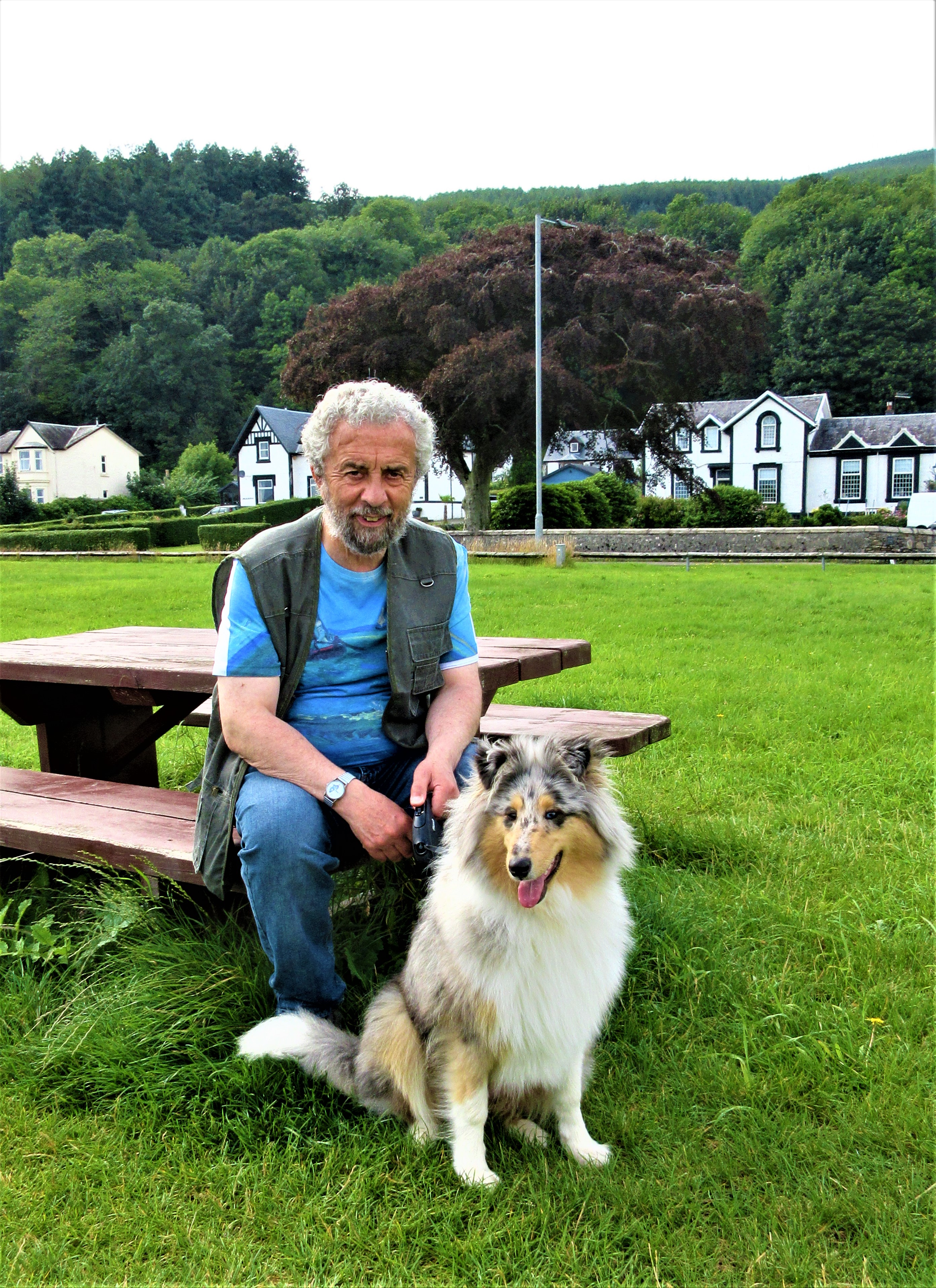
I met a friend today walking a dog that I hadn’t seen her with before. When we stopped to talk, the dog sat at her feet staring steadfastly into her face with a deep look of love. The dog’s previous owner had died. For weeks the dog had been left alone in an empty house with strangers popping in to give it food and water. Then my friend adopted the collie and gave it what it needed most—love. Grace. The eternal substance of life on earth and in heaven.
There was a time when I was a sexually abused child. There was a time when two abortions were forced on me to protect the identity of the abuser.
There was a time when I used profanity. There was a time when I was mean and ugly to my siblings.
There was a time when I drank alcohol. There was a time I hung out in beer halls, got drunk, and drove home.
There was a time when I could never have written even one book. I felt ugly, unwanted, stupid, and worthless. Then Jesus whispered the love song of grace into my heart and it began to beat again—for the first time. I was reborn as a new daughter in Christ.
Only grace can forgive. Only grace can write the language of love and acceptance that endures forever. Jesus’ love. Jesus’ grace.
“For love is as strong as death…Many waters cannot quench love, nor can the floods drown it.” Song of Solomon 8:6&7.
Some folks search for joy in the bottom of a bottle or a glass. Some folks search for joy in the feeling of smoke clogging up their lungs. Some folks search for joy in getting tattoos, body piercings, or jewelry. Some search for joy in money, prestige, luxury homes, new cars, or travel to exotic places.
Joy is closer than that. Joy is simpler than that.
Joy is in the changing faces of clouds; the sweet song of a bird; the delicate color of flower petals. Joy is in the smile of a child; the tail wag of a dog on a walk; the contented purr of a kitten.
Joy is in sunlight tracing fire and color in the clouds; the reaches of a tree to the sky; the gentle lapping of waves against the shore.
Joy is in every nation, every language, every people in this wide wonderful world.
In God’s presence is fullness of joy. Psalm 16:11
The best thing about this joy…it is a free gift available to anyone who reaches out to take it.
I’m a sucker for abandoned buildings. I want to hug them. I want to whack down weeds, plant flowers, fix the roof, paint the exterior, refurbish the interior. I want to change them from abandoned and unwanted to cherished.
I can’t explain it. I don’t know why neglected, unwanted shacks exert such a strong pull on me.
When I was living under a bridge in the back of my pickup truck I viewed every abandoned structure I spotted as a potential home. Why did no one live there? Why couldn’t I live there? How much money would it cost to buy it? To rent it? I would stare at it longingly and imagine what color I would paint it. I would note what repairs it needed and calculate how much it would cost and which damage I could repair on my own. I was pretty good with a hammer and I loved colors and painting.
Since then, I’ve owned a home. I helped build our house in Texas, even climbing up a metal extension ladder to the roof with 80-pound bundles of shingles over my shoulder. I painted our home inside and out with a paintbrush. I collected truck loads of flat rocks and did the rockwork around it. I built semi-circular stone steps up to the porch.
And, yet…I am bemused by abandoned buildings.
Now, here in Scotland, I live in a small, comfy rental house—which I also painted with a paintbrush, scaling a metal ladder to cut a nice straight line around the top of the exterior walls.
Still…unwanted structures whisper to my heart.
When my young son Luke and I lived in the Nevada desert, we loved visiting ghost towns and wandering through the empty buildings imagining the people who used to live there and the dreams—now broken, shattered dreams—that motivated them.
Now Luke is in his forever home. I’ll be joining him soon. This earth is not our home. We are just sojourners passing through. Even the bodies we live in down here on earth will be abandoned. Our bodies are mere shells that will be left here when our spirits rise to be with Jesus in Heaven where we will get new bodies.
So why am I a sucker for abandoned buildings? It must be empathy or compassion toward the former residents who stepped out of broken dreams and left them behind. No one likes broken dreams. It’s a comfort to know that Jesus promised that He was leaving this earth to return to Heaven and make a place for us there so we could follow Him.
And, yet…I’m a sucker for old buildings and broken dreams.
If it ain’t broke—don’t fix it. I love that maxim. I hate change.
A change came to our house last week that I can embrace. It makes life easier. For the five years we’ve had Savannah she has had no easy access to the two-foot gravel path around our house. We have no yard. We have no grass. It’s impossible to use an umbrella to walk around our house because the umbrella hits the outer wall of our house on one side and the neighbor’s fence on the other side. Still, during gales and snow storms, that strip of gravel circumvents walks and gives Savannah a place to do her business.
Savannah had a long, wobbly, rotting wooden ramp on one side of the house that would not support a person’s weight. It finally got so bad that even Savannah couldn’t use it. I improvised steps at the back of the house by stacking unopened bags of gravel up to the level of the deck. It gave Savannah a way down and back up, but the bags became slippery after a few years and it scared her when she slid on them. I could go up and down the gravel bags by holding the rail of the deck on one side and the neighbor’s fence on the other side. But the deck rotted and broke apart leaving me nothing to hang on to. I fell down the gravel steps a couple of weeks ago.
Our landlord—the Church of Scotland—hired a company to tear out the old rotten wood and replace the ramp on one side with steps and the back deck and gravel bags on the other side with a smart new smaller deck and steps. A beautiful job and one that makes life easier for both Savannah and me. Finally, a change I can embrace! Of course, my favorite maxim is “if it ain’t broke—don’t fix it”—but the ramp and back deck were both “broke.”
Sigh. I suppose I must admit that change is inevitable—and sometimes it is for the best. But I still don’t have a cell phone. And I will continue to use my 12-year-old laptop with Windows 2007 and a plug-in keyboard because I wore out the keyboard on the computer itself by writing 45 Christian cozy mystery-romance-suspense books on it. I still hand turn a crank to whip egg whites into meringue and to open cans. I still use a handheld cheese grater. I will continue cooking in my cast iron pans and pots—as long as I have the strength to lift and carry them. Why change what works?
The changes God makes are good: “Wisdom and might are His, and He changes the times and seasons; He removes kings and raises up kings.” Daniel 2:20.
But God Himself does not change. “For I am the LORD, I do not change.” Malachi 3:6.







 Stephanie Parker McKean