
Dysfunctional Memories

With the buzz word “dysfunctional families” so popular, nearly everyone can either claim to have come from a dysfunctional family or to know someone who has. With the childhood sexual abuse we girls suffered, my family was not dysfunctional—it was dystopian. It’s my memories that are dysfunctional.

As I walk Savannah and let my mind wander—it takes such strange, serpentine paths that I wonder why I remember those things. I can’t think of any way they have enriched my life or taught me valuable life lessons. So why do I remember them? Yet, I do, and somehow they have woven themselves together to form the fabric of Me.

For example, although I was born in Texas my earliest childhood memories begin in California. I remember my “pet” scorpion when I was about three. When my father realized what it was—he lobbed the can as far away as he could and until he explained how dangerous my “pet” was—I was shocked and heartbroken.

As a five-year-old child walking home from school I rushed into people’s yards and recovered drowned moles. Much to the distress of my grandmother who lived with us, I lugged the dead critters home and lined them up on the porch rail in the sunshine. I was convinced that when they dried out—they would wake up and live again.

One day I brought home the much run over carcass of a black cat. It was dry and nearly paper thin, but I couldn’t bear to leave it in the street to be run over by more cars. Grandmother came unglued. She lectured me about the danger of rabies and described the horrible disease to me. For weeks after that when my younger sister Leslie (brilliant and talented author Leslie P Garcia) and I were alone in a room, I ran around on my hands and knees growling and barking and telling her that I would bite her and she would get rabies. She was terrified. I hope she has since forgiven me.

I remember the boy my age who let bees land on his hands, the boy slightly older than me who ate broken glass to show off, the boy with the bloodied nose that I took home for Grandmother to help after he was attacked walking home from school, the way the Santa Anna winds blew dirt into our faces and blew the girls dresses up over their heads.

I remember the burro we had that hated women and terrorized Mom, Grandmother, and me. The olive grove we had and how many hours it took to prepare the olives and fill jars with them. Chasing down rabbits with our Great Dane. She would chase them into metal culverts and I would tip the culverts up into a wooden box and keep the wild rabbits as pets. I remember climbing the mountain in back of the house and bringing down cactus to plant in my cactus garden.

For some reason—which I now realize must have had to do with some major crime he had committed that was never discovered, my father loaded up a U-Haul trailer full of chickens and jars of olives behind a Ford wooden paneled station wagon and drove my grandmother, me, two cats, and one Great Dane dog from California to the Florida Everglades where lovely birds lined up around the lagoon morning and evening, and wild animals including bear, boars, Key deer, raccoons, lizards, alligators, and snakes filled the wild places. It was an idyllic location—albeit dangerous—for an adventurous child who loved animals. However, we were so poor that all we had to eat every day was peanut butter sandwiches or pancakes. Every. Single. Day. Every. Single. Meal. To this day—I do not eat pancakes.

Then on to Splendora, Texas, where we continued to live out of the station wagon while my father built a log house in the pine woods. Grandmother continued cooking pancakes over an open fire and helped with the construction. My job was to mix mud and fill the cracks between the logs. When I finished filling the day’s cracks I mixed different colors of clay and fed my stick dolls. I didn’t have even one real toy, but I spent many blissful hours feeding my pretend stick family.

Mom finally arrived to join us and brought my sister Leslie, brother Gregory, and sister Vicky with her. Vicky was just a baby and doctors had given her penicillin not knowing she was allergic to it. Grandmother spent the rest of the day and the night holding Vicky in her arms and walking with her to keep her alive.

The cabin had no door or windows. It was only roofed halfway and when a hurricane roared up the coast and hit close to Splendora, our chickens and three goats sought shelter inside with us. Water rose up to the level of the bed. Our parents had gone somewhere and left us with Grandmother. All of us were on top of the bed to stay dry. Grandmother stood on a chair cooking pancakes over an old gas stove—we had no electricity. Grandmother was deathly afraid of snakes, but when a cottonmouth (poisonous) snake floated in on top of the water, Grandmother jumped down from the chair and went after the snake with a broom.

So many more memories—but I don’t live in the past and I don’t re-live the horrific ones like the childhood sexual abuse. Long ago I crammed it into a closet and locked the door. It can’t get out unless I unlock it…and I seldom do.

Dysfunctional, disjointed memories. Yet, somehow God collected them and wove them into the fabric that is me. Reminds me of Psalm 139, “For You formed my inward parts; You covered me in my mother’s womb. I will praise You, for I am fearfully and wonderfully made.”

Somehow God drew all the dysfunction into a working order. Except for math. God is perfect. I’m not.Amazon.com: Stephanie Parker McKean: books, biography, latest update
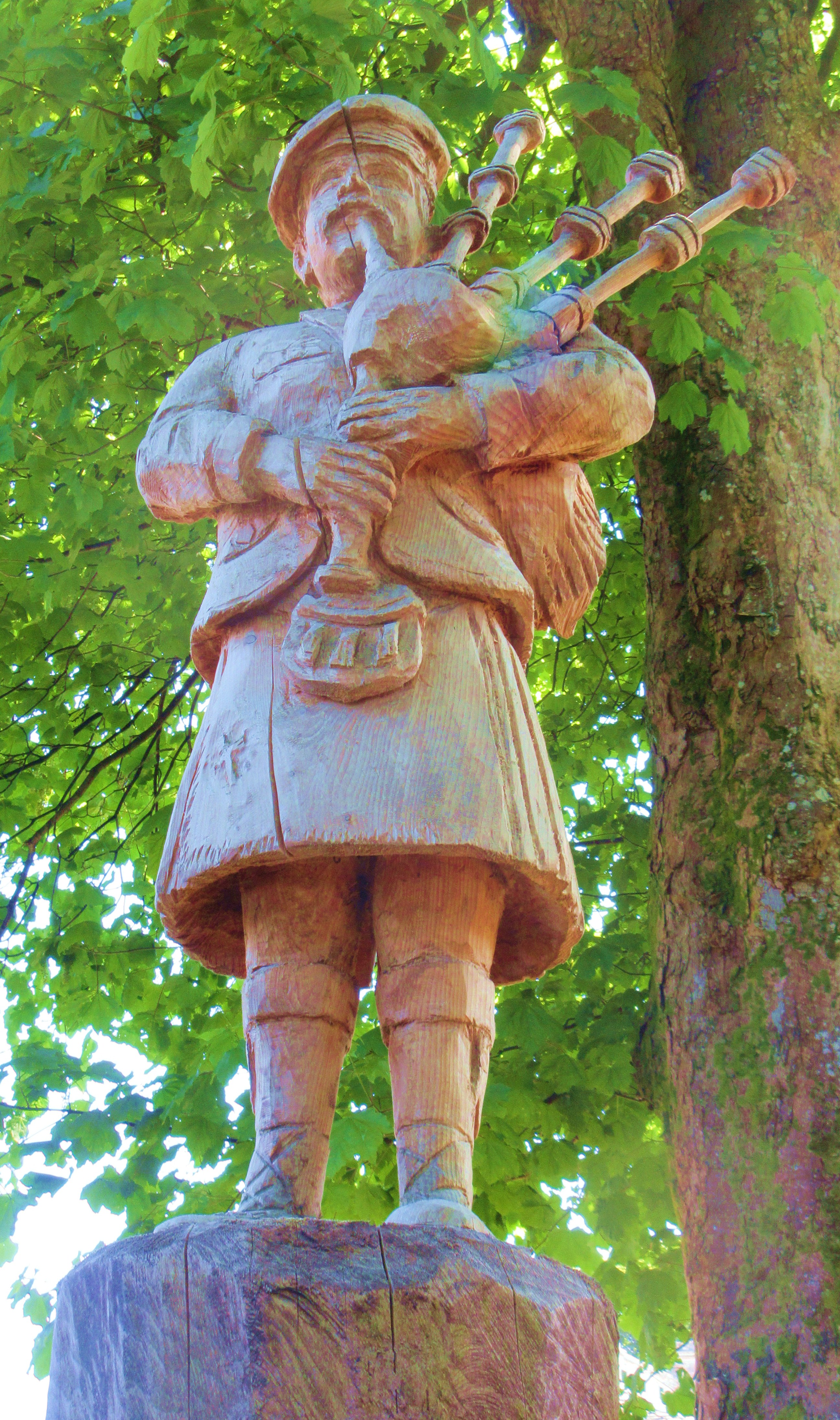
Learning to Walk Again at 73

I’m thankful for my elementary school education. I had excellent English teachers and since all I ever wanted to do since I was a kid is to write books—that was the most important thing for me. However, I also learned things that proved detrimental.

I was taught in school that Pluto was the ninth planet. One of our class projects was to draw the nine planets in their orbits, but in 2006, Pluto lost its status as a planet and was re-labeled “dwarf planet.” Learning that Pluto was a planet when it isn’t hasn’t hurt me. I don’t care. It’s too far away to have an impact on my life.

Being taught in school that snakes don’t come out at night might have harmed me—because they do—especially in the desert, and I used to run through the woods and fields carelessly at night with confidence that venomous snakes were tucked into their beds.

What has negatively impacted me in life is the teaching of my ninth-grade gym teacher. She taught us to “walk like Indians” toe first with one foot in front of the other and bragged about how silently we could walk like that. Her style of walking is great for balance beams and narrow ledges, but detrimental for every day walking as I have learned through painful falls resulting in broken bones.

Due probably to the back, hip, and knee surgeries I’ve had—or perhaps a childhood injury—I’ve developed something called “drop foot.” I’ve included the condition of drop foot in the book I’m working on now. My natural gait is to step forward toe-first as I walk. Frequently, however, one of my feet (and it can be either one) suddenly dips down and digs into the pavement. I’ve had some painful falls as a result.

So now at age 73, I am learning to walk again. It’s tough. My muscles rebel at the physical strain of putting my feet down heel first instead of toe first. I’ve walked toe-first for 60 years.

For the first 23 years of my life I was taught that God is not real. I was taught that God doesn’t exist. I even wrote an essay supporting that fact when I was in my first year of college. The professor gave me an A+ on the paper. I was wrong and he was wrong.

Some folks believe that the key to improving the world is found in education and learning. Falsehoods can be both taught and learned.

The answer is found in the mystery of God, “both of the Father and of Christ, in whom are hidden all the treasures of wisdom and knowledge.” Colossians 2:3.

A person can learn to walk through their life again at any age as long as they reach out and touch the mystery of God.

Amazon.com: Stephanie Parker McKean: books, biography, latest update

I Don’t Want To Go Back

Often I hear folks say, “Oh, to be twenty again.” “If only I could go back and live my life again—I’d do it differently. I’d get it right this time.”

I don’t want to go back.

For the first time in my almost 74 years of life—I like myself. For the first time in almost 74 years I even like my fly-away baby-fine hair that is immune to attempts to style or “fix” it. For the first time in nearly 74 years of life I can look into a mirror and not be disappointed by the reflected image.

Because now I know—now I understand the truth of Psalm 139:14, “I will praise You, for I am fearfully and wonderfully made.”

It’s been a long hard road. For those of us who were sexually abused as children it is difficult to navigate the self-blame and self-loathing because we feel somehow guilty for what happened to us. Especially me since the perpetrator who had no medical training performed two backwoods abortions on me to hide his crime and I nearly bled to death both times. I survived. The babies didn’t. Abortion is murder.

I took my one and only writing course when I was 23. It only lasted a few weeks, but I never forgot the teacher’s advice on the first day: write about what you know. Hard advice for me at twenty-three—I didn’t know anything. I had only been a Christian for a few days, but that was long enough to know that I should pray about things so I asked God to give me something to write about.

God answers prayer. Now I know.

I know what it’s like to live with an alcoholic, abusive spouse. I know what it’s like to live with a drug-addicted spouse and attempt to help him. I know what it’s like to go through divorce when you don’t believe in divorce and don’t want it. I know what it’s like to be a single mom and work two and three jobs to support myself and my child. I know what it’s like to help a new spouse battle cancer, to take care of him until he died, and then speak at his memorial service.

I know what it’s like to bury my child.

I know what it’s like to undergo back surgery, knee replacement, and a hip replacement, and to spend three months in the hospital after the hip replacement became infected. I wrote and published three books while I was in the hospital.

Now I know. Now I have things to write about. My life experiences are sprinkled through my 48 published books, some sprinkled more liberally than others. The book I’m working on right now draws from the painful chapter of childhood sex abuse.

Go back to another time and a younger age? I don’t want to go back. I’ve lived through it once. Once is enough.

I’m ready to go forward to heaven where there is no sin, sadness, illness, sorrow, pain, or parting.

Don’t feel sorry for me. I’ve loved my life. I wouldn’t exchange even one day of it for someone else’s. Even the hardest places and the most disappointing moments have been spun into the greatest blessings by the hand of the God who spun the stars into the universe and spins the earth upon nothing.

I’ve lived in and visited states all over the U.S. and lived in two different countries. I’ve lived in Bandera, Texas, home of my heart—and cowboy capital of the world. I’ve spent years working on several different newspapers as a staff writer. I’ve cuddled wild animals; a fox, raccoon, jaguarondi, African lion, raven, snakes, skunk, possums, dogs, cats, horses. I’ve been bitten on my stomach by an African lion.

I’m ready for the unending chapter in my life—heaven. The Bible describes it as having streets of gold, but all I want in heaven is a rock wall with flowers growing over it and animals coming to visit me. And to be with my son Luke again.

I’ve lived in the desert with Luke, who taught me to see—really see—the wind. I’ve danced through tumbleweed circuses and followed porcupines and coyotes to see where they were going. I’ve panned for gold, wet-washed for gold, metal detected for gold. With Luke’s help I’ve rescued possums and ravens and had remarkable dogs.

I’ve had a blast. And it’s given me something to write about. Now I’m a caregiver for my husband who is dying of cancer. I’ve got silver strands mixed into the brown of my hair. I’ve got puffy circles under my eyes from fatigue. I frequently pull muscles moving Alan about since he can’t weight-bear and must be pulled up and moved with equipment. But the joy of the Lord is my strength and nothing can steal my joy.

That’s why I can look at myself in the mirror and like what I see. I can see myself through God’s eyes. He loves me. He loves you also. So when you look into a mirror, like what you see and repeat, “I will praise You, for I am fearfully and wonderfully made.” Psalm 139:14

No one in the world can be you. God created you for a plan and a purpose that only you can fulfill. You are a poor imitation of anyone else. You are a true you.

Amazon.com: Stephanie Parker McKean: books, biography, latest update
The Falling of Fall

Fall was my mother’s favorite time of the year. Mine is spring…and summer. I hate fall when daylight draws in like a Victorian lady in her girdle and cold fingers creep over the landscape treating everything they touch to shivery coldness.

My mother loved the bright colors of fall. With seven children in the house, Mom got very little time for the things she loved—reading, putting puzzles together, and doing paint-by-number paintings. Our family favorite was an autumn landscape she did. Poor Mom. I don’t remember her painting ever winning the accolade of a frame, but it hung in our living room for many years.

Mom eschewed housework and cooking. She was no good at either. But she was great at the things she loved. And unless it came to Democrats, Mom lived by what she preached: “If you can’t think of anything good to say—don’t say anything at all.”

It’s funny how falling leaves rain down memories. Perhaps because it takes my mind off cold and misery and the relentless approach of winter—the one season of the year I truly hate. I hate cold. I hate being cold. They say that some things “grow” on a person. Winter and fall will never grow on me—they’ve had their chance since childhood.

When I get through writing books, I’m going back to oil painting. Perhaps winter will grow on me then. Meanwhile, fall is falling and I’m doing my best to praise the Lord anyway and remember: This is the day the Lord has made. I will rejoice and be glad in it.Amazon.com: Stephanie Parker McKean: books, biography, latest update

Nose Rings?

I never have understood tattoos, and I especially don’t get “body jewelry.” God created our bodies. He calls them His holy temples and urges us not to do anything to hurt or destroy them. We are beautiful the way God created us without added adornment.

While I don’t understand the tattoo and body piercing craze, nor do I judge folks who engage in it. Shucks. I would be a poor judge of something like that—I don’t even wear makeup.

However, my spirit rebels against nose rings. With “modern” “liberated” women fighting for their rights and equality and refusing to be usurped by men—why, oh, why would they wear a piece of jewelry that men have used over the centuries to keep them submissive and that ranchers use to control and manage livestock? Every time I see a woman with a nose ring—it troubles me. Why would a woman value herself so little that she accepts branding that demeans her? That she would choose to follow fashion trends rather than God?

“Do you not know that your body is the temple of the Holy Spirit who is in you, whom you have from God, and you are not your own? For you were bought at a price; therefore glorify God in your body and in your spirit, which are God’s.” 1 Corinthians 6:18, 19.

Amazon.com: Stephanie Parker McKean: books, biography, latest update
Do Flies Know When They’re About to Die?

Today I watched what seemed to be an old, tired fly climbing on a fence and I wondered—do flies know when they are about to die?

There is nothing wrong with wondering about things. When an apple dropped on Sir Isaac’s head he wondered—and discovered the law of gravity.

When Thomas Edison saw lightning strike the ground he wondered—and discovered electricity.

When Sir Alexander Fleming noticed colonies of staphylococcus bacteria in his Petri dishes avoiding mold in 1928, he wondered—and discovered penicillin.

When a Swiss engineer returned from a hike in the Alps in 1941, and wondered about the burdock burrs sticking to his clothes—he invented Velcro.

When Percy Spencer was working on a radar-related project in 1946, and noticed a chocolate bar in his pocked melted more quickly than expected—he wondered and invented the microwave.

Wondering can be beneficial…but wondering if flies know when they are about to die? Who wonders about something as inane as that? My son Luke would understand if he was still here with me. He taught me to see the wind.

Christina Rossetti, who was born in 1830, wrote the poem, Who has seen the wind?

Who has seen the wind?

Neither I nor you:

But when the leaves hang trembling,

The wind is passing through.

I read this poem to Luke when he was a child. I read scientific facts and explanations to him as to why it was impossible to see the wind. But Luke continued to insist that he could see the wind. And one day when we were out in the desert Luke taught me to see the wind. He was right. So the son of my heart would understand his mother wondering if flies know when they are about to die.

Not even Luke, however, would be able to tell me how my wondering about flies would benefit life on this earth.

So, while I don’t know if flies know when they are about to die, I do know that our Lord God is a Mighty God who does wonders. “You shall praise the name of the LORD your God who has dealt wondrously with you…I am the LORD your God and there is no other.” Joel 2:27.

And that is a wonder for all of eternity.

Amazon.com: Stephanie Parker McKean: books, biography, latest update

How Irritations Grow

Sometimes the most unexpected people “snap” for the most trivial reasons. I confess that I’ve been guilty of judging people who snapped—harboring thoughts like, “I would never get upset about such a silly thing.” And, yet, now I find myself being judged by a seatbelt.

It’s a silly thing for someone like me who has survived and thrived through hardships including living under a bridge and bathing in a river winter and summer; living in an open-ended greenhouse and piling up bales of hay to block the north wind; getting cheated out of my Texas property; leaving my Texas home for Scotland; having spinal surgery, a hip replacement, and a knee replacement. But for all of that—it’s a seatbelt that bugs me.

The bumps on the seatbelt that keep the clasp from sliding down have vanished. This means the seatbelt clasp falls straight to the floor when it’s released. That might not be a big deal in other cars, but our car is small and so closely constructed that it is impossible to reach down and retrieve the clasp to fasten the seatbelt once the car door is closed. That means opening the door into wind and rain and bending down to reach for it while getting soaked…because Dunoon, Scotland, averages 250 days of rain a year, and only 115 dry days.

My head, face, and right shoulder are soaking wet now as I write this (because drivers in the UK drive on the left side of the road from the right side of their vehicles)…and I am cold, wet, and irritated. Once again a reminder from God to be humble and not to judge others. Irritations grow from the most inane seeds.

“Not to think of himself more highly than he ought to think, but to think soberly, as God has dealt to each one a measure of faith.” Romans 12:3.

So…I school myself not to grumble—to ignore the seatbelt irritation and instead to be thankful. To give thanks that we have a car. To be thankful that the car is running. To acknowledge that we are blessed in every area of our life including transportation.

And I lift myself up above and beyond any feeling or irritation…until the next time I get in the car and open the door into pelting rain to grab the seatbelt clasp.

Amazon.com: Stephanie Parker McKean: books, biography, latest update

Never Changing

More than 2,000 years ago a woman came to Jesus and asked Him to heal her daughter. He replied that He had come to heal the nation of Israel. The woman and her daughter were not Jewish, they were gentiles. The woman replied, “Yes, Lord, yet even the little dogs eat the crumbs which fall from their master’s table.”

Jesus answered, “Great is your faith! Let it be to you as you desire.” And her daughter was healed from that very hour.

Crumbs still fall under tables more than 2,000 years later, and Jesus still responds to the cry of faith. He heals, He hears, He blesses, He answers. Even when the prayer is no bigger than one tear, one anguished cry.

“Before they call, I will answer; and while they are still speaking, I will hear.” Isaiah 65:24.

Amazon.com: Stephanie Parker McKean: books, biography, latest update

‘Tis a Puzzlement

The clerk says confidently, “I’ll be back in two seconds.” Fifteen minutes later, as the minute hand on your watch advances and the clerk doesn’t, ‘tis a puzzlement. Did the clerk drop from heaven and is, therefore, operating on heaven’s time line?

“Do not forget this one thing, that with the Lord one day is as a thousand years, and a thousand years as one day.” 2 Peter 3:8.

‘Twas a puzzlement about my father who boasted about his 140 IQ, but did stupid things. Like letting his children throw chicken bones to wild alligators even knowing that gators can run at speeds of 35 mph…and children can’t. There were seven of us. Perhaps that explains it. We were dispensable.

Like engaging his 14-year-old daughter—me—to burn down the house for the insurance money when he got into deep financial mire from spending his money on boats that would never touch water; a sports car he couldn’t afford to fill with gas, and a plane that didn’t fly, while his children went to school with worn-out shoes held together with rubber bands, and hand-me-down clothes with holes in them. Perhaps he looked into the future with that 140 IQ and foresaw today’s fashions.

And the lion. Bringing an African lion home as a house pet. True, it was only 150 pounds when it first came—not much heavier than our Great Dane dogs, but Ebenezer quickly grew to 450 pounds and tore apart his expanded metal cage to escape—repeatedly. When Ebenezer escaped, only my oldest brother Gregory (the first one of us to leave this earth for Jesus’ arms) and our local veterinarian could recapture him and get him back into his cage before he brought down one of the horses or terrified neighbors.

And the horses. No one could tell my father anything—because he already knew everything. His 140 IQ, as he reminded everyone. Even as a twelve-year-old, my sister Leslie Garcia had probably read every book that had ever been written about horses. She knew our poor horses lacked proper nutrition and veterinary care, but when she tried to tell our father and he thought she was arguing with him—he jerked her out of bed, shoved her down on the floor and kicked her until she bled.

‘Twas a puzzlement at the time—but I understand now. My father was an atheist. He forbid us to read a Bible or Christian books, to go to Vacation Bible School at the nearby Baptist Church, or to go to any church anywhere. We were also forbidden to sing hymns or Christian songs.

The 140 IQ that my father was so proud of was wasted because there was no wisdom to back it up. “The fear of the LORD is the beginning of wisdom.” Psalm 111:10.   

My father did not fear God. He did not believe in God. He wanted to be God. He thought his 140 IQ—an intelligence that God gave him—qualified him as God. “The fool has said in his heart, there is no God.” They are corrupt. They have done abominable works. There is none who does good. Psalm 14:1

There is hope for all of us—even those of us with what the world considers lower IQs. “If any of you lacks wisdom, let him ask of God, who gives to all liberally and without reproach, and it will be given to him. James 1:5.

 However…I still haven’t figured out about that vanishing clerk who was coming back in “two seconds.”

Amazon.com: Stephanie Parker McKean: books, biography, latest update

Did You See Me Today?

Did you see me today when I opened up my face to the world? God created me to give you the gifts of wonder and joy. He placed me in your path. So, did you see me today?

Did you see me today when I changed my garments from spring green to a deep summer hue? Did you marvel at how God created me to make that glorious transformation?

Did you see me today when I lined the blades of grass you passed sparkling with all the glory and fire of the world’s most lovely diamond?

God placed me in your life to create joy and wonder. But…did you see me?

“The grass withers, the flower fades, but the word of our God stands forever.” Isaiah 40:8

Amazon.com: Stephanie Parker McKean: books, biography, latest update