It Must Be Love

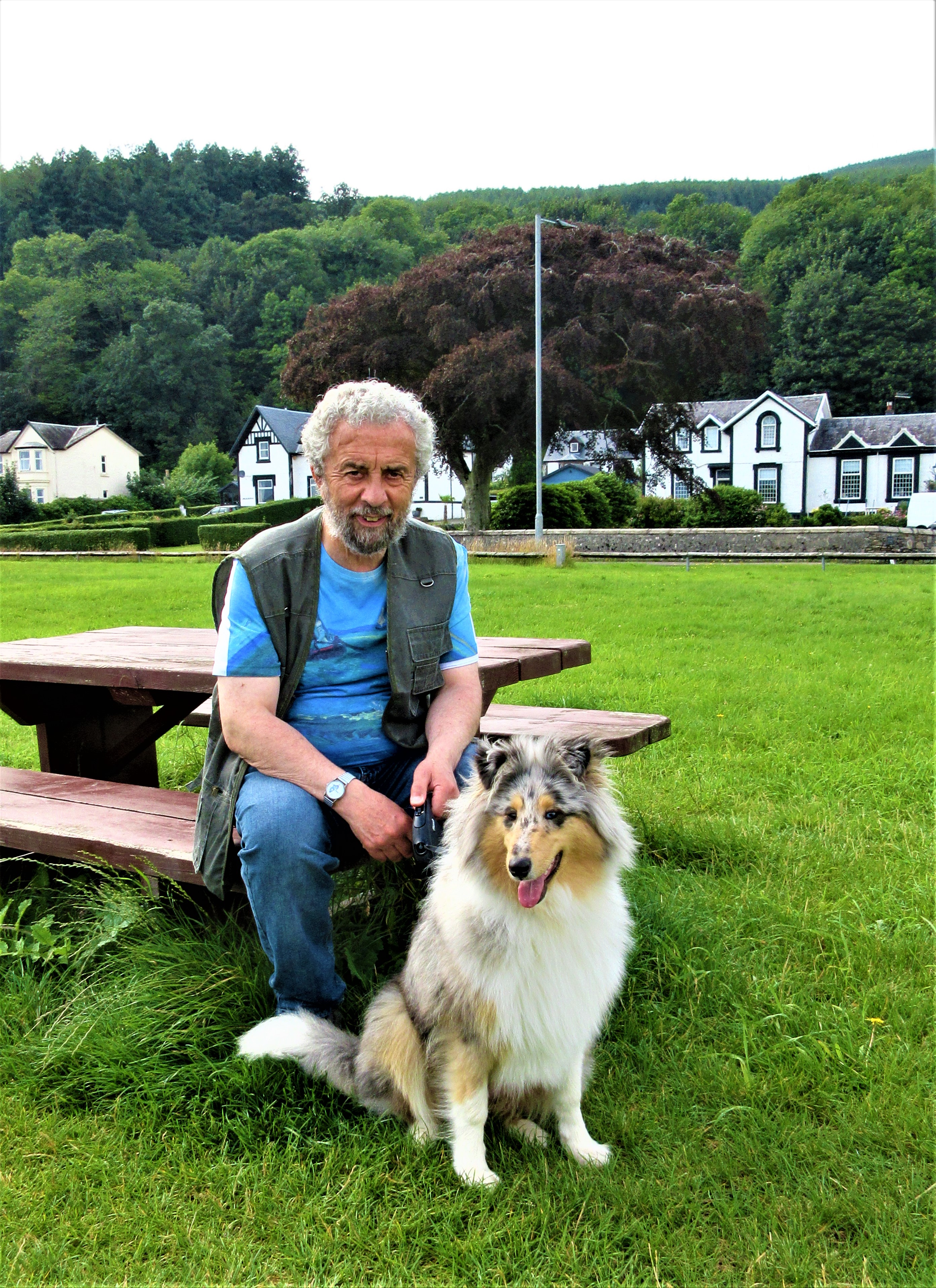
He’s not the same man I married who would grab my hand and run up and down steps with me, camera in hand as he stopped to shoot the best possible angle or photograph a memory. Now he sits in his chair, and I do the running—get the shoes, get a glass of water, get a snack, bring the mail, get clean clothes—again. It must be love.

He’s not the same man I married who wrote five books in the first five years of our marriage. Now he asks me five times a day what day it is, and I attempt to respond patiently and gently five times a day—plus answer the same number of questions about what we are having for lunch, for dinner, and what the names are of family members across the water. It must be love.

He’s not the same man I married who used to walk along the firth with me collecting firewood to collect and take home to cut up for the fireplace. Who used to walk our dog while I fixed meals. Who took the trash and recycle out to the bin and drove into town to get groceries. He hasn’t driven in two years now and he can’t walk. I take out the trash and recycle, walk the dog several times a day, drive into town to pick up groceries and prescriptions. It must be love.

He’s not the same man I married who helped vacuum, dust, and even washed dishes occasionally. Now I do all the vacuuming, cooking, cleaning, dog-walking, shopping—plus all the new things that need to be done for a spouse who is unable to walk or do anything for himself. It must be love.

He’s not the same man I married who took me to visit hidden gems around Scotland, looked for the Loch Ness Monster with me, planned to take me to Rome, looked forward to vacations, decorated for Christmas. Now we can’t decorate for Christmas because there is not enough room to add decorations with the mobility equipment he needs. Now we stay at home and I plan and schedule doctor visits for him and make sure he gets his pills on time every time—five times a day. It must be love.

He’s not the man I married who enjoyed the intimacy of marriage. Now his body is bent over like a capital ‘C,’ and his knees have folded into frog legs and kissing him is a challenge because he can’t straighten up his head. It must be love.

Doctors call it Parkinson’s Disease. They call it myeloma—blood cancer. But I say—it must be love.

Love is not a mushy, gushy feeling with heart pounding, hands sweating, eyes sparkling. Love is being there. Love is putting the other person first.

Love is what the Bible says it is in 1 Corinthians 13: “Love suffers long and is kind; love does not envy; love does not parade itself, is not puffed up; does not behave rudely, does not seek its own, is not provoked, thinks no evil; does not rejoice in iniquity, but rejoices in the truth; bears all things, believes all things, hopes all things, endures all things. Love never fails.

That is love.

Amazon.com: Stephanie Parker McKean: books, biography, latest update

I’m Different

My late brother Gregory Potter with our lion Ebenezer.

I’m different. So are you.

God created each of us as unique individuals with unique talents and abilities. Not everyone runs marathons. Not everyone writes books. Not everyone loves to cook, or sew, or drive race cars.

Somehow, the feminine “shopping gene” missed me. I hate shopping. When I must shop, I rush into the required store, grab what I need, and get back home to write. All I’ve ever wanted to do since I was about nine-years-old is write books.

I’m not sure when I realized I was different. Possibly in childhood. I rode my bicycle with a snake wrapped around my neck to impress the boys. I impressed them. They thought I was crazy. They were as scared of me as they were of the snake.

The buzz word in the 60s was “Generation Gap.” We didn’t have a generation gap at our house. Our entire family sat down to dinner together and engaged in conversation. It was easy for us to eschew drugs when the drug culture swept though the generation—the kids in our family were so accustomed to being different that we were immune to peer pressure.

Rock music roared to life in the 60s drowning out singers like Perry Como, Bing Crosby, Doris Day, John Davidson – and great musicals like “Annie Get Your Gun,” “Show Boat,” “Guys and Dolls,” “Flower Drum Song,” “Mary Poppins,” “South Pacific,” “Oklahoma,” and others. “Sound of Music” was the rare musical that held ground against rock music.

I never listened to Elvis Presley. When I was in high school, I lost a good friend I had made in the fifth grade because he asked me how I liked the Beetles. I told him I didn’t.

As an adult, I continued distancing myself from “normal” by climbing billboards to paint signs, mixing concrete, building with rocks—and I don’t personally know anyone else who has ever survived being bit in the stomach by an African lion or being bitten by a water moccasin—the lion because he was a “pet” and lions are wild animals, not pets, and the poisonous snake because picking snakes up by the tail in an effort to identify them is stupid.

The point is, I might be different—but we are all different. And yet we are all the same the world over because God loves all of us. Zephaniah 3:17 says of God, “He will rejoice over you with singing.”

The Lord employs the differences in me and in my life to weave into my writing. That’s my God-created blueprint. He uses and is using the differences in you and your life to construct you according to your God-created blueprint.

“For You formed my inward parts; You covered me in my mother’s womb. I will praise You, for I am fearfully and wonderfully made.” Psalm 139: 13 & 14.

Amazon.com: Stephanie Parker McKean: books, biography, latest update

Only God Can Unmake a Tree

American author Joyce Kilmer wrote his most famous poem in 1913. “Poems are made in fools like me, but only God can make a tree.”

People who don’t believe the Biblical account that “in the beginning God made the heavens and the earth” set a thorny remit. How can the theory (because it is merely a theory and not a fact) of evolution explain why there are so many different varieties of trees? Evolution purports that species evolve into the best of each type. Wouldn’t the best kind of a tree be one with fruit to feed people? Or nuts for animals? So why pine trees, fir trees, palm trees, mesquite trees, Joshua trees, and the rest of the 73,300 species in the world?

The big bang theory is laughable; explosions don’t create—they destroy. And if a big bang did create a tree—again—why 73,300 types; trees with white bark, brown bark, pink bark, rainbow bark, grey bark. Tall trees, small trees—trees that are evergreen, trees that lose their leaves in the winter, trees that thrive in the desert, trees that grow in tropical forests.

Joyce Kilmer was inspired when he wrote the truth: “only God can make a tree.”

God is also the only One who can unmake a tree. People can cut trees down and use them for lumber, for furniture, or for firewood. They can dig them up by the roots and discard them. But these human actions do not unmake a tree. Trees that are cut down often spring up again around the stumps. Seeds dropped by the trees launch themselves up out of the soil.

Humans cannot make a tree. Humans cannot unmake a tree.

An extinct medicinal tree scientists hope holds the cure for cancer was successfully grown from a 1,000-year-old seed in Israel. Seven date palm trees from 2,000 year-old seeds found in the desert near Jerusalem have grown into a lovely oasis.

Humans cannot define, find, or duplicate the spark of life God put into a tree. Nor can they eliminate it. They cannot unmake a tree.

“For there is hope for a tree, if it is cut down, that it will sprout again, and that its tender shoots will not cease though its root may grow old in the earth, and its stump may die in the ground, yet at the scent of water it will bud and bring forth branches.” Job 14:7

God created us. He makes, heals, and restores us. He grows and matures us into what we are and what we become. Equally, God unmakes us. He removes selfishness, unkindness, anger, hate, and greed and replaces them with His love, forgiveness, grace, and mercy.

Books are written by fools like me, but only God can make a tree—or a human.

Amazon.com: Stephanie Parker McKean: books, biography, latest update

It’s Grace

It’s that time of year again when fatigued leaves abandon their career of decking lofty trees with green and let go to dance in the street and scuttle down the sidewalks in front of rushing feet.

It’s that time of the year when faded flowers beseech the sky for one more day of light and color before falling into forgotten glory.

It’s that time of year again when fingers of wind grow strong and cold and clouds batter the sun.

It’s that time of the year when nature sings with a hoarse voice. The natural world is humbled, debased, and degraded as winter approaches to blanket and hide the landscape it sends into oblivion.

This world is temporal. Nothing humans can do will change the natural cycle of life that God created. “To everything there is a season, a time for every purpose under heaven.” Ecclesiastes 3:1

I met a friend today walking a dog that I hadn’t seen her with before. When we stopped to talk, the dog sat at her feet staring steadfastly into her face with a deep look of love. The dog’s previous owner had died. For weeks the dog had been left alone in an empty house with strangers popping in to give it food and water. Then my friend adopted the collie and gave it what it needed most—love. Grace. The eternal substance of life on earth and in heaven.

There was a time when I was a sexually abused child. There was a time when two abortions were forced on me to protect the identity of the abuser.

There was a time when I used profanity. There was a time when I was mean and ugly to my siblings.

There was a time when I drank alcohol. There was a time I hung out in beer halls, got drunk, and drove home.

There was a time when I could never have written even one book. I felt ugly, unwanted, stupid, and worthless. Then Jesus whispered the love song of grace into my heart and it began to beat again—for the first time. I was reborn as a new daughter in Christ.

Only grace can forgive. Only grace can write the language of love and acceptance that endures forever. Jesus’ love. Jesus’ grace.

“For love is as strong as death…Many waters cannot quench love, nor can the floods drown it.” Song of Solomon 8:6&7.

Amazon.com: Stephanie Parker McKean: books, biography, latest update

The Search for Joy

Everyone is searching for joy.

Some folks search for joy in the bottom of a bottle or a glass. Some folks search for joy in the feeling of smoke clogging up their lungs. Some folks search for joy in getting tattoos, body piercings, or jewelry. Some search for joy in money, prestige, luxury homes, new cars, or travel to exotic places.

Joy is closer than that. Joy is simpler than that.

Joy is in the changing faces of clouds; the sweet song of a bird; the delicate color of flower petals. Joy is in the smile of a child; the tail wag of a dog on a walk; the contented purr of a kitten.

Joy is in sunlight tracing fire and color in the clouds; the reaches of a tree to the sky; the gentle lapping of waves against the shore.

Joy is in every nation, every language, every people in this wide wonderful world.

In God’s presence is fullness of joy. Psalm 16:11

The best thing about this joy…it is a free gift available to anyone who reaches out to take it.

Amazon.com: Stephanie Parker McKean: books, biography, latest update

Old Shacks and Broken Dreams

I’m a sucker for abandoned buildings. I want to hug them. I want to whack down weeds, plant flowers, fix the roof, paint the exterior, refurbish the interior. I want to change them from abandoned and unwanted to cherished.

I can’t explain it. I don’t know why neglected, unwanted shacks exert such a strong pull on me.

When I was living under a bridge in the back of my pickup truck I viewed every abandoned structure I spotted as a potential home. Why did no one live there? Why couldn’t I live there? How much money would it cost to buy it? To rent it? I would stare at it longingly and imagine what color I would paint it. I would note what repairs it needed and calculate how much it would cost and which damage I could repair on my own. I was pretty good with a hammer and I loved colors and painting.

Since then, I’ve owned a home. I helped build our house in Texas, even climbing up a metal extension ladder to the roof with 80-pound bundles of shingles over my shoulder. I painted our home inside and out with a paintbrush. I collected truck loads of flat rocks and did the rockwork around it. I built semi-circular stone steps up to the porch.

And, yet…I am bemused by abandoned buildings.

Now, here in Scotland, I live in a small, comfy rental house—which I also painted with a paintbrush, scaling a metal ladder to cut a nice straight line around the top of the exterior walls.

Still…unwanted structures whisper to my heart.

When my young son Luke and I lived in the Nevada desert, we loved visiting ghost towns and wandering through the empty buildings imagining the people who used to live there and the dreams—now broken, shattered dreams—that motivated them.

Now Luke is in his forever home. I’ll be joining him soon. This earth is not our home. We are just sojourners passing through. Even the bodies we live in down here on earth will be abandoned. Our bodies are mere shells that will be left here when our spirits rise to be with Jesus in Heaven where we will get new bodies.

So why am I a sucker for abandoned buildings? It must be empathy or compassion toward the former residents who stepped out of broken dreams and left them behind. No one likes broken dreams. It’s a comfort to know that Jesus promised that He was leaving this earth to return to Heaven and make a place for us there so we could follow Him.

And, yet…I’m a sucker for old buildings and broken dreams.

Amazon.com: Stephanie Parker McKean: books, biography, latest update   

A Change to Embrace

If it ain’t broke—don’t fix it. I love that maxim. I hate change.

A change came to our house last week that I can embrace. It makes life easier. For the five years we’ve had Savannah she has had no easy access to the two-foot gravel path around our house. We have no yard. We have no grass. It’s impossible to use an umbrella to walk around our house because the umbrella hits the outer wall of our house on one side and the neighbor’s fence on the other side. Still, during gales and snow storms, that strip of gravel circumvents walks and gives Savannah a place to do her business.

Savannah had a long, wobbly, rotting wooden ramp on one side of the house that would not support a person’s weight. It finally got so bad that even Savannah couldn’t use it.  I improvised steps at the back of the house by stacking unopened bags of gravel up to the level of the deck. It gave Savannah a way down and back up, but the bags became slippery after a few years and it scared her when she slid on them. I could go up and down the gravel bags by holding the rail of the deck on one side and the neighbor’s fence on the other side. But the deck rotted and broke apart leaving me nothing to hang on to. I fell down the gravel steps a couple of weeks ago.

Our landlord—the Church of Scotland—hired a company to tear out the old rotten wood and replace the ramp on one side with steps and the back deck and gravel bags on the other side with a smart new smaller deck and steps. A beautiful job and one that makes life easier for both Savannah and me. Finally, a change I can embrace! Of course, my favorite maxim is “if it ain’t broke—don’t fix it”—but the ramp and back deck were both “broke.”

Sigh. I suppose I must admit that change is inevitable—and sometimes it is for the best. But I still don’t have a cell phone. And I will continue to use my 12-year-old laptop with Windows 2007 and a plug-in keyboard because I wore out the keyboard on the computer itself by writing 45 Christian cozy mystery-romance-suspense books on it. I still hand turn a crank to whip egg whites into meringue and to open cans. I still use a handheld cheese grater. I will continue cooking in my cast iron pans and pots—as long as I have the strength to lift and carry them. Why change what works?

The changes God makes are good: “Wisdom and might are His, and He changes the times and seasons; He removes kings and raises up kings.” Daniel 2:20.

But God Himself does not change. “For I am the LORD, I do not change.” Malachi 3:6.

 Amazon.com: Stephanie Parker McKean: books, biography, latest update

Never the Best

Before you begin to read this, please know that I am not throwing a pity party and I am not seeking accolades; merely writing about my epiphany at the grocery store today when the output at the cashier’s stand shriveled what was left in the bank account.

My entire life, I have never been the best at anything. As a child, I was physically strong, but my lack of coordination and clumsiness precluded me from sports. I did tryout for basketball. I failed to make the team. Perhaps because the one basket I made was on the wrong side of the court and counted for the opposing team.

During my entire school career (if you could call it a career), my grade point average and I sat in the middle of my class and never climbed. I was poor at spelling. It took me years to memorize how to spell “pilot.” I depended on my brilliant sister Leslie (writer Leslie P. Garcia) to spell words for me when I was writing. I was too mentally lazy to look them up in the dictionary; besides—in all fairness to myself—my spelling was so convoluted that I couldn’t find the words in the dictionary anyway because my attempts were too far-out. I mean, really…why should an “f” word like physician start with ph? And why should a word like psychiatrist that sounds like it starts with “s” begin with a “ph”?

Math? I was the ultimate disaster in math. It took a student tutor to make me understand that after 100, the numbers start all over again. Even now, figuring out how many months have passed confuses me because it depends on where you start counting. Numbers are used for arithmetic. Letters are used for writing. So why mix numbers and letters and call it a branch of math? Needless to say, I flunked algebra. Twice. When I was painting signs, I would mark the metal yardstick I used to measure lines because I didn’t know how to read the little marks in between in between the inches. Other folks are not the best with math, but I think I must be the most un-best of all.

Singing? I love singing, but we won’t go there. I can’t sing, yet I love to think that I can. It took a college music professor to convince me that for whatever reason—I actually can’t sing.

My joy is writing and I have 45 Christian mystery-romance books to my credit, yet I am not the best writer. Nor are my books bestsellers, although most of them have made the bestselling list briefly at some time. As for making money from writing…that hasn’t happened. Many authors have better sales than I do. Many make more money.

Finances? I have never been the best at finances. I’ve always struggled to make ends meet. Sometimes…they have never met.

I’ve done many things since childhood; painted signs, worked on newspapers, waitressed in restaurants, tamed wild animals, trained domestic animals, done landscaping and rockwork…but I’ve never been the best.

I’ve learned many things, traveled to many states in the U.S.—and now to Scotland—married and divorced, married and buried, married and become a care giver…but I’ve never been the best at any of these pursuits and I’ve never made the best decisions.

Having son Luke was almost the best decision in my life. Asking Jesus into my life and heart is the best decision anyone can ever make and it guarantees that I will be in heaven with Luke when it’s my time to travel to my final destination. So perhaps I have been the best at least once in my life. For some things, once is enough.

“Earnestly desire the best gifts.” I Corinthians 12:31. Jesus is the best gift ever—and He is for all eternity.

Amazon.com: Stephanie Parker McKean: books, biography, latest update

The Colors of Memory

The color of one of my memories from the ninth grade was watching the door to our classroom to see what color Gemma’s hair would be this time. She was a natural blonde with beautiful long, wavy hair. I couldn’t imagine anyone having prettier, more desirable hair—but apparently—Gemma could.

Gemma’s first change was to brown, which amazed me. Brown? Plain brown? My hair was plain brown. Why would anyone who was born with gorgeous blonde hair want to change it to plain brown? Gemma’s next change was to red. I approved of red. I had always dreamed of having red hair myself. Then it was black. With her fair coloring and light blue eyes—black hair looked terrible on her. The next change was powder-puff blue. That was a lovely color on Gemma. It nearly matched her eyes and it was stunning. This was back in the 1960s, before changing hair color constantly and adding tattoos, etc. was commonplace. I envied Gemma at the time, but looking back, I wonder what insecurity in her life caused her to run from one color and hairstyle to another so desperately.

Another colorful memory was watching our classroom door for Latrelle’s entrance to see what she was wearing. She never wore the same outfit twice. All her skirts, dresses, and matching jackets were lovely and expensive. At the time, I envied Latrelle and her endless closet. I had a mere three outfits to wear all week. Looking back, I wonder if her parents showered her with money rather than love.

I was born in Texas, but I grew up in the rolling hills and piney woods of Georgia. Most people in our rural area were desperately poor. One old lady I used to visit on my bicycle was thrilled to have a sweet potato for her Christmas dinner. One sweet potato.

An old man at the end of our road ate a tin of sardines every day. One tin.

A family I used to sneak through the woods to visit because I had been forbidden to befriend them ate cakes of flour and water cooked on an open fire at every meal. The children were thrilled when their father made enough money to purchase a small bag of sugar to add to the flour and water mixture.

A girl about my age met me one day when I was riding my bicycle. She crossed the road in front of me holding a double handful of powdered laundry detergent. She was thrilled that she had enough soap to wash her clothes and her hair.

A girl in my class named Kathy lived in a chicken coop with her family. Kids made fun of her because she smelled bad. Her parents couldn’t afford to buy a bra for her. That was before the bra-burning craze hit. Kids made fun of Kathy for not wearing a bra.

The colors of memory. They find their way into the pages of my books. How could they not?

God engraves us on the palms of His hands and carries us with Him. My childhood memories are carried in my heart and spill out into my books, one memory at a time, one character at a time.

Fiction is seldom all fiction.

Amazon.com: Stephanie Parker McKean: books, biography, latest update  
The Right to Be Wrong

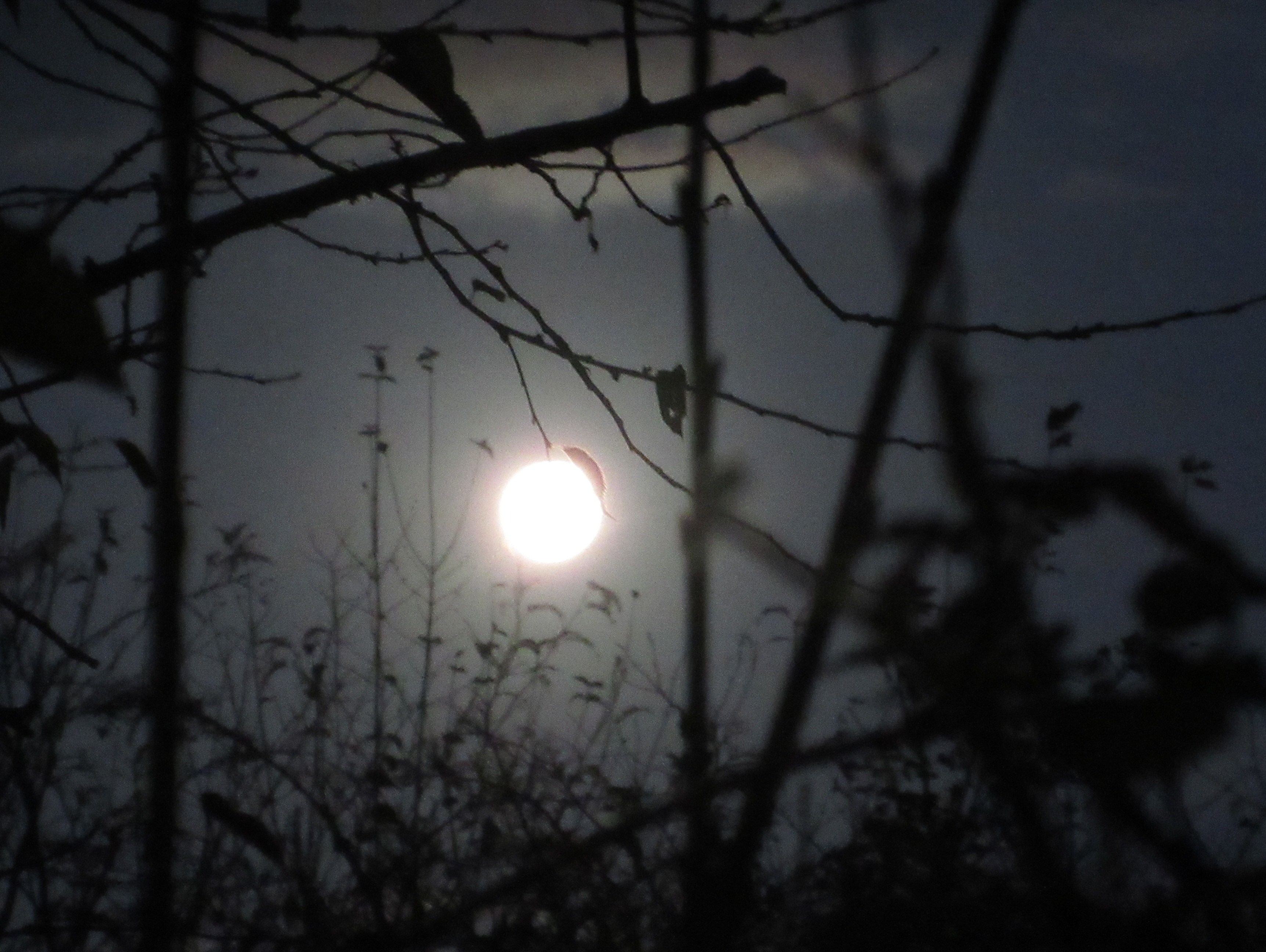
My grandmother didn’t believe in the moon landing. As far as I know, she believed that entire historic event was staged all the way up to her death. Her non-belief in the moon landing didn’t hurt anyone else. It was unimportant. Yet, our family ridiculed her for it.

My younger brothers weren’t involved in the ridicule, but the older children in our family were…because my atheist father set the example. That was unforgiveable. She was his mother.

For some reason—probably to earn the accolades of a father who didn’t respect anyone because he thought he was a god and could make the rules—we laughed at Grandmother’s foible. The great tragedy of this was that while Grandmother’s wrong belief didn’t hurt anyone else or any of us, my father’s ridicule of his own mother set a terrible and soul-damaging example. And it demanded that we make an impossible choice that no child should ever be forced to make; to earn my father’s affection, or choose the unconditional love of a grandmother who poured out her life for us—cooking for us, making our favorite desserts, taking care of us when our parents were gone.

My grandmother taught me to make her chicken gravy, much to the enjoyment of those I have fed over the years. And as-light-as-air yeast rolls. And from-scratch hot chocolate that my sisters still beg me to make all these years later.

My grandmother had very little money of her own, but she spent what little she had to pick out unique and perfect presents for us on Christmas and our birthdays. As a young teen nearly immobilized by the agony of having thick dark hair covering my legs and my mother’s refusal to allow me to shave—Grandmother understood my anguish in spite of our age and generational differences. She bought me the most lovely and perfect birthday gift that anyone has ever given me…an electric razor. I have never forgotten the love and thoughtfulness behind her gift—and to this day, nothing else has surpassed it. Not because of the expense…but because she understood.

In a perfect world, I could say, “Well, others might have ridiculed my grandmother for her beliefs, but I didn’t. Unfortunately, this is not a perfect world and I was not a perfect child. Instead of listening to my grandmother talk about God and Jesus—I strived to win my father’s approval by espousing my father’s atheism and his abuse and derision of my faith-filled grandmother.

Jesus has forgiven me for my blighted past, but He can’t take away the regret and shame I feel when I remember mocking Grandmother for not believing in the moon landing. Her non-belief in that event never hurt anyone. The ugly example my father set poisoned an entire family.

Guard your words. God gave all of us the gift of choice. Give others the right to their choices even when you think they are wrong. Gift others with the right to be wrong.

Jesus said, “I have given you an example that you should do as I have done to you.” John 13:15. Jesus built people up. He never destroyed them with His actions or words.

Amazon.com: Stephanie Parker McKean: books, biography, latest update