Getting Pruned

As a writer, or as a person, I don’t like getting pruned. Facing tribulation.

With the world in a panic over covid-19, we are all getting pruned. Limited in where we can go, what we can do, what we can wear—sometimes even what we can purchase. Facing tribulation. It stinks.

Even as a writer, pruning is required. Standard book writing advice when I started writing was to make each chapter in the book as close to 20 pages as possible. Most books were between 19 and 23 chapters. Now books feature short chapters of a few pages each, and can have 50 or more chapters.

Good authors have always researched their books before writing them, but now research is required even to make conversations flow. People nowadays use phrases copiously such as, “no worries,” “so basically,” and “right?” And teens toss in, “dope,” “lit,” “sick,” for good—and “salty,” “thirsty,” and “curve” for bad.

For me, technology is like a pair of pruning shears. First Facebook changed. Then WordPress. When I write a blog—I want to write it, insert a photo, include the link to Amazon, and publish it. I don’t want to be pruned. I don’t want to have to fight and be stretched, shaped, and chopped to figure out the new way of doing it. I don’t want to be pruned. I don’t want to face tribulation. I just want things to be simple.

Simple. No tribulation. No pruning.

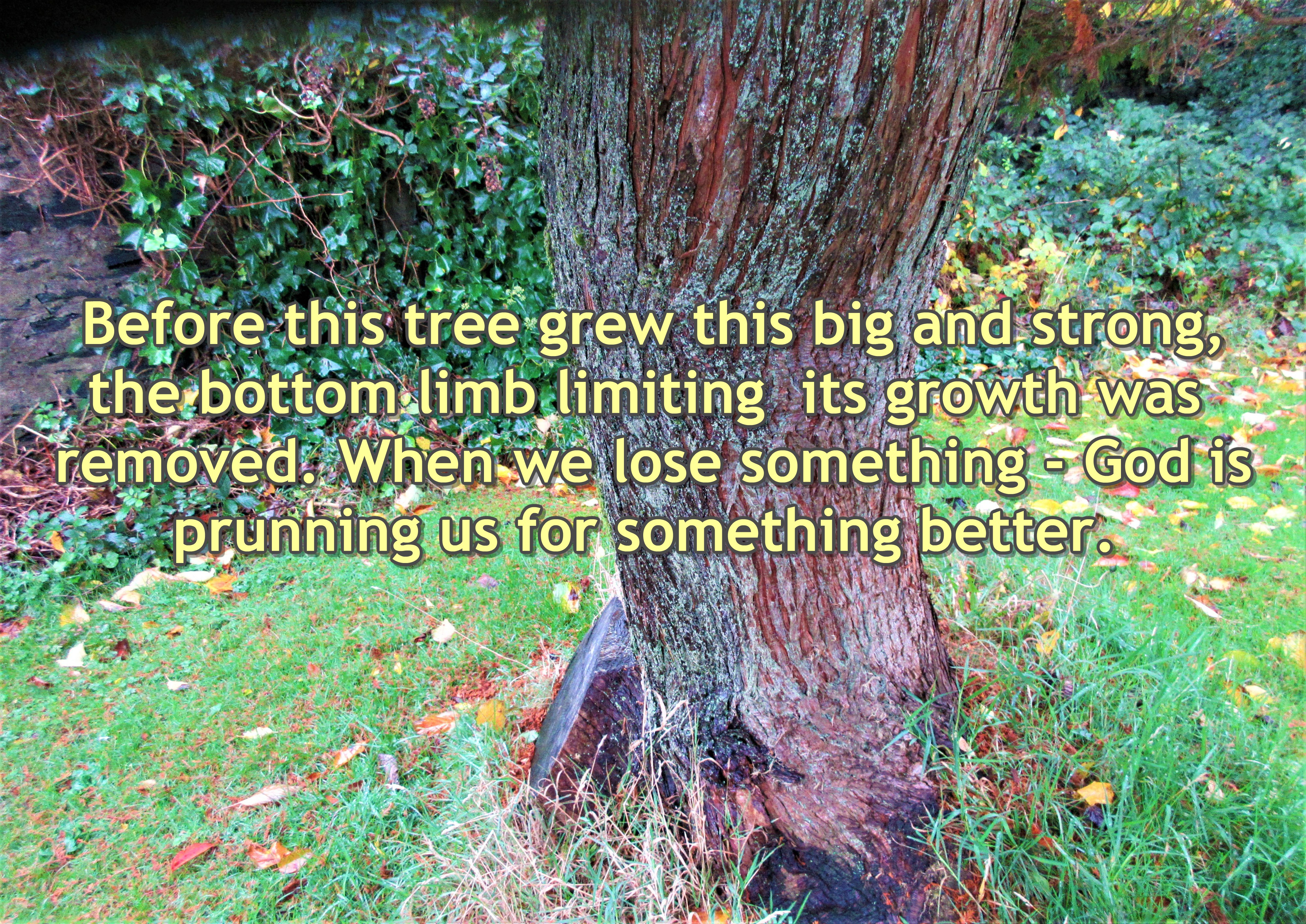
A tree made me ashamed of my bad attitude about being pruned. It is a wide, tall, healthy tree working its way up to the sky. At the bottom…a large nearly horizontal stump where the limb at the bottom of the tree was sacrificed to allow the straight tree to flourish. The stump is dark and disfigured. When it was chopped off, the tree cried tears of sap. Trees don’t enjoy pruning any more than I do. But the tall healthy tree is a testimony to the power and benefit of pruning.

“And not only that, but we also glory in tribulations, knowing that tribulation produces perseverance; and perseverance, character; and character, hope.” Romans 5:3

Potato Chips & Writing

Why do I write mystery-romance-suspense books? Potato chips. They taught me all I know about deception.

Potato chips are almost as light as air. They are crispy and flavorful, and for folks attempting to lose weight, what could be wrong with consuming something that is nearly as buoyant as air? Right? Wrong.

One of those deceitful, delightful treats contains 10 calories. How is it even possible to capture calories that can make a person fat in something so weightless? Ten calories in one chip—and who eats just one?

It gets worse. A single serving bag of light-as-air chips contains 155 calories, not bad unless one realizes that those bags are small and that after eating an entire bag—one is still hungry.

Chips are masters of deception. “Why is your waist getting bigger? Why are your jeans tight around your middle? What is causing your bathroom scale to creep up? Not us, surely. Look at how small we are and how lightly we sit in your hand. How could we be guilty? Look for the culprit somewhere else.”

Mystery writers are tasked with directing readers from one suspect to another to keep them guessing and to keep them from becoming bored. The closer mystery readers get to the end of the book without knowing whodunit, the better the writing. That requires delving into levels of deception and cooking up deceitful characters.

The world is full of examples of deception and deceivers. Potato chips are the worst.

Leaving Leaves

Some people hate autumn because leaves falling off trees remind them of death and dying. I hate autumn because it leads to winter. I hate cold.

Some people wax poetic about the beauty of leaves changing colors. I love color and beauty, too, but what I love most about fall leaves is their passionate dance with the wind.

Leaves are born to a single tree in the spring. For the first half of their lives—they are stationary. They are held captive by the tree. Wind can tickle them and make them tremble or shiver—but the leaves can’t go anywhere. They are dependent on their attachment to the tree.

Fall arrives. The leaves turn lively colors and die. Trees release them. The wind catches them up—and suddenly—they are no longer “dead.” They have new life, new adventure, new purpose. Piles of fallen leaves warm the ground and protect it from winter cold. Creatures bury themselves under the leaves finding shelter and food. Eventually, the leaves decompose. They enrich the soil and coax new life into existence.

What a marvelous parallel to our lives as humans on planet earth. We live. We “die.” But, because of Jesus—we never really die. Our “death” is a freedom ride to eternity.

Jesus promised those who believe in Him, “And I give them eternal life, and they shall never perish, neither shall anyone snatch them out of My hand.”

Carson

It was before digital cameras, and I’ve moved a lot—so I don’t have a picture of one of the banes of my life…Carson. The picture at the top of my blog is a free image of an “ugly dog,” but who is to say what is beautiful and what is ugly?

When Luke was five, we went to Carson City, Nevada, one Saturday to explore. Before we entered a restaurant for lunch, an ugly black dog began following us. Luke pet the dog and talked to him. We went in to eat and forgot about the dog. When we came out—the dog started following Luke again. When we got to our truck the dog tried to climb in with us. We told the dog to stay. I pulled out of the parking lot and drove away. Luke screamed at me to stop. “He’s following us. He’s going to get hit by a car.” Sure enough, the ugly black dog with bat ears ran down the road behind us with cars honking at him. We didn’t know where he belonged, or how to make him stay—so we took him with us. I spent the next two weeks placing ads in papers, making phone calls—and when no one claimed him—I spent the rest of his life trying to give him away. No one wanted him. Including me.

Carson was a ridiculously long dog, with ridiculously short legs, and a ridiculously long fluffy tail, bat ears, and a snout like a Labrador. He was ugly—and stupid. Even puppies learn “come,” “sit,” “stay,” “down,” and “shake” at just a few weeks to a few months old. Carson never learned.

A few months later, Carson stampeded a herd of buffalo. Buffalo-viewing tourists fled to their vehicles. Embarrassed, I tried to drive away and leave Carson behind—but he chased us down the road and Luke screamed and cried…and I stopped to rescue him…again.

Carson barked at other dogs and at everything that moved; chased cars; dug under fences; terrorized chickens; tangled with skunks, and lost one of his back legs attacking a dog ten times his size. The leg was so mangled that the vet had to remove it. Driving home with the three-legged dog, Luke suddenly burst into tears. “What’s wrong?” I asked my sobbing son. “Mom, we have to get another dog. There’s not much left of Carson.”

It was a good thing that there wasn’t much left of Carson. When we moved to Montana, I was forced to work three jobs to support myself and Luke. One of the jobs was waitressing at an all-night restaurant. I worked from 10 p.m. to 6 a.m. and had to leave Luke alone in our duplex with Carson. The people in the next duplex opened the door between the two units in case of emergency. Dogs were not allowed. But because Carson had only three legs and no one wanted him—he got to stay. And because Carson was with him—Luke felt safe.

When Luke was eleven, Tom and I got married. I still had Carson. The day of the wedding, Luke and I entered Tom’s house—a mobile home—for the first time. Tom’s fluffy old cat tackled Carson and sent him tumbling across the floor. For the rest of the time we lived in that mobile home, Carson would never walk past the living room—even after the cat died and been gone for a year. Carson was not only ugly—he was stupid.

The day of liberation finally arrived. After all the years and all the attempts to get rid of Carson…he died.

I sobbed for two days.

Jesus said, “Do not judge according to appearance.” The ugly dumb-as-a-box-of-rocks black dog knew how to love.

Valued

Close to where we live there is a pile of discarded furniture stacked up on the side of a building; chairs, sofas, desks, dressers, bed frames—all things which were at one time valued by their owners but have since been discarded.

It’s sad to see once-treasured possessions put aside. Perhaps shoved aside to make room for new treasured items—which will last no longer than the ones they replaced.

Everything in this life; everything on this earth gets old, wears out, loses values. How sad that some people spend their entire lives gathering treasures which wear out, get old, or are discarded.

Thankfully, God never loses His love for us no matter how old, how ill, or how crippled we become. He loves us so much that He sent His Son Jesus to die on the cross so we can have eternal life. We can also have eternal treasures.

Jesus, our Lord and Savior said, “Do not lay up for yourselves treasure on earth, where moth and rust destroy, and where thieves break in and steal; but lay up for yourselves treasures in heaven, where neither moth nor rust destroys and where thieves do not break through and steal. For where your treasure is, there your heart will be also.”Matthew 6:19-21.

God created eternal value. We can accept it or reject it.

Never Poor

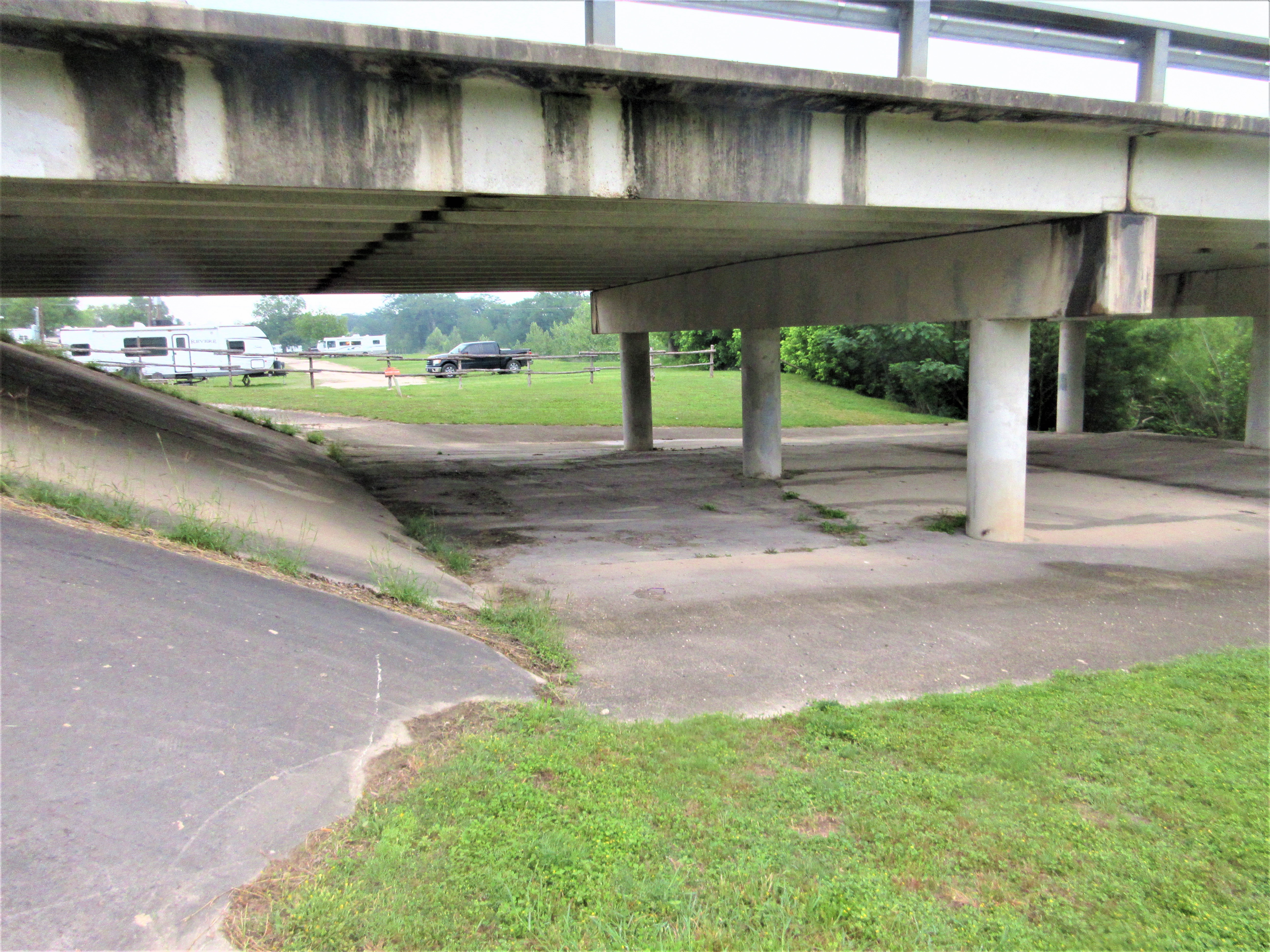
I’ve lived under a bridge in the back of a pickup truck and washed myself and my clothes in the river, but I’ve never been poor.

I’ve lived in an open-sided garden shed with no indoor toilet or plumbing, sleeping on wooden planks on top of concrete blocks with a lawn chair mattress on top, but I’ve never been poor.

I’ve lived in my pickup truck, using cold water from a garden hose to wash my hair and public bathrooms for washing my face, under my arms, and my private parts, but I’ve never been poor.

To me, “poor” is a label written in a foreign language. How can one be poor when they are free? How can one be poor when flowers splash the path with beauty and stars fill the nighttime sky with wonder? How can one be poor with clothes on the back—even though not designer labels—and food in tummy—even though not preferred?

I love Irving Berlin’s musical “Annie Get your Gun.” Like the lyrics in one of the songs, no matter how “poor” I’ve ever been, I’ve always had a healthy balance on the credit side: “Got no mansion, got no yacht, still I’m happy with what I’ve got; I’ve got the sun in the morning and the moon at night. Sunshine gives me a lovely day; moonlight gives me the Milky Way.”

And even if I were to live in a concrete drainage pipe instead of a bridge—a place where the sun didn’t shine during the day and moonlight didn’t gladden at night—my future is living in Heaven with Jesus. Heaven is a place with no sin, no sorrow, no illness, no pain, no death, no parting. And once one has the gift of eternity living inside them—no one and nothing can steal it or take it away.

“The blessing of the LORD makes one rich, and He adds no sorrow with it.” Proverbs 10:22

I’m not poor. I’m blessed.

Dream Possible

One of my favorite songs is “The Impossible Dream,” written by Joe Darion and composed by Mitch Leigh. It is the most popular song from the musical “Man of la Mancha.

To dream the impossible dream
To fight the unbeatable foe
To bear with unbearable sorrow
To run where the brave dare not go.

To right the unrightable wrong
To be better far than you are
To try when your arms are too weary
To reach the unreachable star

This is my quest, to follow that star,
No matter how hopeless, no matter how far…

I love Man of La Mancha. I love “crazy” knight Don Quixote who tilts at windmills and lives to the extreme rather than allowing his dreams and visions to be tamed by society and turned into cookie-cutter realities.

I’ve spent my entire life and writing career encouraging others to reach for their dreams. I will probably spend the rest of my life giving the same advice. Yet, a comment from a neighbor recently made me realize that perhaps our dreams should in some way be possible. For example, I dreamed of being in my drama department’s musical productions at college and becoming a famous singer. I can’t carry a tune.

This neighbor said, “My husband and I dreamed of buying a two-story house and retiring here. We did, but now our knees have gone and our dream has become a nightmare. We can’t get up and down the stairs—and that’s where our bedroom is.”

With God, all things are possible. All things are possible with God. But wisdom may be contained in knowing how to dream the possible and trust God for the impossible.

Freedom Behind Fences

I got a good chuckle when Savannah rushed at hooded crows with all the exuberance of puppyhood. The crows ignored her. They were behind a fence.

Some people fear becoming Christians because they think it will mean losing their freedom. Yet the crows behind the stadium fence are free to visit together, fly, hop, gather food, drink from clear rain puddles, find homes in trees—and participate in other crowly activities. They are also free from attack. Free from fear.

The Bible instructs Christ Followers not to do anything that will destroy their bodies. Not smoking is not a loss of freedom, it frees the non-smoker from a host of smoking-related health issues.

Not drinking alcohol breaks the chains of addiction, violence, spouse abuse, child abuse, drunk driving, car wrecks, and arrests.

Not coveting frees a person from depression and removes the temptation to steal. Not stealing frees a person from the rigors of life behind bars.

Not committing adultery frees a person from contacting sexual diseases, or courting the ire of a wronged spouse.

Not committing idolatry and loving God with all heart, soul, mind, and body frees Christ Followers to live in love, peace, joy, and assurance of everlasting life after this one.

Worldly fences restrict. God’s fences free.

Mysterious Ways

One of our friends frequently declares, “God works in mysterious ways.” He does.

It is a mystery of God that husband Alan McKean and I met. He lived in Scotland. I lived in Texas. If the staff writer who was scheduled to interview him had arrived at work that day—I would not have gone to interview him and we would not have met.

It is a mystery of God that I ever left Texas. Partially due to a bad decision, my house and property was stolen out from under me. I stood beside my packed truck with tears running down my face and prayed, “Lord, if you don’t want me to leave Texas, now would be a good time for one of Your miracles.” The miracle turned out not to be that I stayed in Texas, but rather that after I left—Alan and I re-connected and got married. I moved to Scotland, and since that move I’ve written 24 books, 10 of which are set in Scotland.

As in the Garth Brooks’ song, “Some of God’s greatest gifts are unanswered prayers.”

My life is filled with God’s mysteries and miracles. All things really do work together for good to those who love the Lord, just as God promises in His word. Some of the worst days in my life have turned out to be the best.

Jesus told His followers in Mark 4: “To you, it has been given to know the mystery of the kingdom of God.”

I’ll never live long enough to understand the mysteries of God, but I know they pen the chapters of my life.

Sheltered

      Until someone has lived in Scotland for a long time they cannot understand Scottish weather. Even after someone has lived in Scotland for a long time they cannot understand Scottish weather.

It was reasonably warm and breezy with a clear sky when I took Savannah on our once-a-day mile-long walk. By the time we rounded the stadium and headed back up the hill toward our house—the sky opened. Rain didn’t fall—it bucketed. So when we reached the one and only clump of trees along that side of the path, we sheltered under them.

Looking up into the leafy green canopy overhead, I felt a lovely sense of peace and joy. It was warm. I was protected. The pounding rain didn’t touch me. I was sheltered.

No wonder birds live in trees. No wonder they sing. No wonder they are joyous and carefree. The same Lord God who created the trees as a habitat for birds protects and feeds them. They shelter in His great goodness.

We can too.

“The LORD will be a shelter for His people.” Joel 3:16.