Mistakes!
Mistakes. We all make them. At least, I do.

Not all mistakes are bad. Naval engineer Richard Jones dropped a tension spring, watched it bounce – and invented the Slinky toy.
Sir Alexander Fleming was searching for a “wonder drug” when he found penicillin – by accident. He had discarded a contaminated Petri dish. He noticed the contamination was dissolving the bacteria around it.
One of my favorite mistakes was made by Ruth Wakefield, owner of Toll House Inn. She was attempting to make regular chocolate cookies – but had run out of baker’s chocolate. So she broke sweetened chocolate into the dough…and invented Toll House chocolate chip cookies.
George Crum lost his temper over a hard to please customer and invented potato chips from a plate of fried potatoes. Silly putty, the microwave oven, pace maker, and saccharin were all birthed by failure – mistakes.
I love the legend about a cook in China who was experimenting in the kitchen – and invented fireworks! It seems that charcoal, sulfur, and saltpeter were common in kitchens 2,000 years ago. The cook accidentally mixed these substances together and compressed the mixture into a bamboo tube. BOOM! It exploded. I’m not sure what happened to the unnamed cook.
I recently read a book where a male calico cat is one of the heroes. Due to genetics, almost all calico cats are female. The book portrayed opossums as cat-eaters. Opossums are non-aggressive and will play dead rather than attack. Cats are far more likely to kills possums than possums are to kill cats. In the Texas Hill Country, possums came up regularly and shared the cat food with the cats. No one ever had a spat or got hurt. Sometimes books and authors get it wrong.

I love the Bible account about men bringing an adulterous woman to Jesus. “The law says she should be stoned. What do you say?” If Jesus said, “Let her go,” they would condemn Jesus for disregarding the law. If Jesus said, “Stone her,” His followers would leave Him because He preached mercy and grace. Jesus said, “Let the one without sin throw the first stone.” The accusers left. Jesus told the woman, “go and sin no more.”
It was easy for me to forgive the author’s mistakes about calico cats and opossums – especially after “Captive of Fear” was released and I read the kindle copy. BOOM! Desert instead of dessert – twice! (Now corrected.) This after professional editing & me reading the edited copy.
Authors should be forgiving and humble. You never know when a cat-eating possum might stumble into your book!

Bucket List
Making “bucket lists” is trendy. I don’t have a bucket list.

Since I was in the fifth grade my enduring dream has been to write books. I write books. I’m happy.
I would love to make money writing books – enough money that I could keep writing more books. But several of my books have made the Amazon Best Seller’s List (albeit briefly), so I’m happy.
It would be great to visit my hometown of Bandera, Texas, “Cowboy Capital of the World,” and say howdy to my friends. Needless to say, I’d love to visit all my family members. Family is more fulfilling than writing books.

It would be fantastic to take a Christian cruise to warmer climes. I can’t think of anything more enjoyable than spending days eating food you don’t have to cook, swimming, working out at a gym, and relaxing in the sun – except writing books.
There are fascinating places in the world to visit with strange and exotic landscapes and animals. But I’ve traveled to many of those places already through reading books. I’ve researched and written some of them into my books. I’m happy.

Our rough collie Angel Joy had a one-item bucket list. She wanted to meet a cat and sniff it to see what it was. Our friendly birds outside let her sniff their feathers, but cats have always run. Finally, a cat not only let her sniff – it followed her across the parking lot and tried to jump into the car with her. She’s happy.
If I had a bucket list, one animal I always wanted to meet was a hedgehog. I got to meet one the other night. It let me crawl around on the ground and take its picture and touch its stiff bristles. I’m happy. I wrote a hedgehog into “Bridge to Brigadoon,” which is set here in Scotland. It was fabulous to meet one in person – so to speak.

The apostle Paul said in Philippians 4:11, “I have learned in whatever state I am, to be content.” Paul lived for Jesus even after being beaten and stoned for his faith, and after having survived shipwrecks. He knew the secret: “The joy of the Lord is my strength.” I don’t think Paul had a bucket list. He lived each day fully engaged – and he was a writer. He was happy.
Bucket lists are cool. They really are.
But, I have my books. I’m happy.
http://www.amazon.com/Stephanie-Parker-McKean/e/B00BOX90OO/ref=ntt_dp_epwbk_0
Directions Are Overrated
Directions are not all they’re cracked up to be. Send me into the country. Tell me to take a left past the first cottonwood tree after the low water crossing, follow the fence to the third gap, turn right and stay straight until I see a crooked fence post, turn left at the old tire and go along side the pond until I see a shed on the hill, then turn right at the sheep pen—and I can find it every time. But send me into a city building with rooms on both sides of the corridor and I need an escort to get out again. On city streets, I have been known to turn into a gas station, fill the tank, then pull out and drive the wrong way for miles before I snap to the mistake.
Directions like east, west, north, and south are the worst. We learned in school that north is in front of us, south is behind us, east is to the right, and west is to the left. Try using that information to navigate. You are always headed north unless you walk backwards or crab walk to one side or the other.
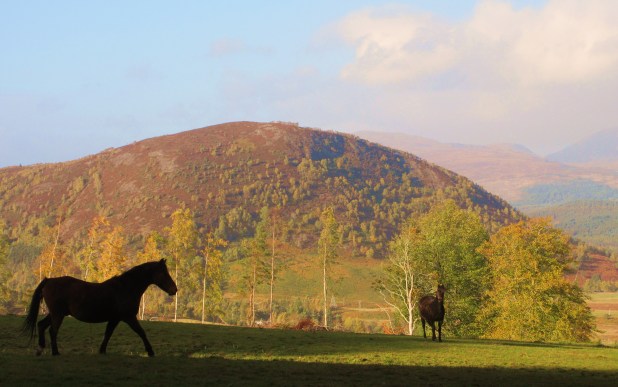
The Highlands of Scotland may not be the worst place in the world to find destinations—but it’s close. The roads aren’t marked. Alan says directional signs were purposefully removed to confuse German paratroopers in the war. Folks, the war is over.
Additionally, signs are small; street signs are erected so high up on buildings that they are above eye level; they are faded almost beyond legibility, and road signs are in both Gaelic and English making them too crowded to read. And roundabouts. The map may tell you to take the B999351 at the next roundabout. Four roads spin off in four different directions and not one of them is marked.
When I first arrived here five years ago, Alan and I headed to a memorial service. We never got there, in spite of following lines of cars on a one-lane road in two different directions and stopping to ask two different people out walking their dogs how to get there. It’s a good thing Alan wasn’t preaching—five years later, we still haven’t found the place.
Oh…and the death blow, “You can’t miss it.” Perhaps no one else can miss it. But I can. Trust me.

Yesterday we embarked on a trip the map said would take 29 minutes. Two hours later, we arrived at our destination. Today, we headed out on a 30-minute trip and made it home again within three hours. The road was not marked, so we took it to the end in both directions. Nor were there any numbers on buildings. Nor did the building we were searching for have a sign. So while Alan and I are both directionally-challenged…sometimes it’s not our fault that we get lost.
We have learned to enjoy the scenery while lost. We may be the first folks, for example, to know that the leaves are already turning.

I’m so thankful the directions God gives in the Bible are easily understood. Even a directionally-challenged person can understand, “Do not covet, Do not steal, Do not commit adultery…love the Lord your God with all your heart, mind, and soul.
Can’t miss it.
You Don’t Have to be a Rose to Smell Sweet
A few nights ago, our rough collie Angel Joy walked into the backyard and stood sniffing the breeze. It hit me too, the sweet fragrance of wild honeysuckle on a fence across the lane.

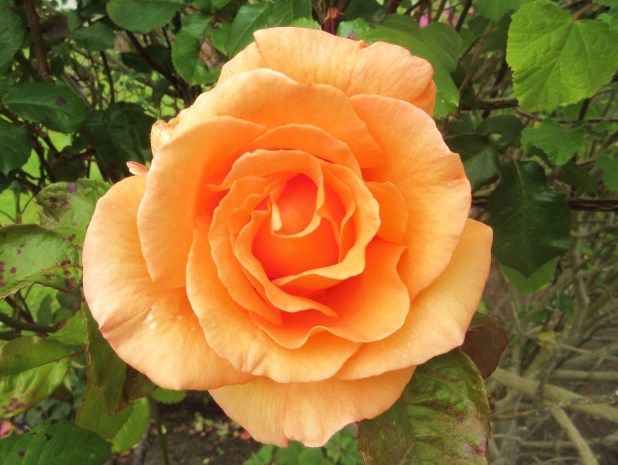
We have roses in the garden. They smell sweet when you bend over them and inhale, and they are lovely in appearance—but they cannot out-fragrance a honeysuckle, even though some people label the vine “a weed.”
You don’t have to be a rose to smell sweet.
Like honeysuckle, truth can be deceptive. Sometimes the rosy blossom of a lie looks more attractive than the stalwart form of truth—no matter how pure the truth smells and how badly the lie stinks.
When a friend called for clarification about three Bible verses, one of which seemed to contradict the other two, I was reminded of this. King Saul knew God had rejected him as king and had anointed David. For years, Saul sought to kill David. Twice, Saul was delivered into David’s hand and David could have killed his enemy and become king. Instead, David said, “I will not raise my hand against God’s anointed.” David wanted to do things right and wait for God’s timing.
Both I Chronicles 10:4 and I Samuel 31:4 say that Saul was wounded in battle. He asked his armorbearer to kill him so the enemy would not capture and abuse him, but the armorbearer refused to lift his hand against the king. So Saul fell on his sword and killed himself.
Then, in 2 Samuel 1:10, one of the enemies ran to David with Saul’s crown and bracelet and said that Saul was wounded and asked to be killed, and he killed him as requested. This was a lie. A rose-colored version which the unfortunate Amalekite hoped would bring him honor and rewards from David. After all, Saul had stalked David and attempted to kill him for years. Now David would be king. Surely David would reward him for killing his enemy. Instead, David said, “How was it you were not afraid to put forth your hand to destroy the LORD’s anointed?” David had him executed.
To the Amalekite, his lie held the beauty of a rich, blooming rose. It proved to be his death flower.
Truth does not always hold the beauty of a rose, but it always holds the fragrance of the finest flower blooming in God’s garden. Jesus said, “I am the Way, the Truth, and the Life. Then He died and rose victorious to show that we, too, can have everlasting life.
From weed to flower, whatever shape the Truth of Jesus assumes, its fragrance is always unmatched.

Seagull Attack
I love getting attacked by seagulls when I run around the grass track next to the school. Not because I’m a masochist—but because the attack seagulls are good parents.
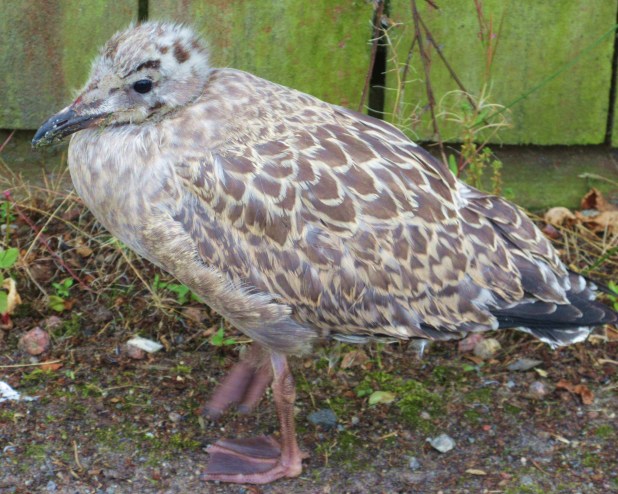
The gulls take their babies out into the field for flight lessons. When I run around the periphery of the field, one parent herds the babies into the middle of the field while the other parent tries to frighten me away. They love their offspring and are courageous when it comes to protecting them.
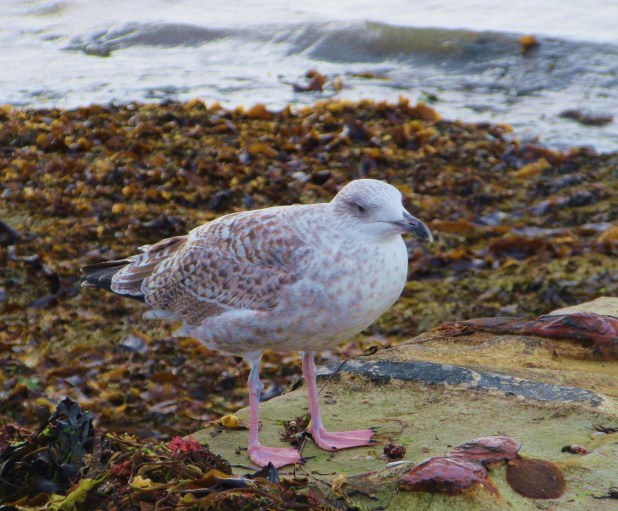
Wouldn’t it be a wonderful world if all parents loved and protected their children as fiercely as seagulls do? There was a great example of parents who do recently in Idaho when a cougar grabbed a four-year-old girl and her parents stormed the mountain lion and made if drop the child and flee.

Since my son’s birthday is August 19, this blog is in memory of him. There are some doctors who probably would have advised me to abort Luke: I was a single mom working two and three jobs to support him for most of his childhood; he was hyperactive, had learning disabilities, a speech impediment, and serious medical problems. From childhood, Luke had unshakable faith in Jesus and in prayer. He lived a victorious life, graduating in the top five percent of seniors in the State of Texas and delivering a speech at graduation. He learned to play the trumpet and piano, sky dive, scuba dive, rock climb, train horses, and fly an airplane. Luke was also kind and loved rescuing animals.

When he was four years old, I had no job, no place to stay, no money, and no vehicle. I was a new Christian. Luke and I had just started attending church. Luke was hearing Bible stories for the first time. He said, “Mom, pray for a truck. The Bible says that Jesus can do anything. Ask Jesus for a truck.” I was afraid to pray. I was afraid that if I prayed, Jesus wouldn’t answer, and that if Jesus didn’t answer, Luke might lose his faith—and that I might lose mine. Luke had no such qualms. He knelt beside the bed and asked Jesus for a truck. The next day…we had a truck!
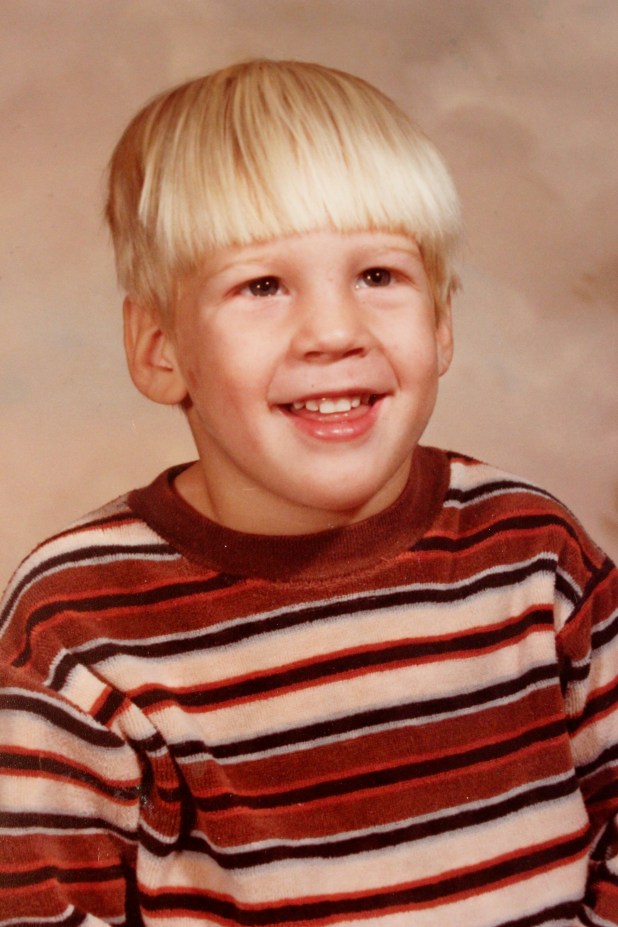
Luke invented “wind surfing.” He tied ropes to a black plastic tarp and let the wind skate him along the ground. We had an alcoholic living in the trailer next to us. We had invited Wallace to church and told him that Jesus could help him quit drinking, but Wallace never came—and he kept drinking. One day Luke was wind surfing in front of our house when a strong gust of wind picked him up and flew him through the air. He smacked into Wallace’s kitchen window. Wallace was sitting at the table drinking and looked up to see an airborne kid crash against his mobile home. A few days later, we met Wallace at the store. “I’ve quit drinking,” he said. “I figured it was time. The other day…I was sitting at my kitchen table drinking and I saw a kid fly past the window.”

Most people think it’s impossible to see the wind. I used to tell Luke that he couldn’t really see the wind—only what the wind was blowing. Then he took me up on a hill and made me look out across forty miles of desert. He described the wind—the patterns it made across the sagebrush…and I saw it. Luke was right. He could see the wind. He taught me to see the wind. It is one of the many priceless gifts in life that he gave me.

Just as the seagull parents had to teach their babies to fly and let them go, I had to let Luke go so he could fly—literally in his case. I was blessed to call Luke “Son.” Others knew him as USMC Major Luke Parker. He enlisted in the Marine Corps and worked his way up to Major. On November 17, 2013, age 37, Luke took his last flight straight into the arms of Jesus.
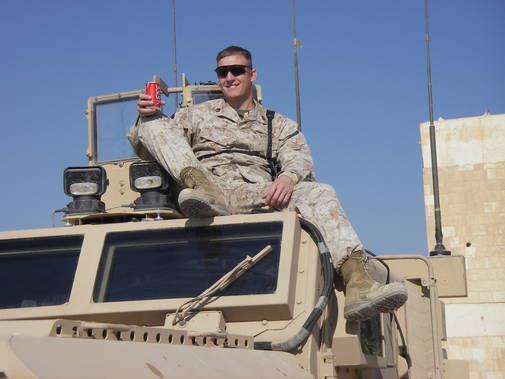
Bridge Beyond Betrayal is dedicated to Luke and contains the prophetic poem he wrote one year before he and his Focke Wulf crashed in North Carolina.
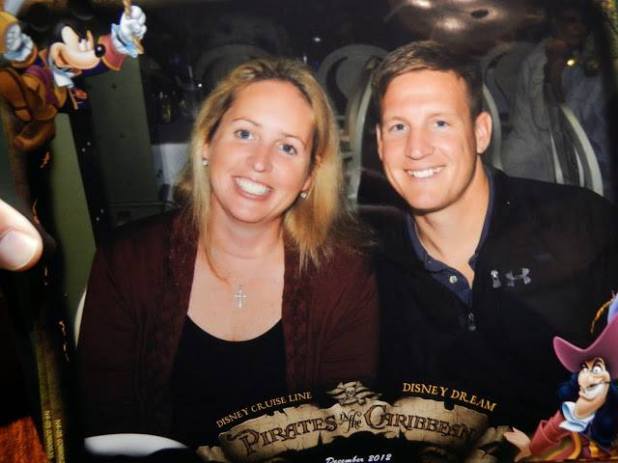
Happy Birthday, Luke! Fly high. I’ll join you soon.
http://www.amazon.com/Stephanie-Parker-McKean/e/B00BOX90OO/ref=ntt_dp_epwbk_0
Truth Kills
Truth is unpopular. Tell someone they’ve put on weight, have a messy house, are wrong, or that their dog is stupid—and see how quickly they walk away.
Some 2,000 years ago, the Man Who said, “I am the way, the truth, and the life,” was condemned to death and nailed on a cross to suffer and die. Today, Christians around the world are being imprisoned, tortured, and killed for telling the truth.
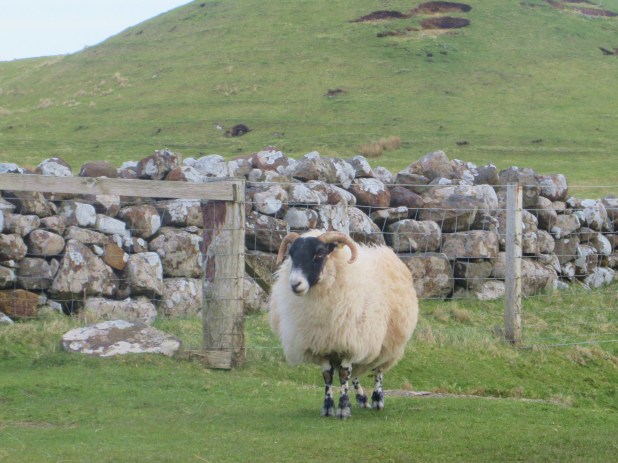
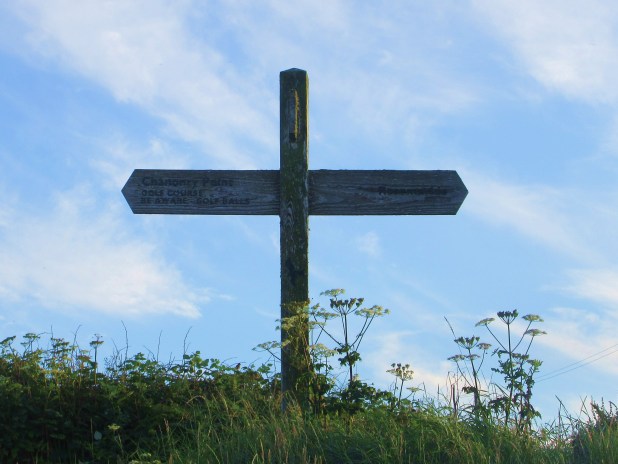
So, too, with Scotland’s Brahn Seer. Because there are only oral, and no written stories about him, some claim that Gaelic-speaking Coinneach Odhar never existed outside folklore. As in earlier centuries, written records in Scotland in the 1600s were rare. Some historians would likely doubt the existence of the Picts, who disappeared without a whisper in the 9th century, had not the Picts left behind marvelously carved stones that thwart attempts to decipher them for lack of a written language. Because the story of the Brahn Seer and Lady Seaforth rings true to human nature, and because I’m a writer and love great stories—I choose to believe what the students at Fortrose Academy believed when they erected a stone monument to him at Chanonry Point in 1969. The Brahn Seer was burned to death in a staked barrel of tar at the point…for telling the truth.

Coinneach Odhar worked for Kenneth MacKenzie, 3rd earl of Seaforth at Brahan Castle near Dingwall. He had acquired a reputation for possessing second sight and making predictions. When Lady Seaforth asked Odhar, he told her that her husband was enjoying sexual adventures with other women in Paris. She rewarded that truth by having him burned to death in a barrel of tar.

He predicted the building of the Caledonian Canal in Inverness. Author Alan McKean and I took our books on a trip down the Caledonian Canal and out across Loch Ness.

He predicted that the MacKenzies would come to ruin and their castle would be inhabited by a cow that gave birth to a calf in the uppermost chamber of the tower. In 1851, a farmer was storing hay in the ruined castle. A cow followed a trail of hay up to the garret and gave birth to a calf. The farmer left them there for five days so people could come witness the truth of the Brahn Seer’s prediction.

He predicted that when five bridges were built over the Ness River in Inverness, there would be world wide chaos. In August, 1939, there were five bridges…and Hitler invaded Poland.

He predicted that when there were nine bridges across the Ness River, there would be fire and calamity. The ninth bridge was completed in 1987. In 1988, there was an explosion at Piper Alpha North Sea Oil Production resulting in the worst offshore oil disaster ever, claiming 167 lives, and impacting ten percent of North Sea oil production.

While historians claim there are no written records of the Brahn Seer, his words are recorded as he stood overlooking land where the Battle of Culloden was fought in 1745. “Oh! Drumossie, thy bleak moor shall, ere many generations have passed away, be stained with the best blood of the Highlands. Glad am I that I will not see the day, for it will be a fearful period; heads will be lopped off by the score, and no mercy shall be shown or quarter given on either side.”
Another prediction was that, “The sheep shall eat the men.” As crazy and impossible as those words must have sounded in the 16th century, sadly, during the 19th century Highland Clearances families were driven from the Highlands by landowners who thought they could make more money grazing sheep. Families who had been farmers for generations were thrust into seaside villages and told to become fishermen. They knew nothing of fishing and scores of them starved or froze to death. Their croft houses on the farms were burned down behind them as they left to keep them from returning, and they were often unable to even take their possessions with them.
The Brahn Seer predicted that within a few generations, the chieftaincy of the Mackenzies would pass to a man who was deaf and dumb; all of his sons would die before he did; the ancient Mackenzie line would end, and a hooded girl from the East would claim his possessions and kill her sister. This would happen when all four of the great Highland lairds had some physical defect; buck-toothed, hare-lipped, half-witted, a stammer. It happened in the 17th century
Truth is seldom popular. Whether or not the Brahn Seer was a real person or a much embellished oral legend, truth can get a person killed. Jesus, Who died to take on the sins of the world and purchase eternity for us is a real and lasting example of the fact that—sometimes—truth kills.
http://www.amazon.com/Stephanie-Parker-McKean/e/B00BOX90OO/ref=ntt_dp_epwbk_0
History, Mystery, Endurance
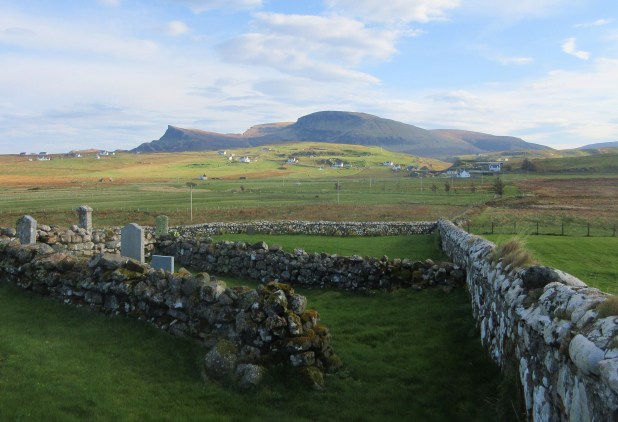
When I found a branch of a wild rose growing through a stone wall it made me ponder the history and mystery of endurance. I had just left the Groam House Museum in Rosemarkie, Scotland, which contains Pictish carved stones dating back to the 6th century AD after the Picts converted to Christianity.

The Picts are mysterious, thought by some to have been fierce warriors who painted or tattooed themselves. After carving beautiful, intricate patterns and designs that included Christian crosses, the Picts simply disappeared from history in the 9th century, leaving behind place names like Pitlochry, Pittenweem, and Pitsligo, and enigmatic standing stones which—lacking a written Pict language—have never been interpreted.

The recently discovered Pictish monastery in Portmahomack proves that at least some of the Picts were educated and capable of great art and architecture. Amazingly, the monastery, which housed 150 monks and workers, was built to the proportions of “The Golden Section,” or “Divine Proportion.” This 1.618 to one ration of dimension is found in spiral seashells and was used to construct the Notre Dame Cathedral in Paris, the Acropolis in Athens, and the Egyptian Pyramids. Along with the single-line carvings of wolves, salmon, and eagles, a piece of broken stone was found at Portmahomack with the Latin inscription: “This is the cross of Christ in…”

Scotland thrives on history and mystery. As enduring as the rose growing through the rock wall are the Highland Travellers, also called Gypsy/Travellers. Descendants of ancient Roma, they date back to the 12th Century and up until the 1950s, Travellers continued to traverse the Highlands in their brightly painted horse-pulled carts, supporting themselves with metal working and seasonal labor. Plastic replaced tin, motorized vehicles replaced horses, and the Travellers gave up Gaelic as their first language, replaced horses with motor homes and travel trailers, and learned new trades. Their nomadic way of life is a part of their ethnic and cultural identity. Unlike the Picts, they have not vanished into the pages of history—but their numbers continue to decline.

In his book “Highland Folk Tales,” Bob Pegg credits Travellers for keeping Scotland’s rich resource of folklore alive. Alec Williamson was born to Gaelic-speaking parents and knew only three English words when he started school. He and his parents traveled through Ross-shire—where the Groam House Museum stands—by horse and cart and lived in tents. His father taught the art of storytelling to Alec.
One of Alec’s stories involves Roddy from the “wee glen” of Glutan who left his wife and family to go to America. He never returned, never wrote, never sent money. The eldest son went looking for his dad. Passing a bar, he heard a familiar Gaelic song. Thus, he found his father and sent him home by ship. The father never strayed from home again.
Then there was a young man who went to Aonghas Donn (Gaelic, Brown-haired Angus) for a horse. He walked through the hills looking for the horse, and was approached by what he thought was a stray dog. The dog caught him by the arm. His only weapon was a wee penknife. He sunk the knife into the dog’s neck and twisted it until the dog let go of his arm, sank down to the ground, and died. His arm was so badly mangled that he couldn’t catch the horse. He used his shirt for a sling and went back home to tell everyone about the tiger-striped dog that had attacked him. He continued telling the story years later because, as he explained, “I’d never seen a dog that color before—tiger striped. You’d be surprised at what you might see or meet in the hills even yet.”

History, mystery, endurance. The rose in the wall brings me back to Picts. As a Christian, it’s comforting to know that Christianity was so strong in the Black Isle of Scotland as far back as the 6th century that Picts carved their faith in stones. We still carve our faith today. Stones not needed. We carve the same message of God’s love in our hearts.
http://www.amazon.com/Stephanie-Parker-McKean/e/B00BOX90OO/ref=ntt_dp_epwbk_0
The Cure
The Bible tells us that “In the beginning God created the heavens and the earth…and God looked at his creation and saw that “it was good.”

Then Adam and Eve sinned and sin entered the world, bringing death and destruction with it. God told Adam, “Cursed is the ground for your sake…both thorns and thistles it shall bring forth.” To me…that explains nettles, fire ants, scorpions—and all the other uglies and nasties. They came into the perfect world God created when sin ruined the perfection.

My first exposure to Scottish nettles was…rather embarrassing. That expression, “When you gotta go, you gotta go.” The gotta hit me during a long woodland hike soon after I arrived in Scotland from Texas. So I waded into high weeds away from the path to do the necessary. Let me just say…you don’t ever want to expose bare skin on any part of your body to nettles—especially not that part!

But where sin brought a curse, God placed a cure. Broad-leafed plants called dockens will stop the pain and burning when applied to the affected area.

Most recently, I accidentally ran the back of my hand across nettles when I was walking the dog. I couldn’t find a docken. We were eating dinner when I mentioned the pain to my husband. Alan looked at the redness and swelling…then…just like Brigadoon, he vanished. He was gone so long that I thought about going to look for him. He returned with docken leaves and they stopped the burning and pain almost immediately.

Because we are living in a sin-infested, imperfect world—there will always be nettles, either physical or spiritual. But where there is a curse, there is a cure. Jesus died to set the captives free from sin, pain, sorrow, illness, and the finality of death. He is the ultimate cure.
http://www.amazon.com/Stephanie-Parker-McKean/e/B00BOX90OO/ref=ntt_dp_epwbk_0
Wordplay
Scotland and the U.S. are two countries divided by a common language.

Even in the U.S., Texans stand apart in the language department with their “y’alls” and “fixintos.” If you plan to travel to Scotland from a U.S. destination, there are a few things you need to know: you don’t get your bangs trimmed. Here, it’s a fringe.
You need to know that sidewalks are pavements. Bus drivers get cranky if you continue standing on the pavement in front of the bus after you are directed to move to the pavement. Or, as they would say here in Scotland, they get crabbit. You can cause a stushie if you continue to blether with a friend while a crabbit bus driver waits for you to take a dauner on the pavement so he can skyte away with the bus. I have met one woman bus driver; she was a quean, a wee cheerful, braw, bonnie lass. But most of the bus drivers seem to be male and dour.
If it’s a grey, rainy day—which some part of every day usually is—it’s dreich and your breeks may get wet. Folks here wear trousers, not pants. Pants are considered whatever is under the breeks and not a topic of conversation.
If something vanishes quickly in Scotland, it doesn’t go “poof.” I’ve been warned that using that word can make a homosexual crabbit because it’s a derogatory term. It can cause a muckle stramash. Only an eejit would be glaecit enough to act like a wee nyaff and open up the possibility of a skelping. Gives me sweaty oxyters just thinking about scunnering someone, because I’m a sook.
When you come over to visit, do your shopping early. Stores, and even some restaurants, close by 5 p.m., and “late” hours for Christmas are 6 to 7 p.m. If the stores are hoachin, och! You’ll just have to get used to standing in a long queue, or look for the “Way Out” sign. Don’t girn. Practice being thrawn if it’s something you really need.
Most folks from the U.S. know about the spelling differences: colour, tyre, realise, programme, harbour…the KISS (Keep It Simple Stupid) idea hasn’t caught on here. Dish soap is “washing up liquid.” Toilet paper is “loo roll” or “toilet tissue.” Trash bags are “bin liners” and there are no trash cans—they’re bins.
Spaghetti sauce is “Bolognese.” Bread is white or brown—not whole wheat, but you can’t get whole wheat flour—that’s whole meal. When it comes to a beef roast, it’s called “silver side,” and ground meat for hamburgers is mince. You can’t get ham either—it’s gammon. Don’t forget that KISS doesn’t operate on this side of the pond.
Most folks from the U.S. know that cars in the UK drive on the wrong side of the road, the hood is a bonnet, and the trunk is a boot. But did you know that the windshield is a windscreen?
Yards are gardens, even if there are no flowers or vegetables. You won’t find okra, and zucchini squash is called something I can’t pronounce. You may not recognize the pronunciation of garage and aluminum. Even words like schedule and Isaiah have a different sound to them and folks here don’t submit resumes. They submit curriculum vitae (CVs).
As for dill pickles? Bring them with you.
Three of my books, “Killer Conversations,” “Bridge to Brigadoon,” and “Bridge Back” are set in Scotland, so I’ve tried to introduce Scottish words and phrases to add color and place. I have to admit it; I’m spoiled. Every book I’ve written has all 5-star or 4-star reviews, with an average of 5-stars…except “Killer Conversations,” which rated a 1-star review from someone who said that even though I was from America, I should know that there are no sidewalks in the UK, they are pavements, and there are no street vendors.
Well, I went back to the street vendor who inspired one of the characters in “Killer Conversations” and cringed when I found out his name was Kem. I had named him “Kurt.” Too close for comfort! Same with Miz Mike #6, “Bridge Back,” where the character I spun in my imagination and named “Blair” has a counterpart named “Blaine”! That’s spooky! Perhaps I should start numbering my characters.
I don’t mind the 1-star review, but I hope the reviewer realizes that if Americans read that Sandy “ran down the pavement” instead of the “sidewalk,” they will quit reading. Who wants to read a book about a kid who doesn’t have enough sense to get out of the street?
Scotland is a lovely country with unmarred scenic views in all directions. As I am writing this blog in the middle of July, we haven’t had summer yet. At least we haven’t had to light a fire in the fireplace today. I think we are all hoping that “global warming” will at least bring a couple of days of summer to Scotland!
The folks in Scotland are rich, varied, kind, and friendly in character. I won’t offend them by saying that they are a lot like Texans in some ways, because they like the notion of being different. In other words—great folks! They take offense to the 1950s Hollywood musical “Brigadoon,” and things here that are overly Scottish are labeled “brigadoonery.” Hope this blog doesn’t fall into that category. I’d hate to lose my all 5-star rating for “Bridge to Brigadoon!”

