Leaving Scotland

If all goes according to plan, I will be flying away from Scotland in two weeks and landing in the arms of my family. I haven’t seen them in nine years because Alan became too ill to travel.

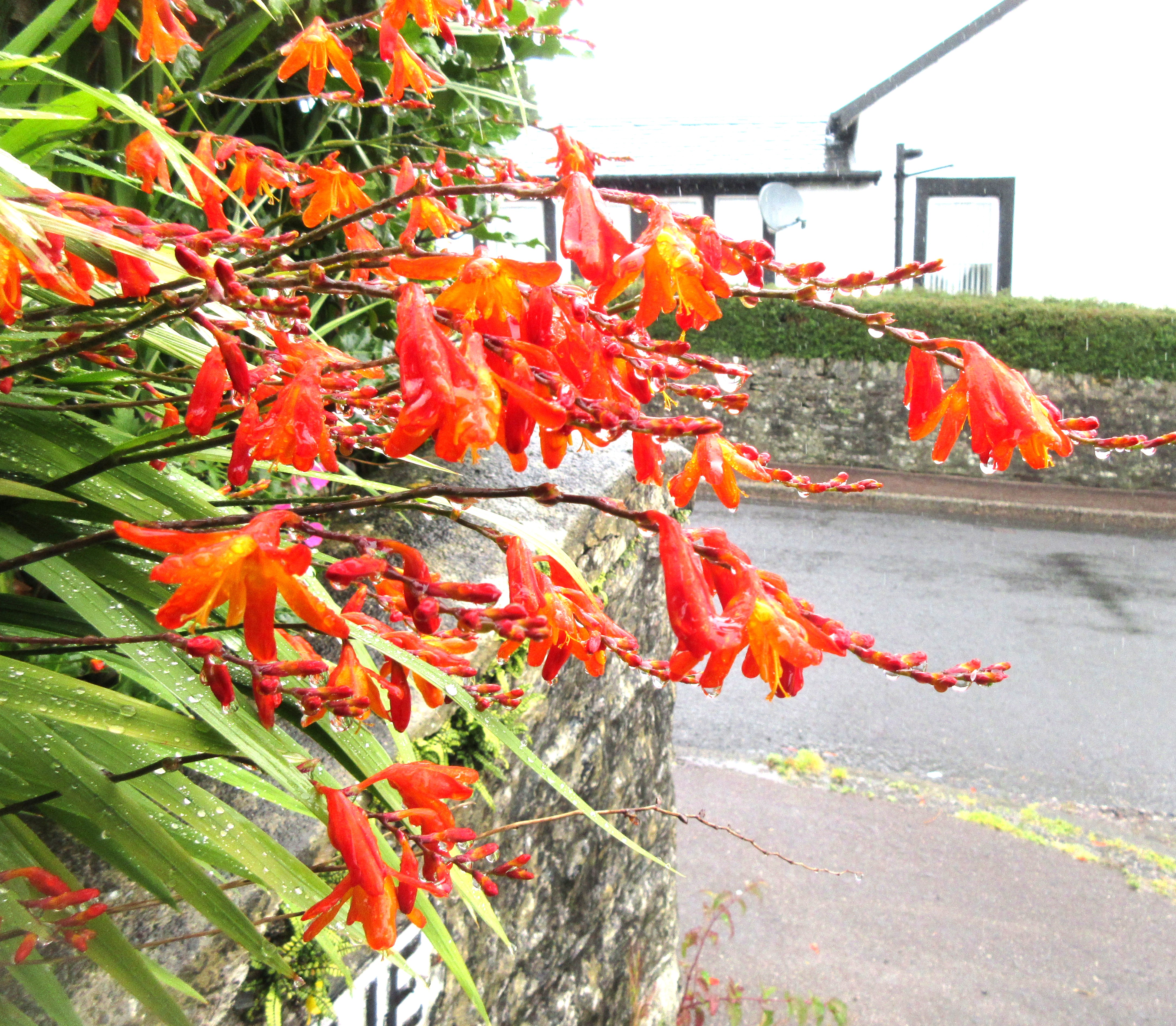
Scotland is an altogether lovely and mysterious country, and the people here are warm, friendly, and wonderful. If the weather was not so grey, gloomy, dreich (wet and rainy), and cool to cold—the entire world would crowd into Scotland and ruin the scenic beauty.

God put me in Scotland for these past 15 years. I have no doubt of that. By every law of probability known to science, I should never have met Alan—much less married him and moved to Scotland. It was a God thing. I often wonder if I have accomplished what God sent me to do. I was here to hold Alan’s hand as he took his last earthly breath. I have met and made lovely friends that I will carry in my heart and prayers until I take my last earthly breath. And adventures? They color the pages of many of my 51 cozy mystery books, especially the ones set in Scotland like “The Moss Murders.”

But have I finished what God sent me to do?

I have helped teach Children’s Church at my church, a privilege and a blessing. I have fed birds, pet neighborhood dogs, rescued sea gulls and hedgehogs, and supported local businesses. I learned to drive on the wrong side of the road and passed my driving license exam on the first attempt. But have I done what God sent me to do?

I’ve done what my character Zara did in my most recent cozy mystery, “The Moss Murders.” Zara explained, “I studied 480 test questions so I could take the test for Indefinite Leave to Remain in the UK. Do you know what kind of things I had to learn, Cleve? I had to learn that the first British curry restaurant opened in London in 1810. I don’t even like curry. I had to learn the owner’s name—Hindoostane. What did I need to learn that for? The only way I could remember how to spell it was comparing it to voodoo, and then on the test—it was multiple choice. I felt cheated.”

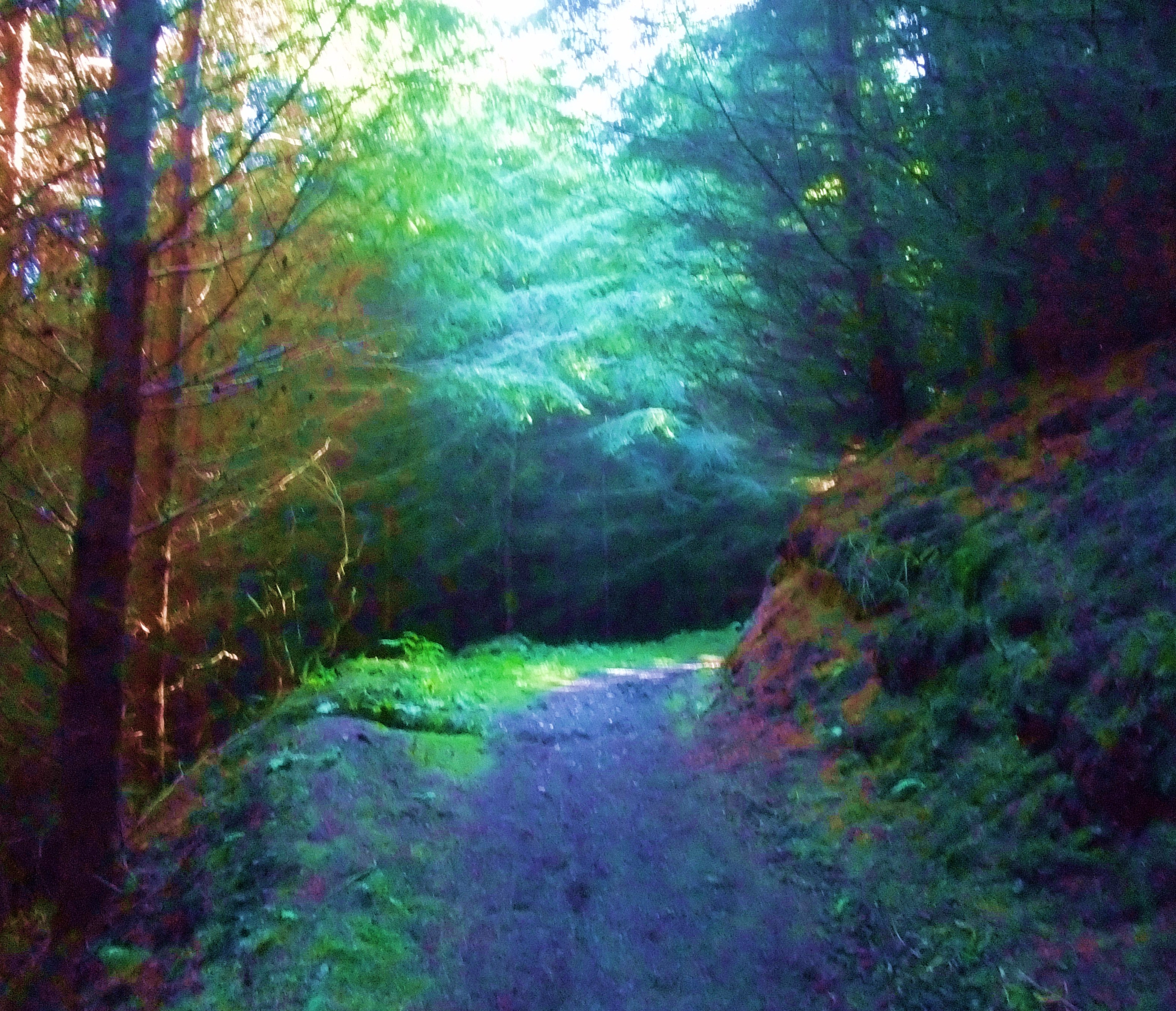
I survived my first experience with roundabouts. I hit one going to Inverness and went around, and around, and around, and around—because I didn’t know how to get out of it. I climbed over a mountain and entered an enchanted forest where a ghost army of mushrooms guarded the path and the trees grew so close together that daylight never touched the ground to dry the muddy, slippery trail. I searched for the Loch Ness Monster. I learned a slew of Scottish words like blether, shogly, haver, muckle, peely-wally, stooshie, dreich…but have I accomplished what God sent me to do?

I ate two evening meals on the same day because I fixed dinner before going to have “tea” with a neighbor. I didn’t know that “tea” is the evening meal. Even dogs have their “tea” at night.

I have learned to recognize words that the Scots pronounce differently than my Americanism—words like garage and aluminum that I didn’t understand the first time I heard them. And “zed-e-b-r-a,” which is how zebra is spelled here.

But have I done what God sent me to do?

Last night when I was walking Savannah, a group of older teen girls stopped to pet her, as they have done for years. As they were leaving, two of them called out, “God bless you,” before I could.

Some might consider a new house a blessing. Or a new car. Or an unexpected deposit in their bank account. Or a gift of bling. I don’t need any of those material things. Hearing those girls call out “God bless you” filled my heart with joy and sent tears trailing down my face. In a small humble way, perhaps I have accomplished what God sent me to do.

“That you may tell it to the generation following. For this is God, our God forever and ever; He will be our guide even to death.” Psalm 48:14

Amazon.com: Stephanie Parker McKean: books, biography, latest update
Of Frogs and Snakes…and Umbrellas

The best laid plans of mice and men…sometimes work. If mine do, I will be leaving Scotland at the end of the month to go home to family and friends in the U.S.

Scotland is a lovely country with lovely people. There are things about Scotland that I will miss. Fourteen of my 51 books are set in Scotland. These include the two most recent, “The Moss Murders,” “Body in a Bush Murder,” four Fog Buster mysteries featuring older amateur sleuths with age-related disabilities, “Body From the Scottish Castle Mystery,” three Texas Miz Mike mysteries, a stand-alone one-of-a-kind mystery, “Killer Conversations,” and one of the funniest, “Lost For Murder.”

Living in Scotland has enriched my life. Not all enriching experiences are positive. Learning to drive on the wrong side of the road, navigate roundabouts, drive a big car on narrow roads lined with stone fences, and “hold it” on road trips because there are few public bathrooms have all been challenging. The hardest challenge has been learning to live with nearly daily rain, grey skies, cool to cold temperatures “summer” to winter and all seasonal variations in between—these have been teeth-gritting challenges. As I write this blog at 10 a.m. in the morning, half of Savannah’s towels are already wet and are hanging around the house on every protrusion that sticks out far enough to hold them while they dry.

Scottish words are lovely and it’s been fun to learn them and use them. Feeling blue? Call up a friend for a blether. Angry? Don’t be glaikit. Control your temper and don’t cause a stooshie. Day dreaming? Don’t haver the day away. Fence a bit shoogly? Reinforce it. Sick? Are you peely wally (physical illness) or scunnered (fed up)? Someone invite you to tea? Find out if they are serving hot tea and biscuits (cookies), or if they are serving the evening meal. If you make a mistake about this, they will think you are numpty.

The fourteen books I’ve written with a Scottish background take advantage of the richness of Scottish words. The most recent one, “The Moss Murders,” perhaps more than the others. To me it’s a lovely, almost poetic book, in spite of being a murder mystery. And if you read it and are “blown away” by whodunit, you are not alone. I didn’t know myself until the last couple of chapters. I had a different culprit in mind when I started writing, but the characters took over and wrote their own baddie—which left me scrambling to go back into the front of the book to plant clues for readers.

As I walked Savannah in the rain this morning and watched the advancing army of umbrellas of different heights as children headed for school, I thought about things (besides family and friends) that will delight me to see again. Joining the list were amphibians and reptiles; frogs, tadpoles, turtles, lizards, snakes. They must have frogs here in Scotland because they have a marvelous word for them—puddocks, but for nearly 15 years, I have searched burn after burn (streams or creeks in the U.S.) without ever finding one. It is too cold for lizards and turtles although some people keep tortoises as house pets.

Leaving Scotland will be a sad time and I will dearly miss the friends I’ve made. It will be a happy time, too, because I haven’t seen my family in nine years—nor have I seen a lizard, snake, or turtle. And when I attempt to explain some of the common wildlife we have in the U.S.—raccoons, skunks, armadillos—to our children’s church class, they are as bamboozled as I was when I met my very first roundabout and drove around, and around, and around, and around, because I didn’t know how to get out of it. I fear the children think I’m clyping.

“To everything there is a season, a time for every purpose under heaven.” Ecclesiastes 3:1.

It’s time for me to get back to my wonderful family. And to a land of warm temperatures, and amphibians, and reptiles.

Amazon.com: Stephanie Parker McKean: books, biography, latest update
A Calamity of Errors

The eight-book series featuring Texas Miz Mike was a blast to write—partly because Miz Mike was an adventure-seeking klutz. My protagonist did the ridiculous things I do: shut my nose in the refrigerator; trip over the dog bed and break a toe; lean over to find the seatbelt clasp because it’s fallen to the bottom of the car and tumble out into the parking lot; open the car trunk only partially to keep the pouring rain out and straighten up under the trunk latch, and etc., etc., etc.

A calamity of errors can be funny. The 1953 Technicolor Western musical featuring Doris Day is proof of that. Highly recommended for anyone who hasn’t seen it.

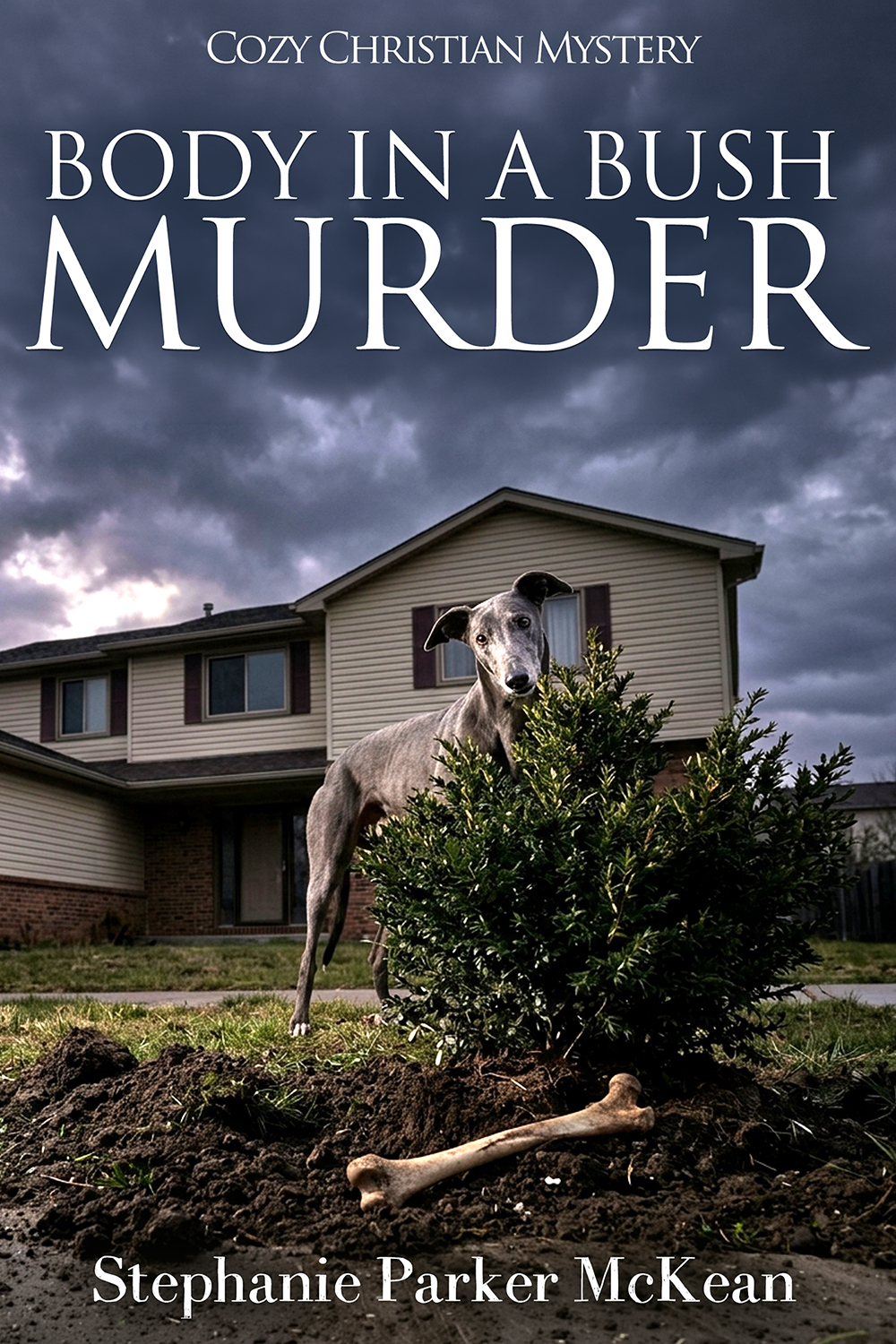
My newest book, “Body in a Bush Murder” features a different brand of calamity of errors. The protagonist moves to Scotland from Georgia, and hates it because of the cool, rainy climate, and nearly constant rain. The differences between driving in the U.S. versus Scotland; the differences in food, language and the pronunciation and spelling of words, and the difference in accommodations—after the chaotic life she left behind her in the U.S. and then finding a child’s skeleton in her garden—who could blame Skye for finding solace in alcohol?

Attractive neighbor Gareth blames her. He not only encourages her to quit drinking before she can’t, but then adds to her stress by bringing her a “baby” Great Dane dog—a baby who weighs 155 pounds and loves to fly.

Errors continue to build as Skye searches for the identity of the child killer and seeks to make peace with her new country. And new love? Except Gareth hates alcohol and—to use a great Scottish word—is “scunnered” by Skye’s drinking. Skye refuses to acknowledge that she has a drinking problem. She can control it, can’t she? In spite of Gareth’s assistance that making friends with alcohol is like keeping a pet rattlesnake in a box and trusting it not to bite.

While Skye’s continued drinking push them apart, their search for the child’s killer brings them together.

Body in the Bush Murder – Kindle edition by McKean, Stephanie Parker, Potter, Victoria M. Mystery, Thriller & Suspense Kindle eBooks @ Amazon.com.

Scottish Restrooms

Here in our part of Scotland what we know as restrooms in the U.S. are sometimes labeled “WC” for “water closets.” Woe to the unsuspecting tourist who desperately needs a toilet and has no idea what the small “WC” sign on a building means.

Toilets in this part of Scotland are called “loos.” And the toilets are frequently labelled “male” and “female.” Humorous considering the fact that they clearly do not reproduce. Finding public toilets as you head north from here to the Black Isle is as difficult and frustrating as finding the end on a clear roll of tape.

Public toilets are so scarce that travelers must resort to extreme measures when they can’t hold it any longer. Or at least—I have. Leaning against the back of a vacant building. Hanging onto metal racks for support in the back of a closed store. Hiding behind the open door of the car on the side of the road. Not. Fun.

However, for folks like me—necessary. If I were not so adamantly opposed to drugs I could make a fortune peeing for drug tests.

And, when one can find a public toilet—dangers abound. The metal hardware has been painted over so many times that when one latches the door it’s a fight to get it open again. And, because the partitions stretch from floor to ceiling—there is no way to climb over or go under when the door won’t open again. On one road trip, it took two men and a handful of tools to extricate Alan from a toilet stall when he couldn’t open the door. The men had to unscrew and take the hinges off the other side to let him out.

Me? I’m so claustrophobic that I take my chances with not locking the door. If some desperate fellow traveler bustles in and plops down on my lap—I’ll just hope they have good aim.

And cold? Scotland never has what a Texan would consider a summer. When it gets over 70 degrees, folks complain that they are “broiling.” Many of the WCs along the way are not heated. Cold metal seats, cold carved granite seats—they are out there, folks!

Some bathrooms—even in a large hospital across the water still have big tanks of water hanging on the wall under the ceiling. A long tube runs down from the water tank to the toilet bowl. It flushes by pulling a chain with a wooden handle at the end.

Many of the more modern toilets have buttons on the top. The buttons are divided in half. The user is supposed to push the big part of the button to flush poo, and the smaller part for pees. The problem is that those buttons are hard to press down—especially for older folks. It is perplexing to me that the hospital across the water with the tanks on the wall would install push button toilets when so many of their patients lack the strength to push the buttons.

Perhaps it’s in poor taste to write a blog about toilets—but I don’t think so. God has marvelously created us. Our bodies are designed to take in and let out. We can’t survive if the process stalls.

Our bodies are not one member, but many members. “God has set the members, each one of them, in the body as He pleased… those members of the body which seem to be weaker are necessary.”1 Corinthians 12:22.

When I first arrived in Scotland from the U.S., I used to aggravate Alan by calling Scotland a “third world country.” But I’ve been stuck in one of those public toilets myself—with no one within hollering distance to help. Toilet dramas have found their way into several of my Miz Mike books and other books of mine which are set in Scotland.

Amazon.com: Stephanie Parker McKean: books, biography, latest update
Staying Dry in the Rain

Here in Scotland, one can walk in the rain without getting wet. The phenomenon is called Scottish mist, mizzle, smirr—but whatever one calls it—it is delightful. Cars need to use their wipers. The steady rainfall is visible. Yet walkers can pass through it and come out again with dry hair and clothes.

For the rest of my life, I want to walk in the Scottish mist and avoid downpours. I’ve never been at the top of anything. I grew up with two sisters and four brothers, all younger than me, all brilliant, all scholars in school—always on the honor roll, always at the top of their class. Me? My high school average for math is “F.” By some fluke—I did make it into college and even made the Dean’s List a couple of times…until I was forced to take math. I did the logical thing for someone with my prowess in the subject. I quit.

Because of my non-achievement in educational circles I am always staggered when I understand something that seems easy to me, but that other people don’t seem to comprehend.

Recently, I ran across a “news” feature on the internet that was repeated on a “news” broadcast on TV. The subject was: “How Dangerous is On-line Bullying?” The article—and the “news” broadcast went into great detail about how damaging cruel on-line “attacks” are to people, especially teens.

Say what? Talk about much ado over nothing. Unplug.

We suffered no damaging on-line attacks when I was a teen. We were outside playing baseball with friends, riding horses, riding bicycles, walking to visit neighbors, mowing our lawns, helping our parents in the garden, fishing, enjoying being young and alive. Parents didn’t take us places unless it was urgent. Our feet provided transportation. We walked in the mizzle, slipping through our teen years untouched and unscathed by internet content.

The same peace avails us now. Unplug from the internet. Plug into God.

It saddens me to watch teens stroll along the sidewalk, heads bent, looking at their phones. They miss the flowers along the way. No wonder so many people nowadays don’t believe in miracles—they pass by them without ever seeing them because their eyes are glued to their phones.

And the teens’ parents? Heads down looking at their phone screens and ignoring their children, those who walk with them, and the miracles around them.

Getting attacked? Unplug. Walk in the Scottish mist.

There will be problems, struggles, doubts, and uncertainties in this life. We live in a fallen world of vicious storms and battering circumstances, but this world is not our home. We are pilgrims, passing through this world to the next—heaven—where nothing grows old and there is no more sickness, hurting, sorrow, parting, or death. We are on a fantastic journey. Why choose to allow something like inane on-line content steal our joy? Unplug.

Walk in the Scottish mist and take time to experience the miracles God has placed along the path.

God wants to give us “beauty for ashes, the oil of joy for mourning, the garment of praise for the spirit of heaviness.” Isaiah 61:3. He wants to take us through this world to our home without letting the smirr turn into a downpour that drowns our spirits.

It’s simple. Unplug from people and plug into God.

Amazon.com: Stephanie Parker McKean: books, biography, latest update

Marketing Midges

Achilles, the greatest of the Greek warriors in mythology and the hero of the Trojan War was defeated by a weakness in his heel. The term “Achilles heel” is used even today to refer to an otherwise strong person’s weakness.

Scots can be thankful that midges have an Achilles heel. Midges are small, nearly invisible flying insects that bite and irritate people and animals. Irritate relentlessly.
They fall in blinding clouds making life a misery. It is impossible to have a friendly blether (chat) with friends and neighbors on summer walks—because if one stands still—the horrible biting creatures descend. They get everywhere—even under woolly hats and up sleeves.

Thankfully, midges have am Achilles heel. They can be outdistanced if one walks quickly enough. They fly slowly. This gave me the idea of marketing midges. Just think: if midges can be caught, stored in boxes, and exported to other countries to stop political unrest—everyone wins. Open up the boxes, release the midges and the midge-miserable dissenters flee. This won’t restrict freedom of speech, but it will disperse fractious crowds. Meanwhile, capturing and shipping midges will build a new industry giving Scotland a venue for employment. It will boost the Scottish economy.

God looked down on His creation and proclaimed everything He made was good. Therefore, I think that scorpions, fire ants, and midges must have been introduced by God’s enemy. Satan must have emptied out some of the ugly, hurtful creatures from hell on earth in defiance after God threw him out of heaven for his treachery and rebellion. But whatever the devil does to make our lives miserable on a daily basis—God can take the worst and turn it around to use for our good.

Marketing midges could bring peace to protests by sending protestors fleeing from their obdurate stands to get away from the tiny tormentors.

If God’s promise from the Bible is true—and I know it is—“All things work together for good to those who love the Lord,” why shouldn’t the scourge of Scottish midges be turned into something profitable and good?

It’s an idea, that.

Amazon.com: Stephanie Parker McKean: books, biography, latest update
The Reality of Dreams

The idea of “going for your dreams” has been one of my life’s mantras; have a dream; dream a dream; reach for your dream. If you can dream it, you can do it.

When I was in elementary school we used the SRA reading program. I loved it. You went to a color-coded box, picked out a story at your reading level, read the story and answered the questions. Then if there was enough time, you could repeat the process. The stories were fascinating. One of my favorite was about the Loch Ness Monster. I was absorbed by that story. My dream was to go to Scotland and search for the Loch Ness Monster.

I live in Scotland now. I have been to Loch Ness and looked for the monster. Several times. I have incorporated those experiences, and the legend itself, into several of my books.

I haven’t spotted Nessie yet, but I fulfilled my dream of looking for her—even on a tour boat once. But about that dream…the reality of it saddens me. I miss my Texas, USA, home. I miss my family. Most of all, I miss Texas heat and dry and scrumptious Southern cooking.

For those who don’t know, Scotland is cold. Always cold. Even in “summer,” temperatures rarely get above 70F, and if they do—people in Scotland hate it. They say they are “broiling.”

Here in Dunoon, Scotland, it rains an average of 185 days a year. Last year it was more. It rained for days on end. Here we are two months into the new year—and it is still raining. It is still dark. It is still cold. The sun has only shown itself about three times in this new year—and all three times—it was bitterly cold even with the sun.

Many people have dreams. Some lament, “I don’t think my dream will ever come true.” Leave it in God’s hands. Perhaps the reality of the dream is not as quintessential as the dream itself.

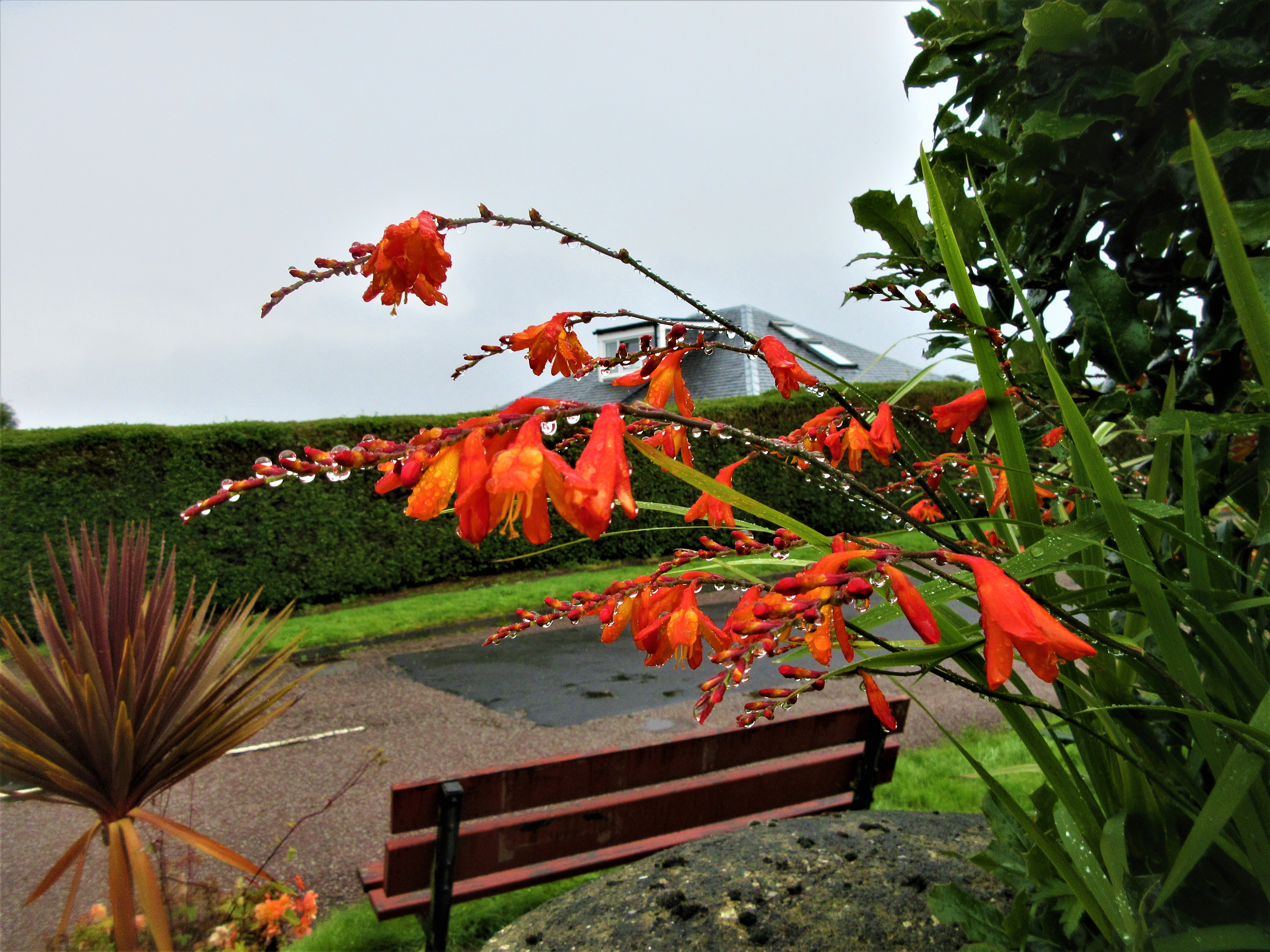
I’m not bashing Scotland, nor am I expressing misery over my life, or over chasing dreams. I would zealously guard both the life I have now, and my dreams from others offering to exchange with me or wanting to rob me of them. I have written and published 46 Christian cozy mystery-romance-suspense books while living here in Scotland. All I have ever wanted to do since I was a child is write books. I am living my dream. I have taken brilliant photos—brilliant not because I took them, but because of the subject matter. Scotland is a beautiful country from coast to coast. But it is cold, it is wet, the sky is grey.

Dreams are marvelous. Never give up on your dreams, but make sure they line up with God’s plan for your life. “For in the multitude of dreams and many words there is also vanity. But fear God.” Ecclesiastes 5:7.

Amazon.com: Stephanie Parker McKean: books, biography, latest update

Kindness in Dunoon, Scotland

The news media is filled with horrible images and stories about atrocities in the world. Yet, there is kindness.

Because husband Alan can no longer walk we do a lot of traveling with him in a wheelchair. Everywhere we go, folks here in Dunoon, Scotland, wrap us in kindness. If Savannah’s leash gets caught in one of the back wheels and I have to help Alan out of the chair and have him hold something while I turn the chair upside down to free the leash—I get shouldered out of the way by eager helpers. Strangers not only take over coaxing the leash out of the chair—they also support Alan as he stands waiting to get back into his chair.

There is chaos in the world, but there is also kindness.

At the entrance to every shop, someone opens the door. They often come in twos or threes and hold Savannah while I maneuver the chair inside, and hold the door open, and tug on the front of the chair to help me get it over the hump. If it’s a restaurant, they run ahead of us and move chairs out of the way so we can get through.

In spite of all that is wrong with the world, there is also kindness.

When Alan spent five months in the hospital, a lovely couple from our church walked Savannah for me every day while I visited Alan in the hospital. Other people in the neighborhood also offered. Friends dropped by to visit him and our church even held a service in the hospital for him.

In a world of hurt, hate, and anger—there is also kindness.

It rains here in Dunoon almost daily. It is 40 degrees colder than my Texas blood likes. When my son Luke was stationed in Hawaii he called excited by the beauty around him. “Mom, everything green has a bloom on it and it is always the perfect temperature.”

The climate is miserable in Dunoon, Scotland, yet there is beauty.

When I am tempted to whine and complain, I remember Luke’s words. Then I tell myself that Dunoon is like a cold climate Hawaii. Everything is vibrant green and almost every green thing has a bloom on it.

It’s amazing how gratitude and thankfulness can transform the world around us and how much kindness there is if we just look for it.

“Finally, brethren, whatever things are true, whatever things are noble, whatever things are just, whatever things are pure, whatever things are lovely, whatever things are of good report, if there is any virtue and if there is anything praise worthy—meditate on these things.” Philippians 4:8

Amazon.com: Stephanie Parker McKean: books, biography, latest update

Little Joys

It is a long walk—a lot of it uncovered and exposed to constant rain—between the little ferry in Gourock and the train station where one can either catch the train, or go through the building and get a taxi or a bus. Before when I made this walk frequently, I was on crutches. I was always the last one to get from the ferry to the front of the station building. When I first began visiting Alan in the hospital nearly every day on the Thursday after Christmas, I was off crutches—but still the last one to reach the front of the building. But now, after all these weeks of walking that route—I can keep up with the frontrunners! I was in the group of the first three folks today to reach the front of the building. Just a little bit of joy to season the day. (I was probably the only one to know that I was ‘racing’ the others!)

Savannah went on a walk with me two nights ago. “Wait,” you might well say. “Don’t dogs usually go on walks with their owners?” Not Savannah. Not after dark. Since the November 5 Guy Fawkes Night fireworks, Savannah has refused to go outside after dark. Every night when the rain is not pouring down I put Savannah’s collar and leash on her and walk to the front door. The leash comes with me. The collar and the dog stay behind. So having her willingly go on a walk with me after dark was a big thing. And it was just another bit of joy to season the day.

My newest Christian cozy mystery-romance came out in paperback today. I got home to find two paperback copies had been dropped through the mail slot. A bit of joy to season the day.

While I was walking around waiting for the ferry yesterday afternoon, I got to take an interesting photo of a building out on a pier, the roof covered with seagulls, and a boat rocking gently in the fog. Today as I waited for the ferry, I got to watch pigeons diligently choose nesting materials and fly off with them sticking out of their beaks. Little joys.

Joy doesn’t have to come in something the size of a shipping container or a new vehicle. It can be small and quiet, a whisper passing through the heart. The Bible says, “In everything give thanks,” 1 Thessalonians 5:18.

A thankful heart finds joy in little things.

Amazon.com: Stephanie Parker McKean: books, biography, latest update

Endings

After a two-year hiatus due to covid, the Cowal Family Gathering in Dunoon, Scotland, kicked off this year with a huge attendance. Not only that—for once it didn’t rain and it was even…gulp!…sunny.

Writers rarely get days off, so I didn’t attend the festivities that were practically in our backyard. However, when I walked Savannah past the stadium we watched the excitement and happiness on the other side of the chain link fence. It was wonderful to see families—many complete with their canine members—having fun. The joy was electric.

Then came Sunday morning. Instead of electric joy, I felt deflating sadness as I heard clinks and clatters and saw tents and carnival equipment coming down. Endings. I hate them. Such a rare and perfect day of sunshine and celebration after two long years of lockdown—I doubt anyone was ready for it to end.

Some writers get excited when they write “The End” on their books. Not me. It means the fun and joy and excitement I was privileged to experience for approximately 300 pages is suddenly gone. It means that I need to hunt down another idea and come up with 300 new pages—even though my head feels as empty as the fluff from last spring’s dandelion stalks.

So many sad endings of things we don’t want to end: vacations, a good meal, visits with family and friends, spring, summer, comfortable shoes, favorite clothes—and death.

Thankfully, some endings are good: the end of pain, cold, disease, sorrow—and death.

Death makes both lists of endings because death isn’t real. It’s a shadow, an illusion. With Jesus, there is life beyond this life we are living now…and Heaven is the end of sorrow, parting, illness, pain, disease. We do not belong to this earth. We are passing through to our eternal destination in Christ Jesus.

Still…I hate endings. Especially the end of spring and summer. Death I do not fear. But winter and snow give me the cold shivers.

Amazon.com: Stephanie Parker McKean: Books, Biography, Blog, Audiobooks, Kindle