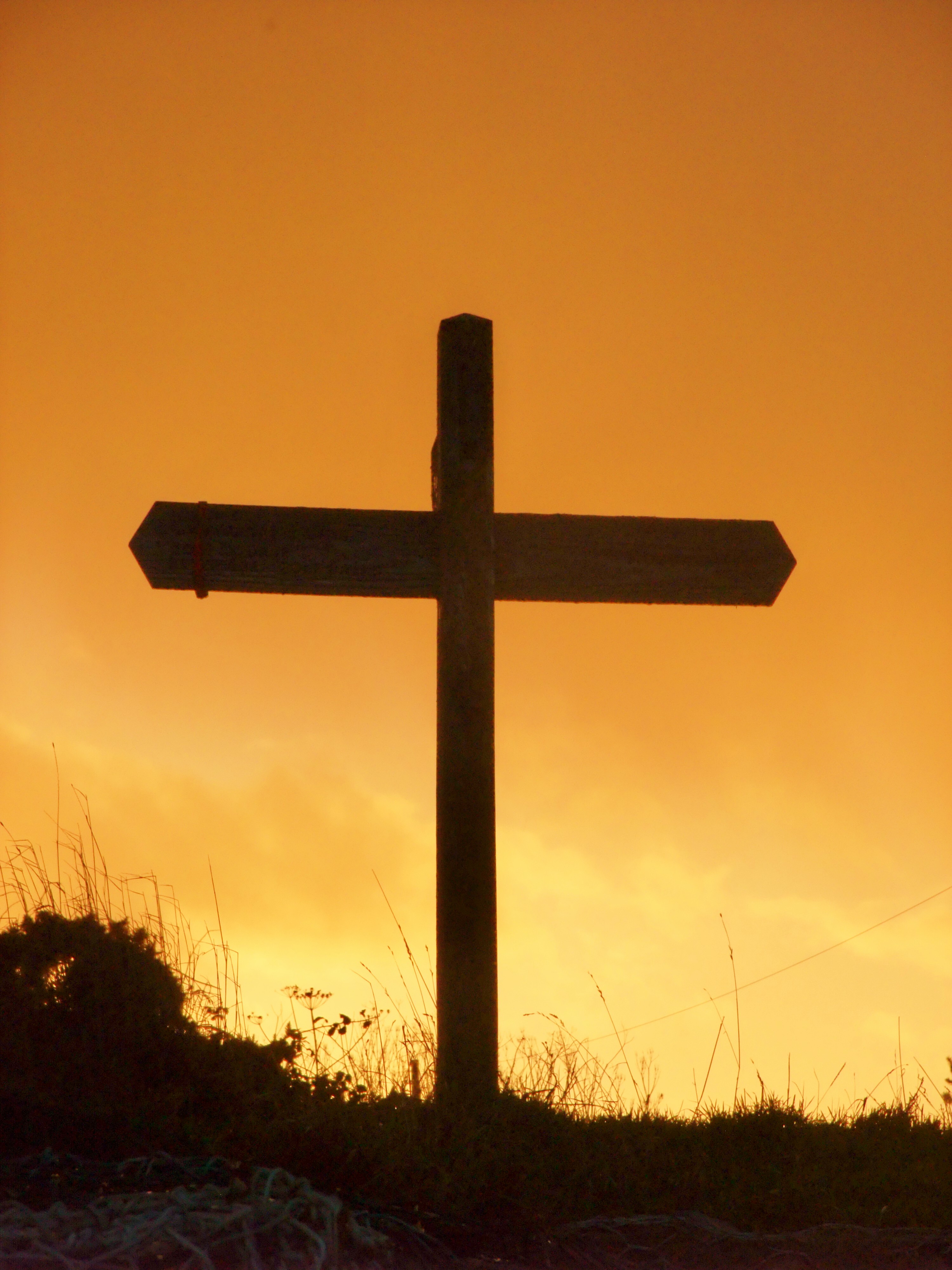
Most Costly Valentines’ Day Card Ever Printed

The most costly Valentines’ Day card ever printed was printed in blood from the nail wounds in Jesus’ hands and feet. Nails didn’t hold Jesus to the cross – love did.

In pro-life adventure-romance Love’s Beating Heart, Dena’s Hispanic step-grandparents have just learned that their granddaughter ran away from home to protect her pregnant best friend Natasha from her parents’ demands that she get an abortion:

Julia nodded her head wisely. “Yes, it is just, m’ija. Just that you loved this young

man. You both thought you were old enough for adult love. You did not understand. Real

love, it means the wait for marriage.” She shook her head. “Not to worry, m’ija, Jesus

forgives you. You must forgive yourself. The baby inside you is because you loved too

much and too young. Yet, you have been wise. You make the right choice for Baby. God

will bless you for that. The unborn have no voice. They have no choice over what

happens to them. But you, m’ija. You have become the voice of your child. Of this, God

is joyful.”

Tears bubbled up in Nathasha’s eyes and dripped heavy crystals down her

freckled cheeks. She whispered, “I don’t want anyone else to know! I’m too

ashamed. I just want to die!”

M’ija,” Julia said gently, “to die you cannot do. Baby would die. You have made

a mistake and you are sorry. Jesus forgives. Since He has forgiven you, why do you not

forgive yourself? You think perhaps that you are bigger and better than God and have

sinned such a great sin that Jesus is not big enough or good enough to forgive?”

Tasha hid her face on Dena’s shoulder while Julia explained the girl’s plight to

Eino. He nodded thoughtfully at Natasha, “Julia is right. Listen to her, m’ija. She is very

wise, my wife, my viejita. What she says is right. You gave the boy you loved the gift of

your love. You were too young to understand the cost.

“You say you are ashamed. But our Jesus is greater than our shame. He has

forgiven. But to forgive yourself, that must you decide. To wrap the guilt around you and

hang on to it is to tell Jesus He is not strong enough, or good enough to forgive you. It is

like to tell Jesus that it did no good to die on the cross for you. And, now, you do the right

thing. Protecting this little one. This I very much believe.

“You loved too young and too fully. Our Jesus, He did not die for the

right we do. He died for the wrong. Now, m’ija, “if you won’t forgive yourself, what

more can Jesus do? Already, He has died for you. He has nothing left to give. To die

again, He cannot do. You must decide to forgive yourself. Listen to Grandma, my vieja.”

Like Natasha, we must choose whether to accept the Valentines’ card Jesus wrote with His blood, or to reject it. Nothing in our past is too big for Jesus to forgive.

I wrote Love’s Beating Heart to keep other women from making an irreversible decision – to get an abortion – that has the power to torment them with guilt for the rest of their lives. I know. As a teen who was repeatedly raped, I was forced to have two non-medically supervised backwoods abortions that nearly killed me. Daily, I live with the knowledge that two children that would have been born to me were murdered.

If you know someone facing a pregnancy decision, gift them with a copy of Love’s Beating Heart. Next to the Valentines’ Day card that Jesus wrote with his blood, Love’s Beating Heart may be one of the best love gifts they ever receive.

https://www.smashwords.com/books/view/307104

http://www.amazon.com/Loves-Beating-Heart-ebook/dp/B00CGNPG9O/ref=sr_1_1_title_0_main?s=books&ie=UTF8&qid=1378320298&sr=1-1&keywords=love%27s+beating+heart

Image

What Puzzles a Monkey?

Stately Chilean Pines hide away in the Scottish Highlands not far from where we live. They are also called “Monkey Puzzle Trees.”

Monkey Puzzle Trees were brought to the UK as ornamental trees in 1850. Seeing one of the intriguing trees for the first time, a person purportedly said, “It would puzzle a monkey to climb that.”

With twisted, interlocking branches and broad, sharp needles, it might indeed prove difficult and puzzling to climb one of the trees.

Monkey Puzzle trees mainly serve as distinctive focal points for gardens. They have edible seeds, but it takes up to 40 years for the trees to produce seeds. While they are labeled “hardy,” Chilean pines can not tolerate exposure to pollution.

Monkey Trees share parallels with Christian life. Consider a popular cliché, “God works in mysterious ways.” When bad things happen in the world and when bad things happen to good people, even Christians are puzzled. We are often asked by a disbelieving world to elucidate the inexplicable. Jesus told his disciples, “To you it has been given to know the mystery of the kingdom of God.” (Mark 4:11) That mystery, according to 1 Timothy 3:16, is “the mystery of godliness: God was manifested in the flesh, Justified in the Spirit, Seen by angels, Preached among unbelievers, Believed on in the world, Received up to glory.”

While we understand that Jesus left Heaven and lived on this earth as both man and God so He could die for our sins and be raised from the dead victorious over sin and death, it still puzzles us when bad things happen to good people. Perhaps the best answer is found in a poem written by an anonymous author:

Not until the loom is silent

And the shuttles cease to fly

Will God unroll the pattern

And explain the reason why.

The dark threads are as needful

In the Master’s skilled hand

As the gold and silver

In the pattern which He planned.

Without pain and sorrow, would we appreciate joy? Without hardship, would we enjoy comfort and success? Without the shadow of death casting itself over our lives, would we live each day to the fullest? Would a lack of opposites turn us into apathetical, ungrateful people? That’s a puzzle. God holds the connecting pieces.

Like Monkey Puzzle trees, Christians should produce seeds in our lives: love, joy, peace, longsuffering, kindness, goodness, faithfulness, gentleness and self-control. Just as it takes years for Monkey Puzzle trees to produce seeds, it takes time for believers to produce Christian fruit.

Like Monkey Puzzle trees, we should be hardy. We are instructed to “endure hardship as a good soldier of Jesus Christ.” (2 Timothy 2:3)

Finally, we should be as sensitive to soul pollution as a Monkey Puzzle Tree is to environmental pollution. We must guard what we see and hear. Philippians 4:7 instructs, “Whatever things are true, whatever things are noble, whatever things are just, whatever things are pure, whatever things are lovely, whatever things are of good report, if there is any virtue and if there is anything praiseworthy – meditate on these things.”

A Monkey Puzzle tree might puzzle a climbing monkey, but as Christians – we should not allow unforeseen and unexpected tragedies and trials to puzzle us. We may not be wise enough to know the answers to all lives puzzles, but we know Jesus. He holds the connecting pieces.

http://www.amazon.com/Stephanie-Parker-McKean/e/B00BOX90OO/ref=ntt_dp_epwbk_0

Image

Gateposts

Here in Scotland, a rock mansion was built in 1790, complete with ornate stone gateposts.

After he inherited it, owner James Douglas Fletcher spent an enormous amount of his wealth creating “a mansion to supersede all others.” Rosehaugh premiered as an elaborate four-square, three-story, 60-room showplace of unbelievable opulence, built with the finest construction materials, and filled with valuable furnishings from around the world. The mansion to supersede all others was completed in 1893. A mere 66 years later, the mansion was demolished. Today, 121 years later, all that remains of Rosehaugh are two ornate stone gateposts leading to nowhere.

That’s a good warning to us. We build our lives every day. Are we building something permanent that will remain when we leave this earth, or are we building grand and eloquent gateposts to nothing?

It is not wrong for Christians to have and to spend money. The Bible encourages us to work. It promises that in all labor there is profit. It tells us to work with all our might. It affirms the right of Christians to get paid for working. “He who plows should plow in hope, and he who threshes in hope should be partaker of his hope…the Lord has commanded that those who preach the gospel should live from the gospel.” (1 Cor. 9:10-14)

If we work and are rewarded financially with a good income, we should have the freedom to spend what is left after God’s tithe on whatever will benefit us in this life so we can continue to be productive. But how wide is the gap between what we really need and what we build? Are we building to impress others, or building gateposts in Heaven?

Once I lived under a bridge in the back of a pickup truck, painting signs for meals and washing myself and my clothes in the river – even on the coldest days of winter. I had little, but I had everything I needed.

Once I lived in an open-ended garden center. I had no bathroom facilities, no kitchen facilities, no air conditioning in the 100-plus degree summers and very little heat on the 16-degree winter days. I took showers with the cold water in the garden hose and slept on a lawn chair mattress on top of three wooden planks. Toads, birds, a wild cat, and other critters came in and out to visit. I had everything I needed. I had Jesus.

I’ve been without things that most people view as necessities, but I’ve never been poor.

“The blessing of the LORD, it makes rich.” Proverbs 10:22.

Jesus encouraged, “lay up for yourselves treasures in heaven, where neither moth nor rust destroys and where thieves do not break in and steal. For where your treasure is, there your heart will be also.” (Matthew 6:20, 21)

As commanding as it was in its time, Rosehaugh is gone. Two stone gateposts stand as reminders that not even an enormous amount of wealth spent on things in this world can secure them or make them permanent.

Jesus is the only foundation for eternal life. Living for Him is just as possible under a bridge or in a derelict half-shell of a building as it is in a palace or grandiose showplace like Rosehaugh.

Jesus was born in a stable. His first visitors were poor shepherds, hated and despised by the wealthy. We have a God that cannot be bought or sold for money; One Who only accepts the freewill offering of our hearts.

http://www.amazon.com/Stephanie-Parker-McKean/e/B00BOX90OO/ref=ntt_dp_epwbk_0

Image

Sailcats, Crucifix Fish & the New Year

Sailcats, Crucifix Fish & the New Year

Kindhearted volunteer Marshall Scott answered the U.S. Marine Corps call to rescue me at the Charlotte, North Carolina, airport on Thanksgiving Day after I attended my son Luke Parker’s memorial service. Marshall took time away from his family Thanksgiving to make sure I made my connecting flight. Additionally he shared the legend of the Crucifix Fish.

Jesus on the cross is outlined on the front of the sailcat’s skeleton, complete with the hilt of the sword that was plunged into Jesus’ side. The back of the skeleton displays the Roman shield. When you shake the cross, you can hear the dice being tossed for the Lord’s clothing.

When I got back to Scotland, my research disclosed that gaftopsail catfish witness God’s love in life, too. For example: Jesus died on the cross and went down for hell for three days to take the keys of death and hell away from satan and secure eternal life for us. The sailcat lives on the soft bottom of the ocean – but unlike other catfish – it doesn’t feed there. Just as Jesus loves and accepts everyone of every color, every country, every social status in life, the sailcat feeds up and down through the entire water column.

Male gaftopsail catfish brood their young in their mouths until they hatch. During this entire period of up to 65 days, males do not eat. What a great parallel of Jesus’ nature; His willingness to sacrifice even His life that we might be born again and grow into His image. Jesus never leaves us nor forsakes us when we are weak.

Sailcats are saltwater catfish. As Christians, we are instructed to be salt in the world. We should walk in love, but also in truth. Our truth – salt – has great healing power.

Crucifix Fish skeletons are popular for jewelry, but rare. Imagine my delight when I received a Christmas present from the Scott family, a box containing a Crucifix Fish! It will be freely shared here, going so much further than just our house.

What a great New Year it would be if we all took lessons from Crucifix Fish: witness Jesus openly both in this life and in the memories left behind when graduating to heaven. Love and accept others, no matter how different. Get out of the comfort zone and dare to be salty! Put others first. For 2014, I want to live like a Crucifix Fish.

Texas Eugenia Thornhill, in my new Christian mystery-romance-suspense “Fear of Shadows,” reminds me of the lessons of the Crucifix Fish. She is too self-reliant and self-sufficient to need God until she solves the mystery of her fear of shadows. The truth almost destroys her. There is power in the Cross of Jesus, but to tap into it – Texas would need to get out of her comfort zone and get salty. Can the proud, independent Texan who embraces one rebellion after another do that?

http://www.amazon.com/Fear-Shadows-Stephanie-Parker-McKean-ebook/dp/B00HGLRS7O/ref=la_B00BOX90OO_1_6?s=books&ie=UTF8&qid=1387739222&sr=1-6

Image

The Real Christmas Tree

(Christmas memory, Major Luke Gaines Parker, Aug. 19, 1976 – Nov. 17, 2013)

From the time he was two until he was 11, I was a single parent to my son Luke. We spent seven years in the Great Basin Desert of northern Nevada, exploring deserted caves, ghost towns, and mountain trails. I had told Luke how my siblings and I would go out into the Georgia woods on our property and find the perfect pine tree to cut down and take home for Christmas each year. One year, Luke decided we should go out into the desert and bring home a Christmas tree.

We headed up rough mountain tracks – hardly roads – in search of a real Christmas tree. Trees of any kind are rare in the desert. But we finally found a scraggly, twisted mountain juniper. Luke was delighted. He cut it down himself and we took it home and decorated it, largely with decorations that he made himself.

My seven-year-old son had a real Christmas tree that he had chosen himself. We thought it was beautiful. Enter well-meaning adult visitor. Said visitor looked at the tree in disdain and said, “The least you could do is buy your kid a real tree for Christmas. That’s the ugliest thing I’ve ever seen.”

Imagine Luke’s heartbreak at being told that his tree was ugly and his mom didn’t love him enough to buy a real tree. Truthfully, I didn’t have sufficient funds to spend on a Christmas tree. We had eaten peanut butter and jelly sandwiches on Thanksgiving while the rest of the country ate turkey and watched football games on TV. We didn’t even have a TV.

Off goes officious visitor and returns with a real Christmas tree, professionally decorated and presented to us in a condescending manner that tempted my southern upbringing to “slap the tar out of him.” For the sake of Luke, who now had a real, bright, beautiful, glowing Christmas tree, I bit back both retorts and violent retributions.

Happily convinced that he had improved a single parent and child’s Christmas cheer, the visitor left. Before the engine noise of his vehicle faded into the desert, Luke said, “Mom, I didn’t want to hurt his feelings, but now that’s he’s gone – can I get my real Christmas tree back. It’s prettier than this one.”

We retrieved scraggly mountain juniper and displayed it with honor in the living room. We added some new decorations from the professionally decorated tree, which we put outside the back door to entertain coyotes and ravens. “Luke,” I asked, “I agree that your tree is beautiful, but why do you like it better than the big one?”

“Cause, Mom. It’s like Jesus. It’s real.”

“What makes it more real than the one outside?”

“Jesus made it and planted it. I loved it the first time I saw it, just like Jesus loved me before I got to know Him. Love is what makes things real, Mom. I thought you knew that.”

The real Christmas tree stayed with us until its memory was a whisper of dry needles scattered across the carpet.

Links to books by Stephanie Parker McKean: 

https://www.smashwords.com/books/view/387341

http://www.amazon.com/Stephanie-Parker-McKean/e/B00BOX90OO/ref=ntt_dp_epwbk_0

Image

Why I Hate Christmas

I hate Christmas.

Hate it because I love giving and Christmas is the perfect season of the year for giving – yet I never have enough money to buy all the things I want to give.

I hate Christmas because imaginary Santa has replaced real Jesus, the Reason for the Season.

I hate Christmas because the emphasis is put on commercial sales rather than on the birth of the Lord Jesus Christ and the gift of eternity that He gives to the world for free.

I hate Christmas because it’s associated with snow and it must be cold to snow.

I hate Christmas because it’s been hijacked by atheists and special interest groups. School children can color pictures of Santa and reindeer on rooftops, but not the manger where Baby Jesus spent His first Christmas. School children can sing nonsense songs about a snowman, but not “Joy to the World, the Lord is Come.”

When Bob, or Marty, or Mary, or Susan have a birthday, we sing, “Happy Birthday, Susan, Mary, Marty, Bob, etc. But on the day that is set aside to celebrate the birth of Jesus, the Savor of the world…we dare not mention His name for fear of offending someone and are expected to say “Happy Holidays” instead of Merry CHRISTmas.

But, really, could anyone hate Christmas?

I love Christmas lights. Jesus is the Light of the World. His brightness is reflected in every glittering bulb that knocks a hole in darkness.

I love Christmas trees. Some equate Christmas trees to pagan history and spurn them. Jesus made trees. Wood was important to Jesus during his lifetime on this earth. He worked with His stepfather Joseph, a carpenter. He carried His cross on His bleeding back. He was crucified on a tree. Some claim a dogwood tree held the Lord Jesus. They point to the blood-stained petals in the shape of a cross with a crown of thorns in the middle. When I look at a Christmas tree, I don’t see a pagan symbol. I see the celebration of creation, redemption and victory over death.

I love Christmas because I love giving. Even though I never seem to be able to give everything I want to give at Christmas, I love a day set aside for giving instead of receiving – small kindnesses like taking baked goodies to neighbors or providing meals for the homeless.

I love Christmas because families come together. Before his death in a plane crash on November 17, my son Marine Corps Major Luke Gaines Parker was planning to fly me from Scotland to North Carolina to spend Christmas with him. He gets to spend his first Christmas in eternity with Jesus while I spend it down here missing him – but I still love Christmas. Every bright and colorful light will remind me of the blessing I had being his mother, however briefly.

So I don’t really hate Christmas. I love Christmas. I love Jesus, the Reason for the Season. And if I never received another Christmas gift in my life, I would be joyful because I’ve already received every blessing of God in this life. I was chosen to be Luke’s mother, and I have the eternal gift of salvation, purchased for me by Jesus at the cost of His blood.

Then there are the added gifts God has bestowed on me; husband and fellow author Alan T McKean, our rough collie dog, Angel Joy, and the gift of writing.

So, Happy Birthday, Jesus! And to all, Merry CHRISTmas!

http://www.amazon.com/Stephanie-Parker-McKean/e/B00BOX90OO/ref=ntt_dp_epwbk_0

DSCF6177

Love Stinks

It takes courage to love – because love stinks.

Okay, so I write Christian mystery-romance-suspense books. I should march through life expounding a giddy procession of clichés about love’s virtues. But honestly – love stinks.

Love stinks because only those we love possess the power to hurt us. We can be callous and indifferent when taunted by enemies, but when someone we love criticizes us, we shatter.

Love stinks because it ends. I met a fellow dog walker today. We fell into each others arms and cried – me because my son had graduated from earth to heaven, she because her loyal doggie companion had done the same. No matter what the object of one’s love, the pain of loss is devastating.

Husband, wife, friend, lover, companion, child, pet, wildlife, flower, tree – every object that we find the courage to love will be lost to us someday. I can write romance novels. I can write happy endings. But I can’t take the hurt out of love. I can’t make it smell good.

Yet, without love, life would be a desert wasteland. Love splashes life and color into every drab corner of human existence. Love fires the souls of writers, poets, dreamers, achievers. Love is the only heart condition that makes living worth the pain and effort. The Bible promises that love never fails.

Love stunk for Jesus, too. Because He loved us, Jesus allowed Himself to be mocked, whipped, have His beard plucked out and thorns pounded into His head. Love nailed Jesus to the cross. Love kept Him there. He could have called angels to rescue Him, but Jesus chose to stay on the cross and die for our sins. Love stinks.

Jesus spent three days in hell – because I’m bad, not because He was bad. Then Jesus snatched the keys of death away from satan, and rose victorious. Jesus broke the power of sin and death and handed us the victory.

Without the stinking love of Jesus, Heaven would be out of reach for us.

Love won’t stink in Heaven. Love will be a fragrant perfume that never dissipates and that lasts for all eternity.

So perhaps love doesn’t stink. Perhaps I can keep writing romance novels, some with happy endings. When sorrow finds a resting place inside my heart, a rose will bloom in its shadow.

http://www.amazon.com/Stephanie-Parker-McKean/e/B00BOX90OO/ref=ntt_dp_epwbk_0

Image

Knife to the heart

There’s no knife to the heart in this short blog about Major Luke Gaines Parker who graduated from the U.S. Marine Corps to Heaven on Nov. 17, 2013 – except for the wound left in the heart of his mother. But there are knives in the story – so keep reading!

Luke isn’t dead. His plane crashed. The outer shell of his body will be buried at Arlington National Cemetery on Tuesday, Dec. 3, but Luke went straight from the sky into the arms of Jesus. So many people have poured out love, support and praise for Luke that I wanted to share a bit of what made him special.

I was raised an atheist. When Luke was four, I had only just discovered Jesus and started reading my Bible and going to church. We had no vehicle and sometimes we nearly missed the bus home from my work. So my four-year-old said, “Mom, why don’t you pray for a truck?” I was afraid to pray for a truck. What would happen to Luke’s faith if we prayed and didn’t get a truck? What would happen to mine? Luke had no doubts. He prayed for a truck. We got one the next day.

Luke read his Bible and believed it. He read that with faith, a person could move mountains. So when he got warts, he asked Jesus to remove them. Jesus did.

When our truck was sputtering and I didn’t think we’d make it home, Luke slapped his hands confidently on the dash and said, “Get the hens, Satan. Get the hens.” Puzzled, I asked him about the hens, only to find that he meant, “Get thee hence, Satan.” God wasn’t confused. The truck made it home.

From snakes and turtles to all things bigger and smaller, Luke loved animals and rescued them. He saved songbirds from bee traps and raised a one-legged baby raven. I found him hanging upside down in a tree one day teaching a baby opossum how to climb. When he ran a marathon in New York City, a bird landed on his shoulder. He fed it drops of water until it revived and flew away.

Luke accomplished everything his heart set out to do. When he wanted to learn to play the trumpet, he did. When he wanted to learn to play the piano, he did. When he wanted to join the Marine Corps and was told he couldn’t because he needed a steel rod to straighten his back, he got prayer for his back. Jesus healed his back and Luke started running up to eight miles a day – every day – to prepare for basic training. He worked his way up in the Marine Corps from enlisted to major. He graduated from college even though he froze during tests. He learned to fly a plane, then bought his own plane. He flew in air shows and preformed aerobatics. But that’s not why I’m so proud of him.

Luke walked with God. When he was in basic training, some of the guys got drunk and tried to get Luke to drink. He refused. When their mocking and taunts continued, Luke got into his bunk and covered himself with a sheet. In the morning, Luke’s mattress was slashed all around his body. One slash had just missed his heart.

When Luke was in Iraq, one of the men wrote in the newsletter, “No matter what we do, we can’t make Captain Parker cuss.”

Luke loved his wife and daughter. He was a great dad to his little girl. He walked with God. The Marines lost a man. I lost a son who walked with God.

Image

Life is never long enough

Today, November 19, 2013, I learned that I must say goodbye to the best son any mother ever had, Marine Corps Major Luke Parker, who was killed in a plane crash Sunday. Life is never long enough when you love someone.

When I look back to my time as Luke’s mother, I know I was blessed by the LORD that He chose me out of all the other women on earth to be Luke’s mom.

Luke was hyperactive before hyper became a buzz word. At the doctor’s office, other children sat in their mother’s laps. Luke jumped off furniture, tore around the room like a wild fox, and shouted with laughter when I tried to catch him. When I finally caught him and attempted to restrain him, he screamed so loudly that we were taken into a waiting room in the back. There wasn’t enough space for him to bounce and run there, and by the time we left the doctor’s office I needed treatment for a raging headache. The Marine Corps was the perfect career for his boundless energy. He began training before he was out of high school, running four to six miles a day in every kind of weather.

Luke was born loving animals and they sensed that and loved him in return. Once when he was walking in New York, a thirsty bird landed on his shoulder. Luke feed the bird drops of water until it recovered and flew away. With Luke’s help, we rescued and saved dogs, cats, ravens opossums, frogs, tadpoles, snakes, lizards. I walked outside one day to find Luke hanging upside down in a tree teaching a baby opossum how to climb.

When Luke was four, the “experts” at a children’s clinic in Reno, Nevada, informed me that Luke had learning and developmental issues and would never do well in school or be particularly successful. My answer was, “As long as he loves Jesus and serves Him, I don’t care.”

The experts were wrong and Luke achieved everything he ever wanted to do. When he decided he wanted to play a trumpet, he learned. When he wanted to learn to play the piano, he took a few lessons and wound up playing in church. He was a skilled artist and poet, and in spite of the fact that he said he hated writing, he was entrusted to write newsletters for his Marine Corps unit. He decided he needed a college diploma and graduated from Stephen F Austin. He decided he wanted to learn to fly and earned not only a pilot’s license, but also his instrument and instructor’s ratings. He fell in love with an old army jeep and bought it and rebuilt and painted it from the ground up, learning as he went. He decided he wanted to buy a plane and found one of the only 19 surviving Focke Wulf planes in the world, which he kept in pristine shape. He and the plane went down on Sunday, Nov. 17. If he could have chosen the way to go – that’s what he would have chosen. From the sky into the arms of Jesus.

I could be proud that Luke made the rank of Major; that he graduated from college; that he and his plane performed in air shows; that he ran marathons. I am proud of all those things, but what I am most proud of him for is for having been a great dad to his daughter and walking with God.

Luke read his Bible nearly every day and prayed constantly. He would want me to use this opportunity to encourage you to consider where you will be when you die and make sure it’s heaven. You’ll get to see him there! Because of Luke, one of my favorite Bible verses is 3 John 4, “I have no greater joy than to hear that my children walk in truth.”

Proud of you, Son. Thank you for walking in truth. I’ll see you soon!

Image

Feather in the Wind

The old cliché birds of a feather flock together proves itself daily here in Fortrose, Scotland. Crows congregate in the stand of evergreen trees along Rosemarkie Beach and seagulls monopolize the rock-strewn mouth of the stream that gladdens the glen. Being sociable critters, they do mix and mingle – but at the end of the day – they are totally segregated.

Jesus named God’s greatest commandments as loving Him first, then loving other people as much as we love ourselves. First John explains: “For this is the message that you have heard from the beginning, that we should love one another…let us not love in word or in tongue, but in deed and truth…let us love one another, for love is of God; and everyone who loves is born of God and knows God…God is love.”

Jesus’ Holy Spirit draws Christians together. Like birds, we gravitate toward other Christians in joyous fellowship. Unlike birds, however, we should never segregate ourselves from non-Christians. The way we conduct our lives may be the only Bible that some people ever read. We need to be close enough they can see the print!

The famous passage in Ecclesiastes states, “To everything there is a season, a time for every purpose under heaven.” There is a time and a reason for segregation. It’s called sin. Christians are commanded by the Bible to come away from sin and be separate.

Just as the ground at the cross is level and everyone born into this world has an equal opportunity to reach out to Jesus for salvation and forgiveness, so too are sins level. Viewing actions from our human perspective we condemn murder as the ultimate crime. Yet God hates all sin. The same God who said, “Thou shalt not murder,” also called profanity, gossip, evil speaking, pride, and anger sins and forbid them. Under God’s law, the penalty for sin is death. Any sin. Anger as well as murder.

Thankfully, Jesus died for us so that we can be forgiven and have eternal life. We don’t have to die for our sins. Jesus already did that. Even so, to know something is wrong and do it anyway is rather like nailing Jesus to the cross again. That’s why things like clean conversation and lifestyle, both in my life and in my books, is important to me.

Want to live a victorious life with such deep peace and joy that no circumstance can uproot it? Release sin, cling fast to God. Dare to be a feather in the wind, dependent on God for the journey.

http://www.amazon.com/Stephanie-Parker-McKean/e/B00BOX90OO/ref=ntt_dp_epwbk_0

Image