The Wrong Melon

Today, I turned a corner in the car and spotted a tall seagull walking toward me. “I’ll have to stop and get a picture of that bird,” I thought. But when I got closer—it was not a tall bird. It was an extremely short woman with white hair, wearing a white woolly hat on her head, a white shawl around her shoulders, and a long grey coat. Perceptions are often faulty.

When we first moved to Dunoon, our old car did not pass the annual MOT, and it would have cost too much to fix it. Our rescue collie, Angel Joy, had developed severe spinal problems and was on a daily regimen of pain medication. Thus Alan went across the water by himself to purchase a used car. He bought one and made arrangements for delivery. With excitement, he told me it was melon colored. Now I grew up in the South U.S. where everyone who has a garden grows melons—watermelons and cantaloupes. Since Alan said the car wasn’t red, I pictured our new car as being orange. I was proud of my conservative husband for splashing color into our lives by purchasing an orange car. But when the car arrived, I was hugely disappointed. It was white. At least it looked white except when it was parked next to a white car. I now know that cantaloupes are not popular here in Scotland. To Scots, melons are white inside—not orange. Perceptions are often faulty. My image was the wrong melon.

When I left home and married Luke’s dad, it was to escape from my father’s sexual abuse and death threats if I told anyone. One of my earliest and scariest childhood memories was seeing him grab a medium-sized fluffy white dog by the hind legs and beat it to death against a concrete curb. He said it bit him. Not long after that, he left my pregnant mother and my two siblings behind in California and spirited my grandmother (his mother) and me away at night. He drove all the way across the U.S., finally stopping beside a lagoon in the Florida Everglades wilderness. We camped there for months, eating pancakes my grandmother cooked over an open fire three times a day. It was all we could afford. For a five-year-old child, it was a great adventure. As I grew older, I realized my father had fled from a crime he committed. I suspect murder.

The good thing about Luke’s dad, I thought when I married him, was his wit and sense of humor. It was only after I became a Christian that I realized his wit and humor actually belittled and mocked other people. His off-color jokes weren’t funny—they were cruel. Perceptions are often faulty. He was the wrong melon.

That’s one benefit of becoming a Christian and reading the Bible. It helps us pick the right melon. “For the fruit of the Spirit is love, joy, peace, longsuffering, kindness, goodness, faithfulness, gentleness and self-control.” Galatians 5:22.

Perceptions are often faulty—and the wrong melon is easy to pick.

Amazon.com: Stephanie Parker McKean: books, biography, latest update

And Then Along Came JW Jennings

He was a thorn in my side. The most aggravating person I had ever met and a total enigma. Some folks laughed at him, mocked him, made fun of him. I totally got that.

I was an atheist. I believed my mission in life was to turn Christians away from God—a God I didn’t believe existed. For the first time in my mediocre academic career I had excelled in college and made it to the Dean’s List. That unexpected success was twofold; I hadn’t taken math yet, and two of my teachers were avowed atheists and gave me top marks in their classes for handwriting (before computers) 30-50 page diatribes on, “Does God Exist—It Doesn’t Matter—Just Live a Good Life.” And then along came JW Jennings.

Lack of finances ended my short college career and I wound up in the Texas Hill Country shacked up with the first guy who ever noticed me—one who rescued me from the sexual abuse I suffered at home. His name was Larry and he was stubborn. He thought he was a Christian. My arguments about how I could prove God did not exist did not move him. He grew up in a Christian home. His momma and daddy told him that God was real—therefore God was real.

The two of us started a sign company. We borrowed extension ladders and a wide plank, went to San Antonio and bought sign paint, and went back to Bandera and began painting billboards. And then along came JW Jennings.

Larry had a strange way of painting signs. We drove out into pastures and set up the ladders and hung the plank on the ladder racks…then Larry went to town for coffee and left me painting. And then along came JW Jennings.

Larry and I painted billboards on ranches all over the county. How that man found out where we were working is a mystery. I would be standing on a plank some 10 feet off the ground painting and enjoying glimpses of the abundant wildlife—curious deer, shuffling armadillos, capricious raccoons, soaring golden eagles—and then along came JW Jennings scaling barbed wire fences and maneuvering through prickly pear cactus and over rocks to where I was working. JW stood there ignoring me ignoring him as he told me about Jesus. The dude really believed God was real. He wanted me to believe, too.

Having atheists as parents and having had zero exposure to anything Christ-like, I didn’t understand JW Jennings’ words. I thought the dude was crazy.

But what I did understand about JW Jennings is that for some reason—he thought he had the answer to salvaging my life—and he thought I was worth salvaging. JW didn’t care that I couldn’t sing. He didn’t care that I couldn’t do math. He didn’t care that I was broken and compromised from childhood sexual abuse. He didn’t care that I was shacked up with a guy outside of marriage. He cared about my soul. He believed in Jesus so passionately that he wanted to share Jesus with me.

Sad to say, I didn’t understand enough of what JW said to accept God into my life. The words were too strange to me. But what I did understand was—then along came JW Jennings, someone who cared enough about me to climb over barbed wire fences and tramp through cactus and over rocks to bring eternity to me. And eventually, JW’s words gained traction in my soul. I understood. I opened up my heart to Jesus and eternity. And for the next 50 years and counting I’ve survived divorce, the loss of a spouse, the loss of my son, lost employment, countless moves and starting over—even moving to another country—and have written 41 Christian cozy mystery-romance books. All because, and then along came JW Jennings.

Every person needs a JW Jennings in their life; a person who will climb over barbed wire fences and through desert vegetation to meet the person where they are and lead them to safety.

“I will lift up my eyes to the hills—from whence comes my help? My help comes from the LORD, Who made heaven and earth.” Psalm 121:1.

God is our help. Sometimes he comes in human form, climbing over barbed wire and cactus.

Sometimes God sends someone like JW Jennings.

Amazon.com: Stephanie Parker McKean: books, biography, latest update
Stopping at Roadblocks

My father was an atheist. His code of life? If it was good for him, it was right. If it didn’t benefit him, it was wrong. Because money was tight, he ignored the State of Georgia’s traffic laws. He did not have our vehicles safety checked. Like our family, they were so dysfunctional they would not have passed.

One day when I was selling magazines to raise money for our senior class, I stopped at a house along a minor road. A man with an unbuttoned shirt and boxer shorts answered the door, an attractive blonde woman some ten years younger hanging on his arm. He curtly informed me that he did not want magazines and he didn’t appreciate his Saturday being interrupted by a panhandler. I made a few more stops along that road before turning onto the main highway. Oops! There was a Georgia State Trooper roadblock about a mile ahead.

There was only one dirt road between me and the roadblock, so—I took it. A highway patrol car left the roadblock and drove to the entry of the dirt road. The trooper sat in his car watching me. Attempting to hide the fact that I was quivering like pudding, I parked the car, got out, walked boldly to the door of the house and knocked. The man in the boxer shorts, still adorned with the blonde on his arm stared at me in disbelief before he bellowed, “You were just at my front door. Get out of here and don’t ever come back.”

I chanced a look back to the end of what I now realized was a long driveway—not a road. Yup. Highway patrol car still there. I gulped. “Do you mind if I go around the side of your house?”

“I don’t care how you go—just get!”

So I drove up a bank, across rocks, through a flowerbed and around to the front of the house to the main road and drove home watching the rearview mirror all the way.

Had I stopped at the roadblock, perhaps the old Cadillac I was driving would have been off the road before the frame broke in four places and the car fell down on the tires in downtown LaGrange when I was on my way to college.

Had our vehicles passed Georgia’s safety inspection, perhaps the brakes on the VW Beetle I drove after the death of the Caddie would not have failed at a traffic light causing me to jump the sidewalk and drive uphill into someone’s yard to keep from having an accident.

Then there was the tie rod end that broke at highway speed on the truck that replaced the Beetle. I wasn’t a Christian at the time and didn’t know that Jesus had saved my life, but the driver in the oncoming car did. He stopped and said, “Girl, someone up there really loves you. You could have been killed.”

Then there was the car that replaced the truck. It lost one front wheel—the entire wheel—at highway speed when I was taking my grandmother home from shopping. Flames shot up into the air over the roof of the car as it careened down the road on a metal rim. Poor Grandmother, who must have been in her seventies at the time, had to walk home with me—two miles on a dark road along a narrow shoulder.

There is usually a good reason for the roadblocks in our lives. It pays to stop.

Roadblocks direct relationships, too. After my husband’s cancer death, I fell in love with a man 10 years younger than me. We enjoyed being together so much that he hired me to travel around Texas with him selling merchandise. He proofread my second book. I went to his church. He went to my church. I met his family. They loved me. I loved them. When his dad—who was in his eighties—died, he would receive more than one million dollars. We discussed marriage. I told him I had to marry him—he was one of the few men I knew who didn’t say, “ain’t.” We sat down and disclosed everything about our pasts that might prove a roadblock. I told him about the childhood sexual abuse I had endured from my father and explained that as a writer—I might need to go public. That bothered him, but it wasn’t a roadblock. He still wanted to marry me. Then he admitted that he smoked pot regularly. I was shocked. He had never used it around me. That roadblock stopped me. While we were together, I had completed two books which were not yet published.

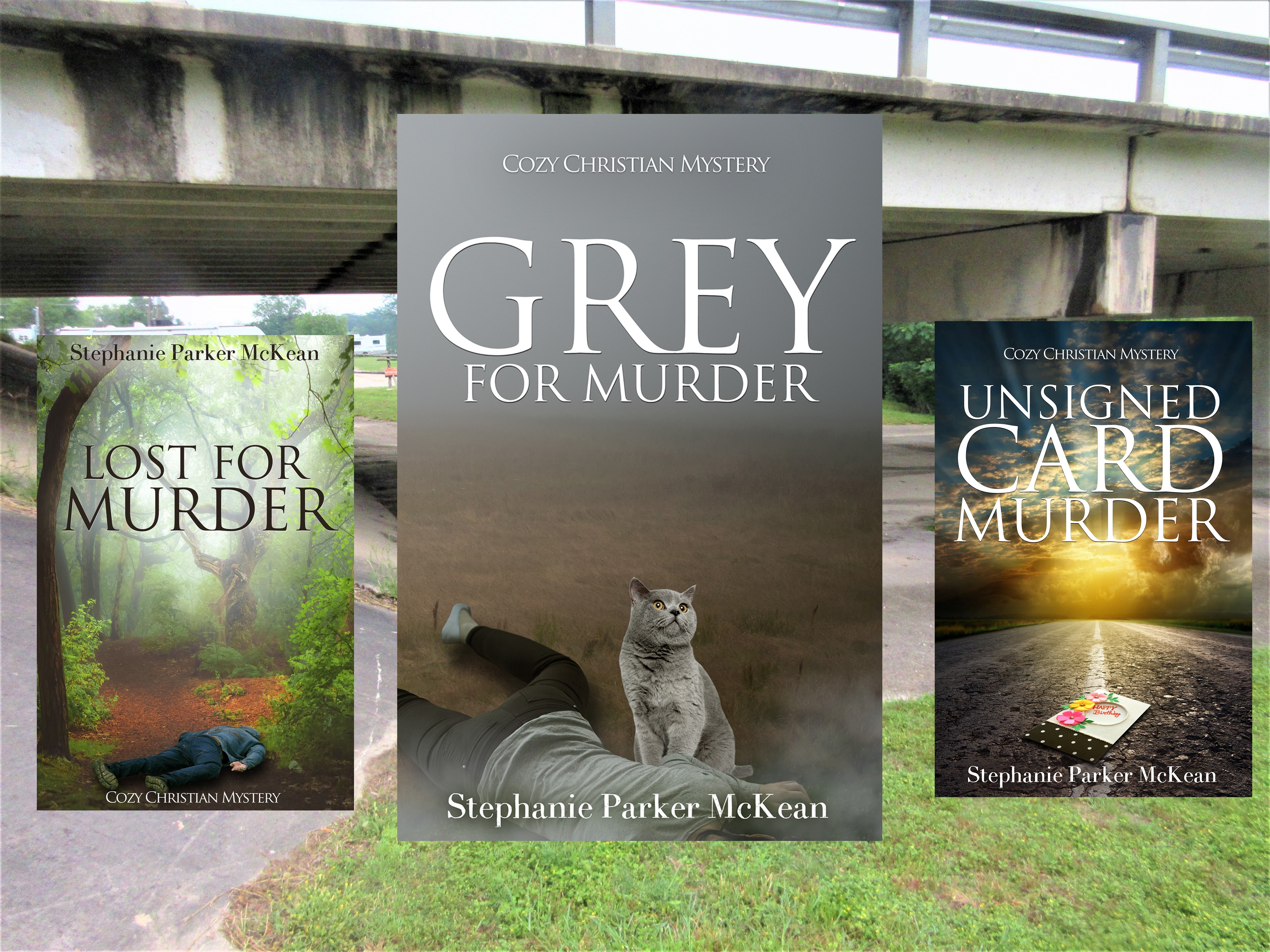
After we parted at the roadblock and I met my husband Alan and moved to Scotland, the first two books were published. I have now written 35 more and re-written the first two so I could self-publish them. That would never have happened on the road in Texas with the man who—however briefly—flung stars into my night sky and painted sunrises and sunsets in vivid colors. Quite a few of the books including the soon-to-be-published “Grey For Murder” are set in Scotland.

There is usually a good reason for the roadblocks in our lives. It pays to stop.

“For this is God, our God forever and forever, He will be our guide even to death.” Psalm 48:14.

Sometimes He guides with roadblocks.

Amazon.com: Stephanie Parker McKean: books, biography, latest update

Norma Jean

Every October when a cloudless autumn sky blooms cerulean—I remember Norma Jean. She died on a day like that.

Norma Jean was in my ninth grade class. I didn’t know her well. She didn’t sit close to me in class. She didn’t hang out with me at recess. But one day our homeroom teacher came into the room and said, “Class, Norma Jean will not be coming back to school this year. She has cancer. She is dying.”

Shock glued me to my desk. I wrote a poem about Norma Jean. I didn’t pray for her—I wasn’t a Christian back then. I didn’t know how to pray. My parents were atheists. We didn’t go to church. We didn’t have a Bible in our house. God and Jesus were only mentioned as swear words—words that kids were not allowed to use.

Up until our teacher’s announcement, I didn’t realize that children could get cancer. I didn’t realize that they could die young. My adolescent mind had never grappled with hard truths like that.

Nora Jean died 55 years ago in rural Georgia. I wonder how any other people remember her? Many of us will never achieve fame or fortune. But if we can have even one person remember us 55 years after our death the way I remember Norma Jean in October when an autumn sky blooms cerulean—we will have lived well.

“My soul still remembers.” Lamentations 3:20

Amazon.com: Stephanie Parker McKean: Books, Biography, Blog, Audiobooks, Kindle

Understanding Old Folks

This morning I put on a pair of white socks with sandals. Fashion faux pas? I don’t care. My feet were cold.

We laughed at my grandmother when we were kids. She never wore anything except dresses and sandals. And when her feet were cold—she added socks. She didn’t care what color they were—she just wanted warm feet. I understand now.

We laughed at Grandmother for believing in God. No matter how many people laughed and ridiculed her, Grandmother never lost her faith.

She was prejudiced. We made fun of her for that, too, but she made the best desserts on the planet—and she often cooked for all nine of us in the family (Seven children, three adults). Simply put, my mother was not a cook. My grandmother was. She taught me to make chicken gravy, yeast rolls, and from-scratch hot chocolate—which we called cocoa.

Grandmother was tough. When she was in her late 50s, Grandmother traveled the width of the U.S. in a wood-paneled station wagon, cooked meals over an open fire, and helped my father build a log cabin in the middle of nowhere.

Grandmother was stubborn. When she was in her 60s, she got stung by hundreds of hornets. She was deathly ill and should have gone to the hospital, but she refused because she was too sick to put on her make-up. She never went anywhere without putting on her makeup.

When Grandmother was in her 70s, she lived on a boat in the middle of the river and paddled a rowboat to get to shore. One day while I was visiting my family in the middle of the river I heard a commotion and ran to the source only to find Grandmother hanging upside down on the metal extension ladder that led from the deck down to the kitchen. Grandmother wasn’t upset about hanging upside down, nor was she worried that she might be injured—she was furious that her dress had flown up over her head and her panties were showing.

Grandmother lived into her 90s. When she left the family, she lived on her own with a parrot that bit everyone except her. This was no ordinary bird. His first word was a commercial slogan he heard on TV: “I can’t believe I ate the whole thing.” When Popeye bit someone—he laughed. When he flew off Grandmother’s shoulder and a truck ran over him, he hopped to the curb, flew back up to Grandmother’s shoulder and said, “Poor Popeye.” Every morning he said, “Maybelle, toast, coffee.”

Grandmother had her flaws. We all do. But she taught me a lot about old folks. When I’m wearing sandals and my feet are cold—I’m putting on the socks—even if they are white.

Amazon.com: Stephanie Parker McKean: Books, Biography, Blog, Audiobooks, Kindle

It Has Happened

DSCF5358

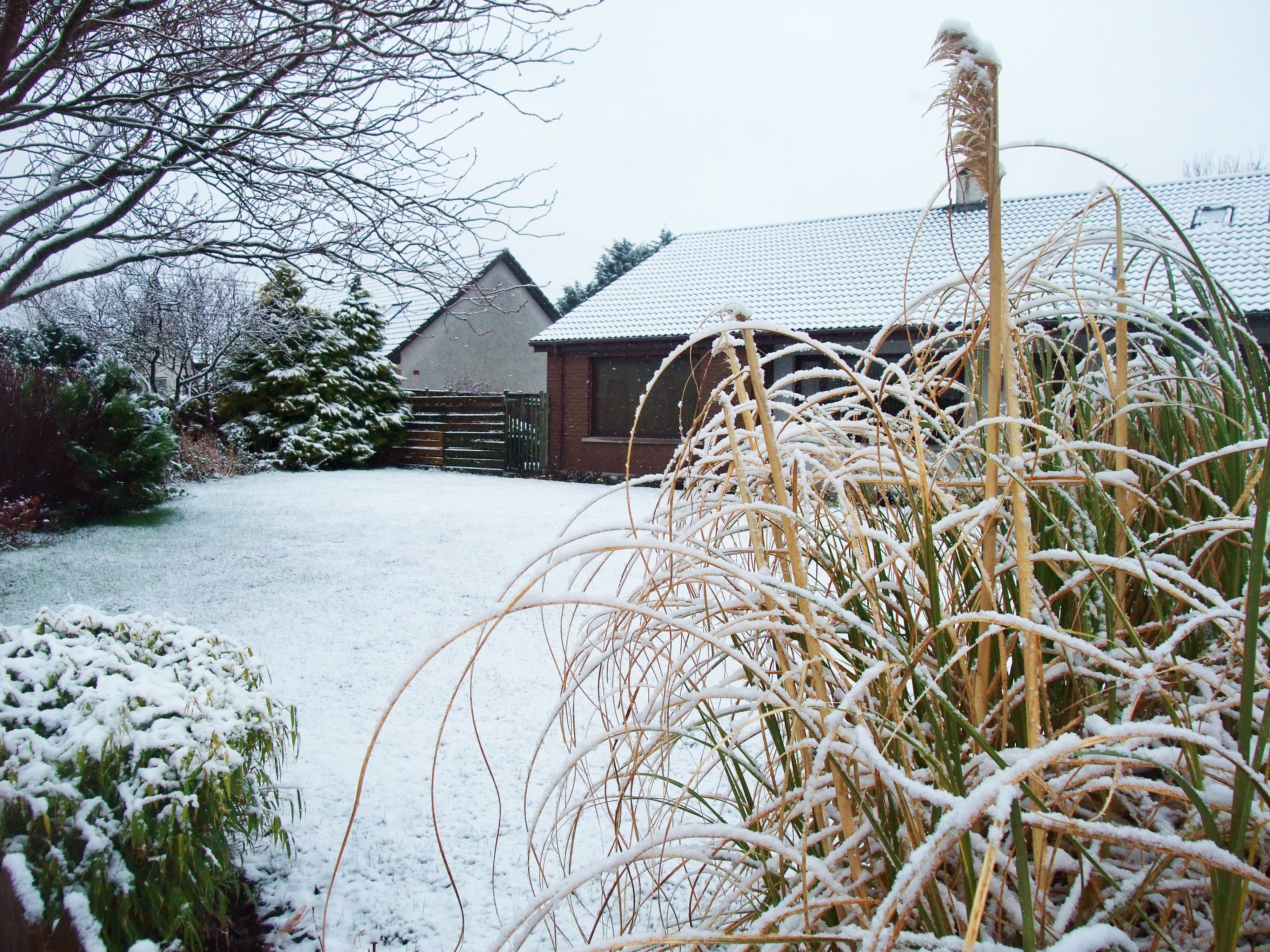
It has happened. Trees shivering their leaves off limbs and me shivering right along with them in empathy, sympathy—or just because I’m cold.

I hate cold. I hate being cold. I hate winter. I have always hated winter. There are very few things in this life I hate: fire ants, scorpions inside the house, winter, being cold.

All three of my winter memories are bad. When I was eleven, I took three cute brown and white puppies home without asking my parents first. I expected my parents to see the puppies, fall in love with them, and agree we could keep them. They didn’t. I had to take the puppies back, walking several miles through snow in canvas shoes with holes in them and wearing no gloves. I suffered severe frostbite on my toes and fingers. To this day my fingers quit working when it drops under 75F, and since it is nearly always cold here in Scotland, I spend part of my working day at the computer sitting on my hands to warm them up.

My second winter memory is worse; cutting, stacking, and carrying ice-crusted logs into the house for the fireplace—without gloves. Our family was too poor to buy gloves. Have I mentioned about my hands? Pain as severe as slowly freezing human limbs is hard to describe—and even harder to forget.

The third winter memory is taking Luke to cut a live Christmas tree when he was four. He had the necessary outfit: snow boots, snowsuit, coat, and gloves. Being a single mom supporting her child—I did not. This was deeper and colder snow—if that’s possible, and we were in it for a long time while Luke searched diligently for the perfect Christmas tree. Me—wearing canvas shoes and blue jeans—by the time Luke found his tree I would have gladly settled for a tin can and a twig.

The good thing about being a writer is that it’s okay to stay inside working—until life intrudes and forces you outside. Then it’s still winter, I’m still cold, I still hate the winter.

Psalm 74:17 says of God, “You have set all the borders of the earth; You have made summer and winter.”

Since God made winter, He has a purpose for it. That means my job is to be happy for those who enjoy the winter and follow the advice in 1 Thessalonians 5:18, “In everything give thanks.”

So I am thankful. I am thankful that winter ends.

Luke_Raven

https://www.amazon.com/Stephanie-Parker-McKean/e/B00BOX90OO/ref=dp_byline_cont_ebooks_1

Old Hat

Besides precious memories, too few pictures, and a much-read and much-used Bible, all I had left of son USMC Major Luke Gaines Parker was the old hat. Now the hat is gone.

It was ironic to still have Luke’s hat after he departed for Heaven at age 37. A hat should not last longer than the person wearing it – especially an old hat.

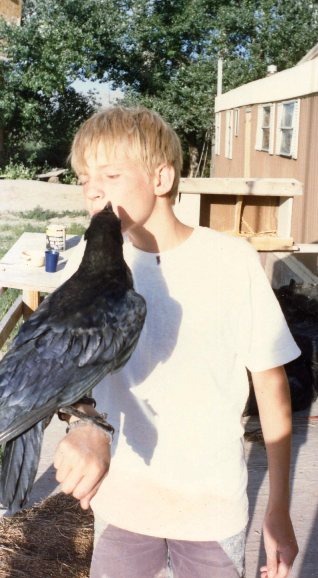
I bought the bright blue wooly hat for Luke in the Great Basin Desert of Northern Nevada when he was eleven. He left it behind when he reported to the Marine Corps for basic training.

Because it had been Luke’s hat, I kept it and wore it on cold, windy days – even though since it was a child’s hat, it was too small for me and kept popping off my head. Over the years, the hat became tolerant of me and relaxed enough to remain on my head. After I moved to Scotland, I wore the old hat nearly every day of the year – spring, “summer,” fall, and winter. Even in the height of “summer” it is still cool – often with a strong wind. The hat kept my hair from blowing across my face and getting tangled.

Now the hat is gone. It vanished. I wish I could believe that Luke reached down from Heaven and reclaimed the hat as a sort of sign. He didn’t. Heaven is a perfect place with a perfect climate. Luke would have no need for his old blue hat. When a person dies, their spirit goes immediately to be with Jesus in Heaven – if they belong to Him. Jesus is alive, Luke is alive – but he didn’t come for the hat.

I spent several days retracing walks and runs to look for the missing hat. Folks here in the Black Isle are honest and thoughtful. When they find someone’s property, they hang it on a fence post for the owner to find: shoes, socks, keys, dog whistles, shirts, hats, dog leashes. No bright blue wooly hat.

Perhaps the hat fell out of my pocket on the rocks and washed into the sea. Perhaps it blew out of my pocket when I was running and someone who needed a winter hat took it. Actually, I’m glad that it vanished because it taught me to look into my heart for what’s left that’s really important.

Everywhere I go, I see Luke’s smile. I remember the times he called me to sing a song he had just written. I still have cards and poems he sent me. When I look at his daughter’s face, I see his eyes and the bridge of his nose. He lives on in precious memories, and in the life of his daughter. These things are important. The old blue hat? Well, it was just a hat.

Every physical possession we have on this earth, no matter how valuable, will eventually wear out, get stolen, get lost, or disappear. Even the ones that we keep until we “die” will get left behind, just like Luke’s old hat when he went into basic training. No one leaves this earth for Heaven with a suitcase.

Value your children, friends, family members, pets – everyone and everything that you love – now. Spend all the time with them you can and lavish all the love on them that you have to give. You can’t spoil anyone with too much love – but you can break their hearts with too little love.

Build memories and hang on to them. Let old hats go.

Author’s books: http://www.amazon.com/Stephanie-Parker-McKean/e/B00BOX90OO/ref=ntt_dp_epwbk_0

Image