Truth Kills

Truth is unpopular. Tell someone they’ve put on weight, have a messy house, are wrong, or that their dog is stupid—and see how quickly they walk away.

Some 2,000 years ago, the Man Who said, “I am the way, the truth, and the life,” was condemned to death and nailed on a cross to suffer and die. Today, Christians around the world are being imprisoned, tortured, and killed for telling the truth.

sheep

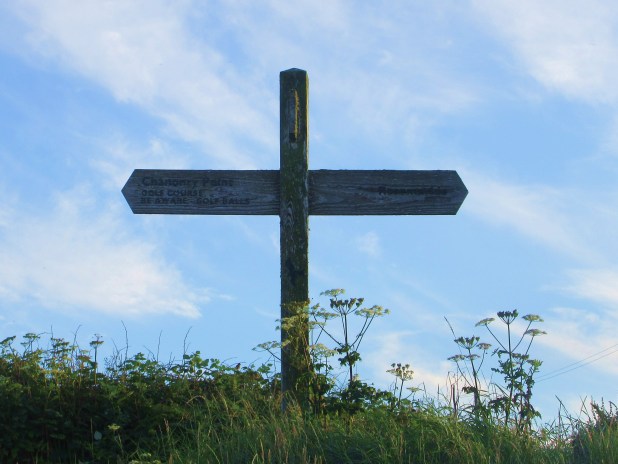
So, too, with Scotland’s Brahn Seer. Because there are only oral, and no written stories about him, some claim that Gaelic-speaking Coinneach Odhar never existed outside folklore. As in earlier centuries, written records in Scotland in the 1600s were rare. Some historians would likely doubt the existence of the Picts, who disappeared without a whisper in the 9th century, had not the Picts left behind marvelously carved stones that thwart attempts to decipher them for lack of a written language. Because the story of the Brahn Seer and Lady Seaforth rings true to human nature, and because I’m a writer and love great stories—I choose to believe what the students at Fortrose Academy believed when they erected a stone monument to him at Chanonry Point in 1969. The Brahn Seer was burned to death in a staked barrel of tar at the point…for telling the truth.

IMG_1833

Coinneach Odhar worked for Kenneth MacKenzie, 3rd earl of Seaforth at Brahan Castle near Dingwall. He had acquired a reputation for possessing second sight and making predictions. When Lady Seaforth asked Odhar, he told her that her husband was enjoying sexual adventures with other women in Paris. She rewarded that truth by having him burned to death in a barrel of tar.

IMG_1835

He predicted the building of the Caledonian Canal in Inverness. Author Alan McKean and I took our books on a trip down the Caledonian Canal and out across Loch Ness.

DSCF5731

He predicted that the MacKenzies would come to ruin and their castle would be inhabited by a cow that gave birth to a calf in the uppermost chamber of the tower. In 1851, a farmer was storing hay in the ruined castle. A cow followed a trail of hay up to the garret and gave birth to a calf. The farmer left them there for five days so people could come witness the truth of the Brahn Seer’s prediction.

ruins field

He predicted that when five bridges were built over the Ness River in Inverness, there would be world wide chaos. In August, 1939, there were five bridges…and Hitler invaded Poland.

IMG_0398

He predicted that when there were nine bridges across the Ness River, there would be fire and calamity. The ninth bridge was completed in 1987. In 1988, there was an explosion at Piper Alpha North Sea Oil Production resulting in the worst offshore oil disaster ever, claiming 167 lives, and impacting ten percent of North Sea oil production.

DSCF5676

While historians claim there are no written records of the Brahn Seer, his words are recorded as he stood overlooking land where the Battle of Culloden was fought in 1745. “Oh! Drumossie, thy bleak moor shall, ere many generations have passed away, be stained with the best blood of the Highlands. Glad am I that I will not see the day, for it will be a fearful period; heads will be lopped off by the score, and no mercy shall be shown or quarter given on either side.”

DSCN0164

Another prediction was that, “The sheep shall eat the men.” As crazy and impossible as those words must have sounded in the 16th century, sadly, during the 19th century Highland Clearances families were driven from the Highlands by landowners who thought they could make more money grazing sheep. Families who had been farmers for generations were thrust into seaside villages and told to become fishermen. They knew nothing of fishing and scores of them starved or froze to death. Their croft houses on the farms were burned down behind them as they left to keep them from returning, and they were often unable to even take their possessions with them.

The Brahn Seer predicted that within a few generations, the chieftaincy of the Mackenzies would pass to a man who was deaf and dumb; all of his sons would die before he did; the ancient Mackenzie line would end, and a hooded girl from the East would claim his possessions and kill her sister. This would happen when all four of the great Highland lairds had some physical defect; buck-toothed, hare-lipped, half-witted, a stammer. It happened in the 17th century

Truth is seldom popular. Whether or not the Brahn Seer was a real person or a much embellished oral legend, truth can get a person killed. Jesus, Who died to take on the sins of the world and purchase eternity for us is a real and lasting example of the fact that—sometimes—truth kills.

http://www.amazon.com/Stephanie-Parker-McKean/e/B00BOX90OO/ref=ntt_dp_epwbk_0

History, Mystery, Endurance

When I found a branch of a wild rose growing through a stone wall it made me ponder the history and mystery of endurance. I had just left the Groam House Museum in Rosemarkie, Scotland, which contains Pictish carved stones dating back to the 6th century AD after the Picts converted to Christianity.

blog #1 rose wall

The Picts are mysterious, thought by some to have been fierce warriors who painted or tattooed themselves. After carving beautiful, intricate patterns and designs that included Christian crosses, the Picts simply disappeared from history in the 9th century, leaving behind place names like Pitlochry, Pittenweem, and Pitsligo, and enigmatic standing stones which—lacking a written Pict language—have never been interpreted.

blog 2

The recently discovered Pictish monastery in Portmahomack proves that at least some of the Picts were educated and capable of great art and architecture. Amazingly, the monastery, which housed 150 monks and workers, was built to the proportions of “The Golden Section,” or “Divine Proportion.” This 1.618 to one ration of dimension is found in spiral seashells and was used to construct the Notre Dame Cathedral in Paris, the Acropolis in Athens, and the Egyptian Pyramids. Along with the single-line carvings of wolves, salmon, and eagles, a piece of broken stone was found at Portmahomack with the Latin inscription: “This is the cross of Christ in…”

blog 3

Scotland thrives on history and mystery. As enduring as the rose growing through the rock wall are the Highland Travellers, also called Gypsy/Travellers. Descendants of ancient Roma, they date back to the 12th Century and up until the 1950s, Travellers continued to traverse the Highlands in their brightly painted horse-pulled carts, supporting themselves with metal working and seasonal labor. Plastic replaced tin, motorized vehicles replaced horses, and the Travellers gave up Gaelic as their first language, replaced horses with motor homes and travel trailers, and learned new trades. Their nomadic way of life is a part of their ethnic and cultural identity. Unlike the Picts, they have not vanished into the pages of history—but their numbers continue to decline.

blog 4

In his book “Highland Folk Tales,” Bob Pegg credits Travellers for keeping Scotland’s rich resource of folklore alive. Alec Williamson was born to Gaelic-speaking parents and knew only three English words when he started school. He and his parents traveled through Ross-shire—where the Groam House Museum stands—by horse and cart and lived in tents. His father taught the art of storytelling to Alec.

One of Alec’s stories involves Roddy from the “wee glen” of Glutan who left his wife and family to go to America. He never returned, never wrote, never sent money. The eldest son went looking for his dad. Passing a bar, he heard a familiar Gaelic song. Thus, he found his father and sent him home by ship. The father never strayed from home again.

Then there was a young man who went to Aonghas Donn (Gaelic, Brown-haired Angus) for a horse. He walked through the hills looking for the horse, and was approached by what he thought was a stray dog. The dog caught him by the arm. His only weapon was a wee penknife. He sunk the knife into the dog’s neck and twisted it until the dog let go of his arm, sank down to the ground, and died. His arm was so badly mangled that he couldn’t catch the horse. He used his shirt for a sling and went back home to tell everyone about the tiger-striped dog that had attacked him. He continued telling the story years later because, as he explained, “I’d never seen a dog that color before—tiger striped. You’d be surprised at what you might see or meet in the hills even yet.”

blog 5 best rock cliffs

History, mystery, endurance. The rose in the wall brings me back to Picts. As a Christian, it’s comforting to know that Christianity was so strong in the Black Isle of Scotland as far back as the 6th century that Picts carved their faith in stones. We still carve our faith today. Stones not needed. We carve the same message of God’s love in our hearts.

http://www.amazon.com/Stephanie-Parker-McKean/e/B00BOX90OO/ref=ntt_dp_epwbk_0

The Cure

The Bible tells us that “In the beginning God created the heavens and the earth…and God looked at his creation and saw that “it was good.”

spring green waterfall

Then Adam and Eve sinned and sin entered the world, bringing death and destruction with it. God told Adam, “Cursed is the ground for your sake…both thorns and thistles it shall bring forth.” To me…that explains nettles, fire ants, scorpions—and all the other uglies and nasties. They came into the perfect world God created when sin ruined the perfection.

ruins field

My first exposure to Scottish nettles was…rather embarrassing. That expression, “When you gotta go, you gotta go.” The gotta hit me during a long woodland hike soon after I arrived in Scotland from Texas. So I waded into high weeds away from the path to do the necessary. Let me just say…you don’t ever want to expose bare skin on any part of your body to nettles—especially not that part!

nettle

But where sin brought a curse, God placed a cure. Broad-leafed plants called dockens will stop the pain and burning when applied to the affected area.

docken

Most recently, I accidentally ran the back of my hand across nettles when I was walking the dog. I couldn’t find a docken. We were eating dinner when I mentioned the pain to my husband. Alan looked at the redness and swelling…then…just like Brigadoon, he vanished. He was gone so long that I thought about going to look for him. He returned with docken leaves and they stopped the burning and pain almost immediately.

Angel Joy weeds

Because we are living in a sin-infested, imperfect world—there will always be nettles, either physical or spiritual. But where there is a curse, there is a cure. Jesus died to set the captives free from sin, pain, sorrow, illness, and the finality of death. He is the ultimate cure.

IMG_1725

http://www.amazon.com/Stephanie-Parker-McKean/e/B00BOX90OO/ref=ntt_dp_epwbk_0

Wordplay

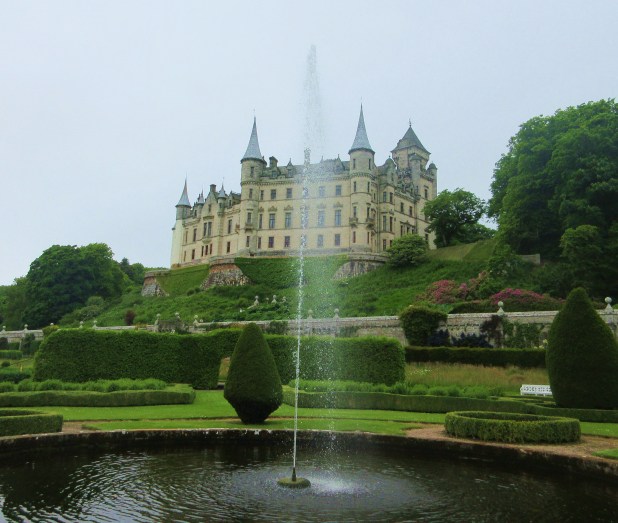
Scotland and the U.S. are two countries divided by a common language.

Dunrobin Castle w fountain

Even in the U.S., Texans stand apart in the language department with their “y’alls” and “fixintos.” If you plan to travel to Scotland from a U.S. destination, there are a few things you need to know: you don’t get your bangs trimmed. Here, it’s a fringe.

You need to know that sidewalks are pavements. Bus drivers get cranky if you continue standing on the pavement in front of the bus after you are directed to move to the pavement. Or, as they would say here in Scotland, they get crabbit. You can cause a stushie if you continue to blether with a friend while a crabbit bus driver waits for you to take a dauner on the pavement so he can skyte away with the bus. I have met one woman bus driver; she was a quean, a wee cheerful, braw, bonnie lass. But most of the bus drivers seem to be male and dour.

If it’s a grey, rainy day—which some part of every day usually is—it’s dreich and your breeks may get wet. Folks here wear trousers, not pants. Pants are considered whatever is under the breeks and not a topic of conversation.

stone pen

If something vanishes quickly in Scotland, it doesn’t go “poof.” I’ve been warned that using that word can make a homosexual crabbit because it’s a derogatory term. It can cause a muckle stramash. Only an eejit would be glaecit enough to act like a wee nyaff and open up the possibility of a skelping. Gives me sweaty oxyters just thinking about scunnering someone, because I’m a sook.

When you come over to visit, do your shopping early. Stores, and even some restaurants, close by 5 p.m., and “late” hours for Christmas are 6 to 7 p.m. If the stores are hoachin, och! You’ll just have to get used to standing in a long queue, or look for the “Way Out” sign. Don’t girn. Practice being thrawn if it’s something you really need.

Most folks from the U.S. know about the spelling differences: colour, tyre, realise, programme, harbour…the KISS (Keep It Simple Stupid) idea hasn’t caught on here. Dish soap is “washing up liquid.” Toilet paper is “loo roll” or “toilet tissue.” Trash bags are “bin liners” and there are no trash cans—they’re bins.

Spaghetti sauce is “Bolognese.” Bread is white or brown—not whole wheat, but you can’t get whole wheat flour—that’s whole meal. When it comes to a beef roast, it’s called “silver side,” and ground meat for hamburgers is mince. You can’t get ham either—it’s gammon. Don’t forget that KISS doesn’t operate on this side of the pond.

IMG_1467

Most folks from the U.S. know that cars in the UK drive on the wrong side of the road, the hood is a bonnet, and the trunk is a boot. But did you know that the windshield is a windscreen?

Yards are gardens, even if there are no flowers or vegetables. You won’t find okra, and zucchini squash is called something I can’t pronounce. You may not recognize the pronunciation of garage and aluminum. Even words like schedule and Isaiah have a different sound to them and folks here don’t submit resumes. They submit curriculum vitae (CVs).

As for dill pickles? Bring them with you.

Three of my books, “Killer Conversations,” “Bridge to Brigadoon,” and “Bridge Back” are set in Scotland, so I’ve tried to introduce Scottish words and phrases to add color and place. I have to admit it; I’m spoiled. Every book I’ve written has all 5-star or 4-star reviews, with an average of 5-stars…except “Killer Conversations,” which rated a 1-star review from someone who said that even though I was from America, I should know that there are no sidewalks in the UK, they are pavements, and there are no street vendors.

Well, I went back to the street vendor who inspired one of the characters in “Killer Conversations” and cringed when I found out his name was Kem. I had named him “Kurt.” Too close for comfort! Same with Miz Mike #6, “Bridge Back,” where the character I spun in my imagination and named “Blair” has a counterpart named “Blaine”! That’s spooky! Perhaps I should start numbering my characters.

ruins field

I don’t mind the 1-star review, but I hope the reviewer realizes that if Americans read that Sandy “ran down the pavement” instead of the “sidewalk,” they will quit reading. Who wants to read a book about a kid who doesn’t have enough sense to get out of the street?

Scotland is a lovely country with unmarred scenic views in all directions. As I am writing this blog in the middle of July, we haven’t had summer yet. At least we haven’t had to light a fire in the fireplace today. I think we are all hoping that “global warming” will at least bring a couple of days of summer to Scotland!

spring green waterfall

The folks in Scotland are rich, varied, kind, and friendly in character. I won’t offend them by saying that they are a lot like Texans in some ways, because they like the notion of being different. In other words—great folks! They take offense to the 1950s Hollywood musical “Brigadoon,” and things here that are overly Scottish are labeled “brigadoonery.” Hope this blog doesn’t fall into that category. I’d hate to lose my all 5-star rating for “Bridge to Brigadoon!”

Dog’s World

Dog owners know that dog, spelled backwards, is God. Dogs make the best people.

Angel Joy weeds

One sure cure for depression is to watch dogs out for a walk or running free along a beach. Heads up, tails wagging, sheer joy and exuberance shining out of their eyes.

Next time you pass someone out walking a dog, look—really look—at the dog. Chances are it is so proud and joyful to be walking with its owner that it will make you smile.

IMG_1105

Dogs are praised for their unconditional love and loyalty. Another trait that makes dogs delightful is their ability to squeeze joy out of every moment. From hanging heads out car windows to catch scents on the breeze, to leaping into the air to catch Frisbees and balls, dogs excel at enjoying life.

Not everyone can own a dog and not everyone has the health to enable them to walk or care for a dog. But if you don’t and can’t have your own dog—just go somewhere and watch other people’s dogs. Then ask yourself, “Depression? What depression?”

follow me buy Mom's books

God provides healing in the world He made for physical and mental ills. I believe cure for depression is as simple as watching a dog and following its example: an attitude of gratitude for every moment of life.

“Let everything that has breath praise the LORD. Praise the LORD! Psalm 150:6


http://www.amazon.co.uk/Alan-T.-McKean/e/B00BR1PM5Y/ref=ntt_dp_epwbk_0

Author Alan McKean took some of these incredible photos of our rough collie, Angel Joy.

http://www.amazon.com/Stephanie-Parker-McKean/e/B00BOX90OO/ref=ntt_dp_epwbk_0

I Think I shall Never See…

Scotland’s majestic scenery draws tourists from around the world. Some 40 million individuals will never get to either visit Scotland or view images. They were aborted.

sheep

Not all aborted babies die. Gianna Jessen’s mother’s saline abortion failed and two-pound Ginanna was born with cerebral palsy.

A nurse heard Melissa Ohden crying in a trash can and rescued her. She now has a masters degree in social work and is a vibrant pro-life speaker.

ohden

Just as Brandi Lozier’s body was being dumped after an abortion, the baby raised her arm. She was rescued.

A woman who was seven months pregnant went to Planned Parenthood in California for a saline abortion. Saline burns the baby inside and out and kills the baby within 24 hours. After 18 hours, this baby was delivered alive. Since the abortionist wasn’t on duty yet at the time, the baby was sent to the hospital and survived.

Gianna Jessen testified at a congressional hearing. “If abortion is about women’s rights,” she asked, “then where were mine?”

The U.S. has the highest rate of abortion in the world, more than 1 million a year. Most are girls, most are black. This is the real war on women. Abortion does not make a woman unpregnant. It makes her the mother of a dead child.

Dunrobin Castle w fountain

“Loves Beating Heart” was written for young adult readers with the hopes that it will help change the statistics and protect unborn life. When teen Natasha discovers she is pregnant, she calls her best friend Dena to help her. Natasha’s stepfather has ordered her to get an abortion and threatened to cut the baby out himself with a steak knife if she does not comply. Instead, she and Dena run away and find themselves lost and alone on a raging, flooded Texas river. They face encounters with dangerous wildlife—and even more dangerous humans. Dena’s goal isn’t to “save Baby.” She just wants to help her vulnerable friend.

Meanwhile, Dena’s older sister Cat flees from an abusive boyfriend and is rescued by a Christian family. Nonbeliever Cat thinks the entire family is barmy. Hmmm…but she likes the look of Sky. Her goal is to separate him from his wife and children and keep him for herself.

Is there a possible happy ending in this combined dystopia?

LovesBeatingHeart_cover2-new

http://www.amazon.com/Loves-Beating-Stephanie-Parker-McKean-ebook/dp/B00CGNPG9O/ref=sr_1_1_twi_kin_1?ie=UTF8&qid=1441309127&sr=8-1&keywords=love%27s+beating+heart+stephanie+parker+mckean


http://www.amazon.com/Stephanie-Parker-McKean/e/B00BOX90OO/ref=ntt_dp_epwbk_0

Navajo Code Talkers & Dragons

I am thrilled to share my blog this week with author Katy Huth Jones. “Mercy’s Prince” is a classic, thrilling and real from beginning to end. I’m looking forward to reading Katy’s other books, and am blessed that she agreed to take time out of her busy schedule to be here today.

Katy, when did you start writing and what inspired you?

I started writing stories in the third grade when we lived in Arlington, Virginia during the early days of the U.S. space program. My teacher, Mrs. White, was passionate about space exploration, and we spent a lot of time studying it and keeping up with the current missions (the last two Gemini missions in September and November of 1966 and the tragedy of Apollo I in January 1967). Mrs. White began my lifelong interest in science but also encouraged me to write my “science fiction” stories about intelligent ants traveling the solar system (illustrated, of course). My longest story that year was TWENTY pages!
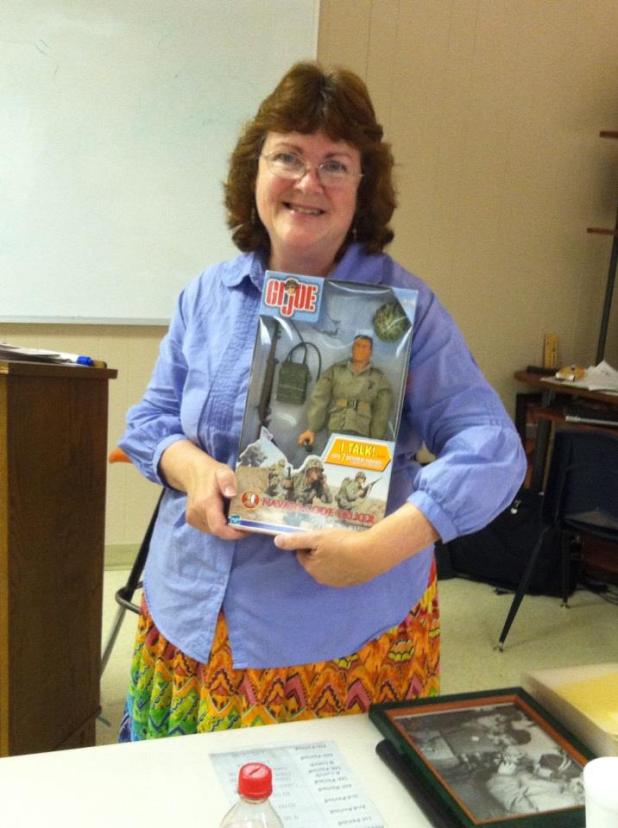
Me with GI Joe Codetalker

Me with GI Joe Navajo Codetalker at a school presentation two years ago. I had a small part in this GI Joe doll. Hasbro called my publisher, and they forwarded Hasbro to me to help them find a real Code Talker to do the voice, so I directed them to the president of the Navajo Code Talker Association (who has since passed away; most of them have!) but I suggested they donate some of the proceeds to the Association to help with funeral expenses. I didn’t hear until two years later (2001, I think) that Hasbro did donate $5,000. Yay!

Tell us just a bit more about your Navajo Codetalker book. It sounds fascinating!

The book is Navajo Code Talkers: Native American Heroes by Catherine Jones. I wrote the book after I researched the archives at a nearby Museum of the Pacific War for a magazine article assignment and realized there were no books written for children at the time. My only regret is that I didn’t borrow the money to travel to Arizona and interview some of the Code Talkers personally. I relied on transcripts of interviews instead. I need to get my rights back on this book and re-publish it. I believe I sold so many copies of this book because I developed a multi-media presentation which I gave to schools and civic groups (and still do once a year for the local sixth graders). I always sold out of the books I brought after each presentation!

“Mercy’s Prince” is a phenomenal book and I can’t wait to read the others. What gave you the idea for the land of Levathia and the characters?

I’m so glad you like Mercy’s Prince, Stephanie! The first idea for this story and characters came about as a reaction to a movie I saw with my oldest son in 1988, a fantasy called “Willow.” I did not like their idea of a “strong” woman and set out to prove that a strong female character could also be non-violent. However, the characters were more like 2-D paper cut-outs, and the plot I tried to force on them just didn’t work, even after several rewrites.

Then in early 2011 my father was diagnosed with lung cancer, and I needed something to distract me so I could keep a “stiff upper lip” and help him and my mother hold together during a long, painful year of chemo, hospitalizations, and hospice so he could die at home. I took out the old manuscript, threw away all but the opening scene (over 400 double-spaced pages), and gave myself a writing assignment, not even thinking about publication. I asked Prince Valerian and Mercy to tell me THEIR story, and I just “listened” while they did so and wrote it down. The plot completely changed, the minor as well as major characters became living, breathing people (and dragons), and I felt as if I’d traveled to a faraway land. I “go” to Levathia when I’m listening to the characters. It’s exciting to capture that feeling of wonder I had the first time I went through the wardrobe with Lucy in The Lion, the Witch, and the Wardrobe.

What is your favorite genre to write?

When I first started writing “for publication,” I attempted science fiction stories for magazines. I wrote dozens of them (some with “promise” as editors tactfully put it), but never published a single one. I could not translate my love of science into stories that “worked.” My first sale in 1992 was a fantasy story, and I quit fighting it! I do love writing fantasy, but a close second is historical fiction.
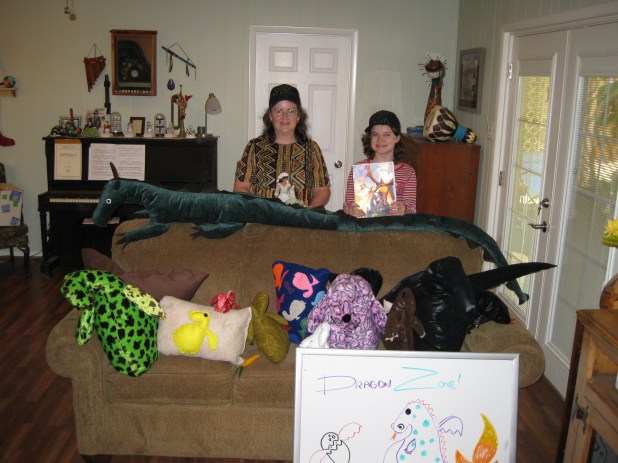
Holly and me and dragons

Holly is my enthusiastic niece who asked if we could have a “summer writer’s retreat” in 2011. For two weeks we worked on our dragon stories and spent a lot of time making dragons without a pattern. The long one on the back of the couch is Albinonix from Mercy’s Prince, but I couldn’t figure out how to attach wings. Holly and I had a “writer’s retreat” three years in a row. Fun times!

The Christian content of Mercy’s Prince is skillfully woven into the plot and the book is a thrilling “clean” read that one would not be ashamed to have others read over their shoulders. How did you achieve this? Is that a goal you have for all your books?

The first incarnations of this story were not as overtly Christian, but once I recognized Valerian’s deep faith, I think that helped shape the story into the final version. I’ve always written clean fiction because I don’t separate what I write from my own faith. I try to make sure everything I write honors God, even if it’s not overtly Christian.

What do you want readers to take away with them when they finish one of your books?

I hope they will be encouraged to persevere during the storms in their own lives as they share the journeys of my characters.

Do you have another book planned? If so, would you like to tell us a bit about it?

I’ve published two more books continuing the story in Mercy’s Prince (Mercy’s Gift and Mercy’s Battle), and there are two more planned. I’m currently editing book 4, Mercy’s King, and have begun book 5, Mercy’s Joy. I’m so relieved the first three are complete, because they can stand alone as a trilogy if, God forbid, my cancer comes back before I finish book 5. I can’t publish book 4 until I complete book 5, because the two books need one another to tell the rest of the story.

Your courage in battling cancer is an inspiration. You have continued to keep up with writing and book promotion even through your illness and treatment. You are amazing. If it’s not too painful, could you tell readers a bit about your type of cancer and the prognosis?

I first contracted non-Hodgkin’s lymphoma (a cousin to leukemia) in 2004 but it wasn’t correctly diagnosed until 2005. By then, two different strains of it were growing in my lymph nodes and it took nuclear-bomb strength chemo to put it in remission. Each year it stayed in remission, my doctor was hopeful it wouldn’t come back, but it did so painfully, with a vengeance in June 2015, and chemo put it back in remission. Each time it recurs it’s more difficult to kill, and eventually I’ll run out of treatment options. But I put myself in God’s hands and pray without ceasing. The good thing about cancer is separating the wheat from the chaff in one’s life and focusing on what’s truly important: honoring my Savior, growing in faith, spending time with family, and encouraging others as long as I have breath in my body.

You said in one of your posts on “Clean Reads” that because of your cancer, your goals are different than most authors. Could you explain that a bit?

When I first began writing for publication in 1986, it was more about making money. I hoped to someday make enough money from writing that my husband could retire early, and we could travel. He has been so good to be the chief breadwinner while I homeschooled for twenty-five years. I had my “15 minutes of fame” in 2002 with a non-fiction book I had published about the Navajo Code Talkers of World War II, and I still give my multimedia presentation to the local sixth graders each spring, even though the book has been out of print for several years. Now I just write the stories pressing on my heart, hoping a few people will read them and be encouraged. My hopes are no longer focused on earthly rewards, but on our heavenly home.
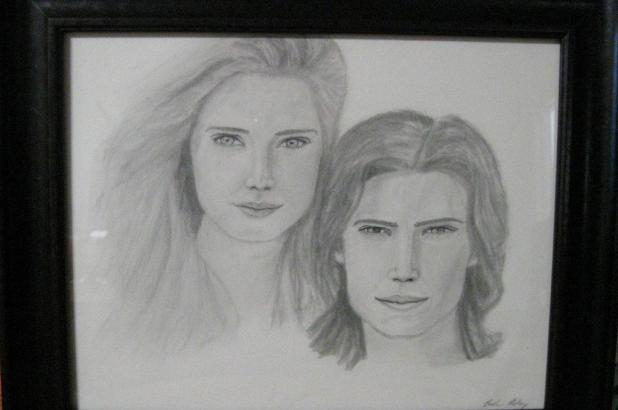
Bode drawing Merry and Valerian

Something important to me: The drawing of Merry and Valerian was done by a former student of mine after he suffered a severe brain injury when an explosive went off at the base of his skull (he was in a World War II re-enactment, and one of the “grenades” was not thrown properly). His therapist urged him to read to get his fluency back, and he chose Mercy’s Prince. He said the story encouraged him so much, he wanted to draw the characters for me. Before his accident, he couldn’t draw a stick figure! I have never been so moved by a gift before.

When you are not writing, what is your favorite genre to read?

Since I read E. B. White’s Charlotte’s Web in the third grade, my favorite genre has been fantasy. I prefer to read Christian fantasy, but I will eagerly read any clean fantasy and have found many wonderful writers in the Clean Indie Reads group! As in my writing, a close second is historical fiction.

When you are not writing or reading, what are some other activities you enjoy?

I have played flute since age 11, but gave up all thoughts of performance to marry, have children, and later homeschool them—although I taught music classes and later a homeschool band for 16 years while teaching private flute at the local schools. Once a year the local symphony conductor would ask if I could play with them, and I turned him down. After chemo in 2005, I stopped saying “no,” and it has been a joy to play with such a quality regional symphony. I’m actually the piccolo player and double on flute. I love to take photos of birds and other beauties of God’s creation, and I used to sew clothes and costumes and other fun stuff, but haven’t done much lately. My husband and I like hiking, and I love fishing, but don’t do it often.

Do you have a publishing company or do you self-publish? What effort do you put into marketing and promoting your books?

I’ve worked with five different publishing companies, three of which are out of business. That’s how I stumbled onto self-publishing, because I didn’t want my two fantasies about Leandra and the talking birds to die when the original publisher went “belly up.” Then when my cancer came back, I stopped querying publishers and agents for the Mercy series and decided to self-publish from the start. Pauline Books & Media, who published Treachery and Truth, expect me to do all the same marketing as I do for the self-published books, except that I have NO control over prices, back blurb, or even the title!

All I can recommend is that an author search for the right audience, whether it be schools (I’ve targeted private schools for T&T) or advertising with discount sites (I had great results with Pixel of Ink, and now they’re closed, bummer). I also look for bloggers who have reviewed similar books, with good results. Because I’m not trying to make a living as a writer any more, I just try to find readers who I think might like my books and don’t worry about becoming a “best seller.”

What else would you like your readers to know about you and your books?

The Mercy series is marketed as YA Christian fantasy, but readers as old as 87 love the story! I dedicated book 3 to my second oldest beta reader, book 2 to my cancer doctor, and book 1 in memory of my father, since it’s not possible for me to separate the story from those last few memories of him. I researched the 12th century to make some of the details feel authentic, but there are dragons of all sizes, hence the name “Levathia” for the land (like the levathian described in chapter 41 of the book of Job). The chapter titles are Scriptures from the old King James Version, but I didn’t cite the chapter and verse. If I am able to compile a companion volume, it will include the citations of all those verses, along with Valerian’s history of Levathia, Mercy’s book of herbs, a genealogy of the royal family, and an index of places and characters. I have music to the words of one of Kieran’s songs, but need to put the others to music, too.

Book 1 of my other fantasy, Leandra’s Enchanted Flute, is an allegory of the cancer journey, but with talking birds instead of dragons in the land of Finian Jahndra. My YA historical fiction, Treachery and Truth, is the story of “Good King Wenceslas” from the point of view of his servant, and takes place in 10th century Bohemia (now the Czech Republic). I also published a collection of poems I wrote inspired by my cancer journey, illustrated with color photos, entitled Carpe Diem.
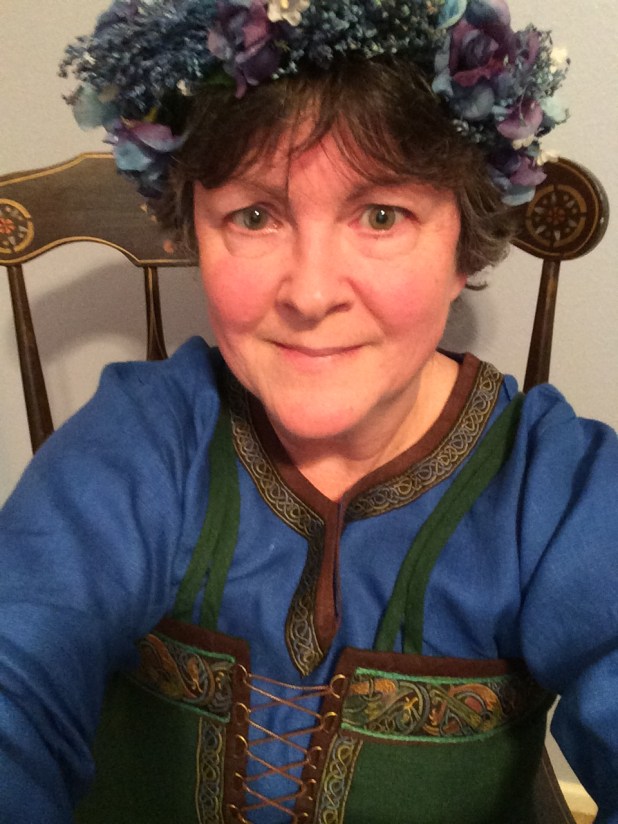
Katy costume closeup

The closeup with the costume is one I purchased to wear at school visits for Treachery and Truth. It’s as close to authentic 10th century Eastern Europe as I could find.

 Universal links to Katy Huth Jones’ books:

Mercy’s Prince myBook.to/Mercys_Prince

Mercy’s Gift myBook.to/Mercys_Gift

Mercy’s Battle myBook.to/MercysBattle

Leandra’s Enchanted Flute myBook.to/LeandraFlute

Return to Finian Jahndra myBook.to/ReturnFJ
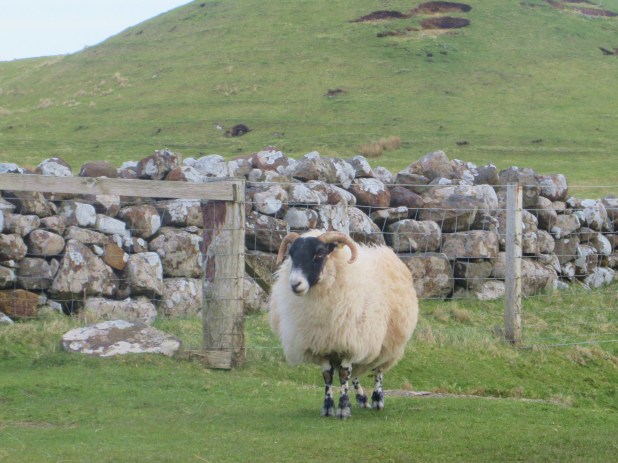


From Texas to Scotland with Love

Imagine exchanging everything you know and love within a 24-hour period of time: going from a 100F summer to a 59F summer; exchanging Mexican food for fish and chips; switching from driving on the right side of the road to the left; leaving the safety and comfort of traffic lights and stop signs for confusing roundabouts; searching for light switches in bathrooms—because they are on the outside; getting either scalded or splashed by water because the faucets are on separate sides of the sink and the cold water is unexpectedly powerful; discovering that shower curtains are barely needed because the water only sprays within a small, weak circumference, and learning words you’ve never heard before—havering, scunnered, puddock (frog), puggled (tired out), shoogly, stushie, manky, dreich, breeks, glaekit, toerag, dauner, drookit, blether…it can happen. If you love someone enough, it can happen.

sheep

God blessed me with a Scottish husband, Reverend Alan McKean, in 2011. That took me from sunny South USA to the cold and cloudy Scottish Highlands. It’s been quite a trip! Even after I learned that “pavement” means a pedestrian sidewalk (after getting yelled at by an irate bus driver because when he told me to get on the pavement I obediently stepped down to the asphalt in front of the bus), and even after knowing that biscuits are cookies and scones are biscuits, and words have extra letters in them (program is programme), it is still daunting at times. The cold never leaves and summer never comes. There are no dill pickles. Nestle House chocolate chips must (like dill pickles) be shipped in from the U.S. and forget ice tea; it simply doesn’t happen.

Steph & Alan w books

Scotland is a lovely country with awesome scenery in every direction. The people are great. I wouldn’t want to offend them because they are convinced that no one else in the world is like a Scottish Highlander…but one reason I love them so much and feel so welcome here is that they are a bit like Texans. They don’t say “howdy,” “y’all,” “fixinto,” and ain’t, and they are too reserved to go in for hugs unless you really get to know them—but they are warm, friendly, and independent. Great folks.

DSCN0164

So…it had to happen. A Texas writer in Scotland? Scotland got into the books. Two of the Texas Miz Mike mystery-romance-suspense books are set in Scotland. “Bridge to Brigadoon” finds Miz Mike on a vacation on the lovely Black Isle that is neither restful nor predictable. And the newly released “Bridge Back” has Miz Mike coming back to Scotland to marry…but with the differences in language, climate, and culture—will the wedding take place? Not to mention the mystery that threatens her life.

BridgeBack_Cover larger

Funny? Gut-bustingly funny! From start to finish, “Bridge Back” is a hoot. It’s even fun for me to read…and I wrote it.

The Bible guarantees that laughter is good medicine. So if something has you down and a chuckle would lift you up, give “Bridge Back” a read.

And, thanks, y’all!

http://www.amazon.com/Stephanie-Parker-McKean/e/B00BOX90OO/ref=ntt_dp_epwbk_0


Living Life With a Whisper & A Song

I’m turning this week’s blog over to lovely and talented author Tonia Parronchi.

002 - Copia (FILEminimizer)

Hey, Tonia! I’m honored to have you as a guest today. Could you tell us a bit about “Song of the Cypress” and “A Whisper on the Mediterranean?” What would you like readers to take away with them when they finish your books?

Hi, Stephanie, Thanks for asking me to join you here. When I write, I get completely caught up in the story I am weaving. “The Song of the Cypress” is completely imaginary. “A Whisper on the Mediterranean” is a memoir. So in some ways, the second was easier to write as I could check my diary as I went along. However, “Song” just flowed as I took daily walks through the beautiful countryside in my Tuscan valley which inspired the novel. Certain characters, such as Fiammetta, the old wise woman, took over my life and invaded my dreams, bombarding me with vivid images until I found a scrap of paper and wrote down what they wanted to say! I suppose that what I hope my readers will get from my books is a sense of place. I was an armchair-traveler for years and know how special it is to read about faraway places and add a bit of spice to an ordinary-seeming life (although I believe there is magic to be found anywhere if one opens one’s eyes and looks). If I inspire people to come and visit Italy to experience this wonderful country, so full of quirks and contradictions, that would be wonderful.

Tonia Parronchi (FILEminimizer)

You have amazing versatility as an author. “Song of the Cypress” is lyrical fiction, a poem in prose with a mix of mystery, romance, and suspense. “A Whisper on the Mediterranean” is a memoir. “Poppies” seems to be your life in poems. Do you have a favorite genre, or have you enjoyed writing each of them equally?

There is no doubt in my mind about my favorite genre, either as a writer or a reader, I love fiction. I had fun writing the memoirs (as you say, “Poppies” is a kind of poetic memoir), but I really fell in love with writing during “The Song of the Cypress.” As I said above, certain characters really took over my life. I felt that I was living two lives at times, my real one, and alongside that, my imaginary one. The characters that I created seem quite real to me, as if they are old friends that I have not seen for a while. I have just finished a second novel which has a completely different flavor, and it made me laugh as I wrote it. Fiction gives me a freedom to write whatever I want and it is such fun!

I’m so glad to hear about your new novel. I can’t wait to read it! Could you tell us a bit about it?

My new novel is called “The Melting of Miss Angelina Snow.” It is set in England, in Yorkshire and Lincolnshire, and follows the adventures of frosty, middle-aged estate agent Angelina Snow and the brave man who falls in love with her, Leonardo Marconi. Mr. Marconi brings Italy into the novel—there had to be something Italian in there after all! Both my main characters are cynical, sarcastic and hard to love. I really enjoyed their verbal battles and finding a way to let them fall in love. I have another novel which is really only vague ideas and a lot of post-it notes at the moment. It is to do with the sea, a woman whose life is influenced by water. There is a mermaid or mythical creature deep within each of us, I think. It is hard to pin down the element of water and fascinating to write about but I am still playing with it

When did you start writing? Was it something that was born in you, or something that developed?

I remember a short story I wrote when I was about 10, about a ghost in a castle. I think my mother still has it somewhere! I was forever scribbling things down, and so I suppose I always wanted to be a writer. It was only when I met my husband, though, and he encouraged me to stop talking about it and start writing that I really began. Now I can’t imagine doing anything else.

What was your first success? And, conversely, did you have any failures?

Getting a publisher (the lovely Sunpenny) for “A Whisper on the Mediterranean” was my first success. Before that I had, as most of us writers do, a nice folder full of depressing rejection letters. I can honestly say that the day I first held my finished book in my hands was one of the best in my life. I kept wandering over to it, picking it up and stroking it lovingly and had a silly smile on my face all day.

blog, this

You were born in the UK. What took you to Italy? Do you think of it now as your forever home? “Song of the Cypress” paints a poignant thumbnail sketch of Italy. Is the beauty and drama of the land why you call it home? Or is it some other reason?

I moved here because I met Guido and moved in with him, in Rome in 1990. I feel a bit like a fish-out-of-water in the UK, and Italy, really. I have been in Italy for so long that it has become home, but England is forever in my heart and I don’t fit in either place properly. Maybe that is what allows me to write about both places with understanding and complicity but still be an observer, on the outside looking in. I love dramatic scenery and beautiful locations and am lucky enough to live in one of the most beautiful places in the world. However, my heart often yearns for the countryside of my youth. I could write with the same intensity about the Cornish coast, Welsh valleys, or Scottish highlands. I live in Italy above all because my husband is here. A few years ago we took a trip to Brittany, in France, and I lost my heart to that region. Before we booked the holiday, I was reading a brochure that made me giggle over some of the translations. One description of the Cote d’Armor coast informed me that I would love to “trot myself along the pink the granite cliffs.” Indeed, I loved trotting myself along there. Maybe I could live there one day?

You call your husband an “Italian Action Man.” From “A Whisper on the Mediterranean,” it would seem as if you share a sense of adventure. Were you always adventurous?

Oh, Stephanie, I am not brave or adventurous at all, only very much in love with my husband, who leads me into all sorts of scrapes. I was a tomboy as a child and forever climbing trees—but never getting very high because I am afraid of heights! I sail and fly with Guido (he built a small 2-seater plane in our workshop!), but get tied up in nerves each time. I am, however, very grateful to him because he has introduced me to so many wonderful things that otherwise I would not have tried. Skiing—I do not ski anymore because each time I go I end up injuring myself, as I am not at all sporty. Snorkeling—but I get panicky with the mask over my face. I went up in a hot air balloon and must be the only balloon passenger ever to not to have seen anything of the flight except the inside of the basket and my white knuckles tightly gripping to the edge! With Guido, I have also been to some amazing places and others that I would not want to go back to, such as the cockroach-infested hotel in Kenya. These experiences will surely, one day, be good to write about.

Asso IX

That’s funny! But I know you are not the first to see only the inside of a hot air balloon basket, I would be the same! My legs would never allow me the courage to stand. I think you are both brave and adventurous, and I love the example you set of loving your husband and being his partner in everything—even if it scares you! But back to your books; being a parent myself, I was alarmed and enthralled reading about your experiences sailing with James when he was a baby. You wrote your fear with such emotion when he almost fell into the engine room that my heart pounded. Knowing what you know now, if you could go back in time—would you do it all over again?

I would not change a thing. It is true that I was scared stiff for James more than once when we were sailing, and questioned my own judgment quite harshly then. Now he is 21, and a very independent and interesting man. I think his early experiences helped to form his unique character. I would not change a thing because my experiences are what make me the person I am now. I can honestly say that I am happier with myself now than I ever was when younger and have no wish to go back in time, either to re-live or to change anything. Just keep the adventures coming. I have become a bit of an adrenalin junkie.

What is some parting information about you and your books, or your life in Italy that you would like readers to take away with them?

What I would like to say to anyone who is wondering about changing their lives but scared about it, is this. Do it. If you don’t, you will always regret not trying. I am so glad that I have had a chance to live an integrated life in another country. Learning another language was a big challenge to me but now I am fluent, although I do still make lots of mistakes and am used to my son and husband rolling their eyes and apologizing for me when I come out with particularly strange sentences. They refer to these mistakes as Toniaisms and find them vastly amusing. My Italian friends are warm and loving, the food and wine here is amazing and the countryside and cities exquisite. The politics, corruption and pollution are terrible but that is true in many other countries too. Everyone should visit Italy at least once in their lives. It is a uniquely wonderful country. I also hope that readers of “The Song of the Cypress” will look at nature differently after reading the book. Maybe they will stop for a while in the shelter of some ancient tree and really take time to look and absorb the beauty around them. If they stay still long enough, maybe they will begin to feel the deep connection that runs through all things. Some call it God, others think of it as the universal spirit that flows through life. I think of it as the song, the entrancing music of the shadow lands—just out of sight, almost impossible to hear but strumming the air with an exquisite melody if you open up your hearts to it.

Thank you, Tonia, for that lovely parting thought. It has put a song in my heart today, and I know your unique books will do the same for your readers.

www.toniaparronchi.com

http://www.amazon.com/Whisper-Mediterranean-Tonia-Parronchi-ebook/dp/B00NMUCIAA/ref=asap_bc?ie=UTF8

http://www.amazon.com/Song-Cypress-Tonia-Parronchi-ebook/dp/B00GNA1TDI/ref=asap_bc?ie=UTF8

http://www.amazon.com/Poppies-Tonia-Parronchi/dp/1523356405/ref=asap_bc?ie=UTF8

When the Bridge Breaks

To celebrate the release of “Bridge to Xanadu” in paperback, I’m offering a glimpse into the third Texas Miz Mike Christian mystery-romance-suspense. The backdrop is imaginary Three Prongs, Texas, not unlike the real Bandera, Texas, “Cowboy Capital of the World.”

Mystery writer Michal Allison Rice follows a porcupine in an attempt to get a picture for the local newspaper. The porcupine climbs into a dumpster. When Miz Mike peeks inside to get a shot of the critter—being Miz Mike—she finds a murder victim. She is convinced that the man she saw in a local restaurant with a child is both killer and kidnapper. But since no one believes her wild accusation—she must prove it herself.

“Bridge to Xanadu” is dedicated to Native Americans. Chief Alan Bitterroot is an unforgettable hero:

The chief himself came to meet me. He was impressive; tall, and bare-chested, with beaded necklaces around his neck and fringed beige pants traveling down the length of his long, straight legs. His skin glowed a healthy brown, and even though tufts of grey infringed on the long, wavy mass of reddish-brown hair, his face looked eternally young. I looked into the verdure depths of his eyes and fell in love—with the eyes—not with the man I had only just met. Now was an unfortunate time to remember that I had not engineered an excuse for my intrusion. His hand clamped around mine and I couldn’t have spoken anyway.

As always, Miz Mike’s talent for minding her own business throws her into the path of danger:

Later, I remembered the sudden increased tempo of footsteps and the rush of movement behind me. But then, standing at the edge of the world alone, I received scant warning before a rodeo bull-like kick to my back sent me sailing momentarily against blue sky and clouds. Then the sky fell out from under me and I tumbled over rocks and through prickly pear cactus in an endless terror-filled plunge down the mountain.

No challenge is greater than Miz Mike’s determination to meet and defeat it:

It was pure insanity. I dropped Matilda’s leash, hoping that the borrowed dog would follow me. Like a football player going in for the tackle, I tore across the uneven ground, grabbed the child, flung her over my shoulder, and ran.

Cowboy hero Marty (who would be any woman’s hero) can’t believe he has lost Mike’s love:

“I don’t know, Marty. It was a magical, amazing world. I had never walked there before. I got lost. Now I can’t find my way back. It’s like there was this bridge there…Bridge to Xanadu, in my mind. The bridge washed out. It left me stranded.”

The killer-kidnapper catches up with Miz Mike:

Something with all the solidity of a metal stick thumped my ribs from the back and a voice that instantly turned my insides to ice growled, “Don’t turn around writer-lady. Just back up and get into my car, just like you planned on taking a little trip with a good friend. Cause we’re gonna be really good friends…until I get tired of you.” He laughed uproariously, but no joy bounded up and down the notes of his laughter. Instead, the smell of death spilled out of his mouth. He planned to kill me and I had stupidly walked into his trap.

http://www.amazon.com/Bridge-Xanadu-Stephanie-Parker-McKean/dp/1530764483/ref=tmm_pap_swatch_0?_encoding=UTF8&qid=&sr=old bridge