Keep on Nesting

When I was a kid in school, the ultimate insult was to call someone a “bird brain.” Thankfully, I made it through school before the “F” word hit. I was in junior high school before I ever heard it. I went home and asked my mother what it meant.

Birds are admirable. When my son Luke and I lived in the Great Basin Desert in Nevada, we rescued a baby raven. Luke named it “Rap.” Rap followed Luke and our dog when Luke rode his bicycle or 4-wheeler. Rap chased strangers away from our house. We lived on an alfalfa farm. Rap flew into the barn everyday at noon and walked up and down the long table accepting offerings from farm workers who met to eat their lunches. When Luke’s stepfather worked on the truck, Rap brought him tools—but we soon learned that if he wasn’t watched—Rap would fly off with any tool he fancied. Also in the desert, Luke and I watched ravens drop rocks on marauders to protect their nests.

Striated herons in Asia catch fish by floating bait to lure them close enough to strike. The woodpecker finch from the Galapagos Island extracts insect larvae from tree crevices with a thorn. Egyptian vultures use stones to crack large eggs. Here in Dunoon, Scotland, seagulls drop shells down onto pavement to crack them open so they can extract the residents. Breakfast served.

Jesus said not even a sparrow drops to the ground without God knowing and caring. In Jesus’ day, birds were used as currency.

Old miners on the edge of the desert in Unionville, Nevada, keep magpies as pets and teach them to talk. My grandmother had a parrot who watched TV. The first thing he ever said—mimicking a commercial that was popular at the time—was, “I can’t believe I ate the whole thing.” After that—he was unstoppable. When anything upset him, he would say “poor Popeye,” in a pathetic sounding voice. In the mornings he would call Grandmother and say, “Maybelle, coffee, toast. Popeye wants breakfast.”

All these things are indeed admirable—but none is the reason I admire birds and their intelligence so much. What I most love about birds is their understanding of and deep dependence on God’s will in their lives. Especially in nesting. At the right time each spring, birds nest. Gales can be alive with 80 mph winds, late snowfall can blanket the land, trees can remain bare-branched, flowers heads can linger under the soil—yet the birds nest. They make no excuse for hardship, inclement weather, or turbulence. God’s wisdom tells them it is time to nest…so they nest…regardless of adversity.

Sadly, some people quit nesting in the loving arms of Jesus as soon as trouble trips into their lives. They rehearse all the excuses: how can I believe in God when He let something bad happen to me? I’m living a good life. Why doesn’t God keep all these troubles away from me? I had more friends before I became a Christian. Following Jesus is too hard.

We live in a fallen world. That’s not God’s fault. He never planned for the world to be flawed. Sin entered into the world with Adam and Eve. Before sin entered, there was no death, no violence, no anger—the Garden of Eden was perfect. Animals and people were friends and God walked in the garden with His creation. But when sin slipped into the perfect world…blight replaced perfection.

Birds don’t argue politics. They don’t assume their way is the only way. They fly above contention and discord…and they keep on nesting.

Jesus said, “Do not worry…Look at the birds of the air, for they neither sow nor reap nor gather into barns; yet your heavenly Father feeds them Are you not of more value than they?” Matthew 6:26.

Jesus has the credentials to declare value. He lifted up His arms and died on the cross to deliver us from our sins, and He rose again on the third day to live forever. With us if we nest with Him.

Amazon.com: Stephanie Parker McKean: books, biography, latest update

Lost Wedding Rings

Because pushing my husband in a wheelchair and pulling him around the house in his potty chair since he can’t walk has increased the size of my knuckles, I can no longer wear my wedding ring. My husband lost so much weight over the five months he spent in the hospital that his wedding ring was too large—and he lost it. So neither of us wear our wedding rings—but the missing wedding rings do not mean that we are not still married. The rings were merely a symbol of our marriage. A label.

Changing labels does not change reality.

William Shakespeare perhaps said it best in 1595 when he wrote ‘Romeo and Juliet.’ “A rose by any other name would smell as sweet.” Changing the name of the flower does not change the rose.

Geologists often abandon BC—Before Christ, and AD—After Christ’s Death, for BP—Before the Present. Astrologists often replace BC and AD with CE for Common Era and BCE for Before Common Era. These new labels do not negate the fact that we celebrate Christmas as the time that Jesus Christ, God’s own Son, came to earth to live as a man and experience everything we experience so He could understand our trials and temptations and deliver us from them, and so that we could see our God in human flesh. It does not negate the fact that more than 2,000 years ago, Jesus Christ died on a cross and was sealed away in a tomb that could not hold Him. He is Risen. Christians have no grave to visit and reverence. We have an empty tomb.

Labels are tricky things. Easy to change—but impossible to change.

God’s immutability: “It is impossible for God to lie. This hope we have as an anchor of the soul, both sure and steadfast.”

Don’t let human applied labels and criticism wear you down. You are fearfully and wonderfully made and God loves you and has a plan and purpose for you.

Amazon.com: Stephanie Parker McKean: books, biography, latest update

History, Mystery, Endurance

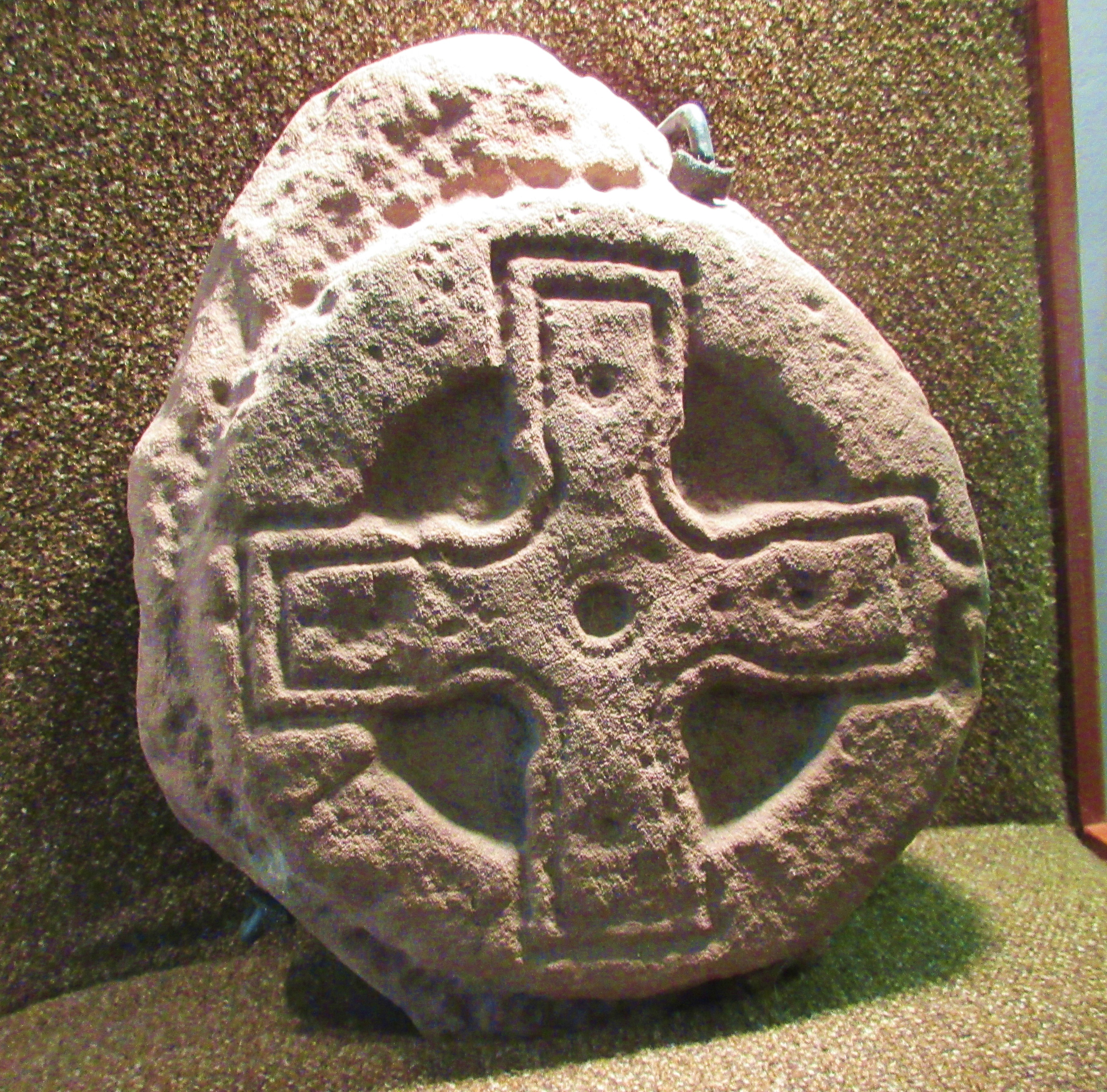
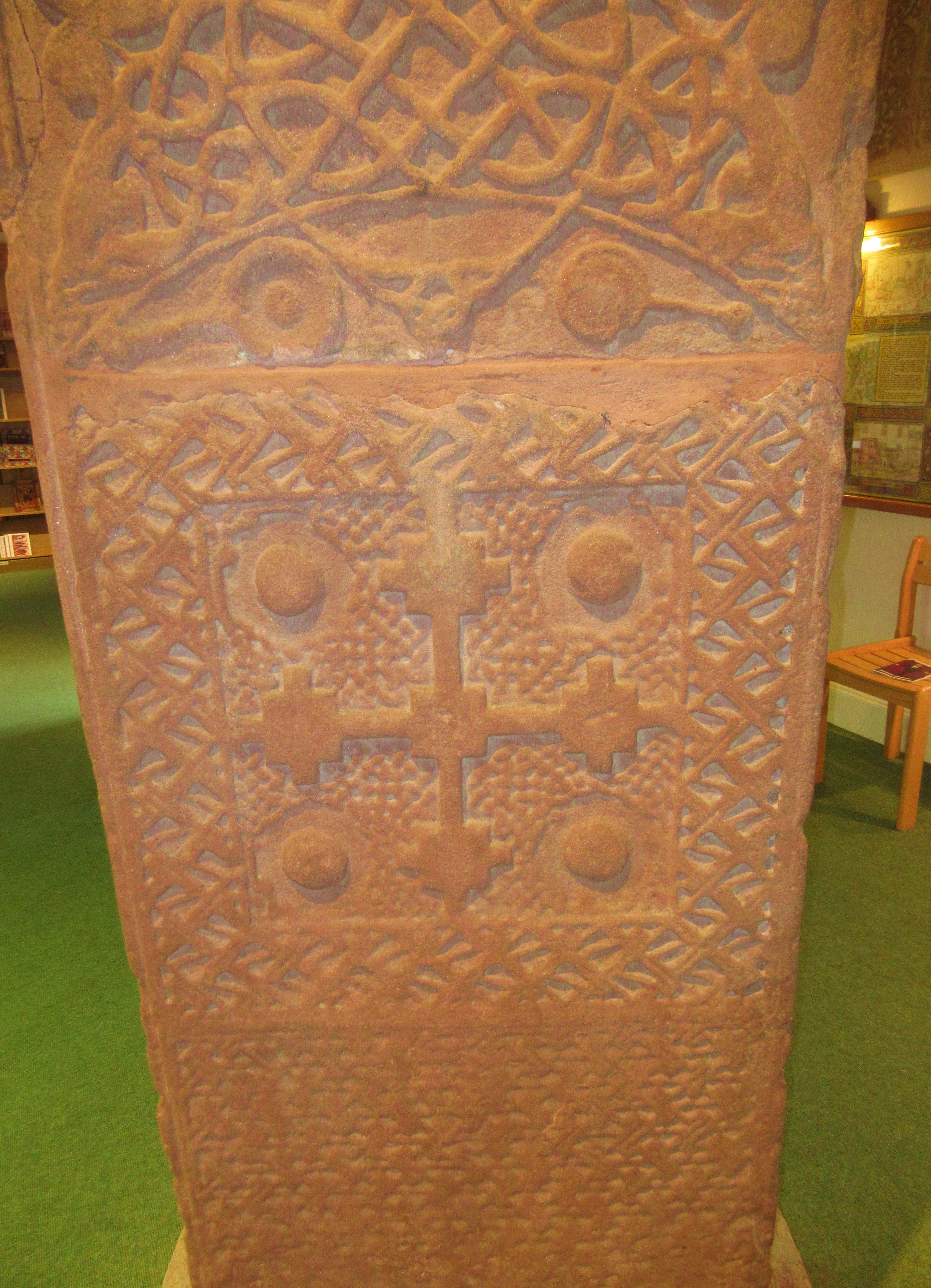
When I found a branch of a wild rose growing through a stone wall it made me ponder the history and mystery of endurance. I had just left the Groam House Museum in Rosemarkie, Scotland, which contains Pictish carved stones dating back to the 6th century AD after the Picts converted to Christianity.

blog #1 rose wall

The Picts are mysterious, thought by some to have been fierce warriors who painted or tattooed themselves. After carving beautiful, intricate patterns and designs that included Christian crosses, the Picts simply disappeared from history in the 9th century, leaving behind place names like Pitlochry, Pittenweem, and Pitsligo, and enigmatic standing stones which—lacking a written Pict language—have never been interpreted.

blog 2

The recently discovered Pictish monastery in Portmahomack proves that at least some of the Picts were educated and capable of great art and architecture. Amazingly, the monastery, which housed 150 monks and workers, was built to the proportions of “The Golden Section,” or “Divine Proportion.” This 1.618 to one ration of dimension is found in spiral seashells and was used to construct the Notre Dame Cathedral in Paris, the Acropolis in Athens, and the Egyptian Pyramids. Along with the single-line carvings of wolves, salmon, and eagles, a piece of broken stone was found at Portmahomack with the Latin inscription: “This is the cross of Christ in…”

blog 3

Scotland thrives on history and mystery. As enduring as the rose growing through the rock wall are the Highland Travellers, also called Gypsy/Travellers. Descendants of ancient Roma, they date back to the 12th Century and up until the 1950s, Travellers continued to traverse the Highlands in their brightly painted horse-pulled carts, supporting themselves with metal working and seasonal labor. Plastic replaced tin, motorized vehicles replaced horses, and the Travellers gave up Gaelic as their first language, replaced horses with motor homes and travel trailers, and learned new trades. Their nomadic way of life is a part of their ethnic and cultural identity. Unlike the Picts, they have not vanished into the pages of history—but their numbers continue to decline.

blog 4

In his book “Highland Folk Tales,” Bob Pegg credits Travellers for keeping Scotland’s rich resource of folklore alive. Alec Williamson was born to Gaelic-speaking parents and knew only three English words when he started school. He and his parents traveled through Ross-shire—where the Groam House Museum stands—by horse and cart and lived in tents. His father taught the art of storytelling to Alec.

One of Alec’s stories involves Roddy from the “wee glen” of Glutan who left his wife and family to go to America. He never returned, never wrote, never sent money. The eldest son went looking for his dad. Passing a bar, he heard a familiar Gaelic song. Thus, he found his father and sent him home by ship. The father never strayed from home again.

Then there was a young man who went to Aonghas Donn (Gaelic, Brown-haired Angus) for a horse. He walked through the hills looking for the horse, and was approached by what he thought was a stray dog. The dog caught him by the arm. His only weapon was a wee penknife. He sunk the knife into the dog’s neck and twisted it until the dog let go of his arm, sank down to the ground, and died. His arm was so badly mangled that he couldn’t catch the horse. He used his shirt for a sling and went back home to tell everyone about the tiger-striped dog that had attacked him. He continued telling the story years later because, as he explained, “I’d never seen a dog that color before—tiger striped. You’d be surprised at what you might see or meet in the hills even yet.”

blog 5 best rock cliffs

History, mystery, endurance. The rose in the wall brings me back to Picts. As a Christian, it’s comforting to know that Christianity was so strong in the Black Isle of Scotland as far back as the 6th century that Picts carved their faith in stones. We still carve our faith today. Stones not needed. We carve the same message of God’s love in our hearts.

http://www.amazon.com/Stephanie-Parker-McKean/e/B00BOX90OO/ref=ntt_dp_epwbk_0