Do Flies Know When They’re About to Die?

Today I watched what seemed to be an old, tired fly climbing on a fence and I wondered—do flies know when they are about to die?

There is nothing wrong with wondering about things. When an apple dropped on Sir Isaac’s head he wondered—and discovered the law of gravity.

When Thomas Edison saw lightning strike the ground he wondered—and discovered electricity.

When Sir Alexander Fleming noticed colonies of staphylococcus bacteria in his Petri dishes avoiding mold in 1928, he wondered—and discovered penicillin.

When a Swiss engineer returned from a hike in the Alps in 1941, and wondered about the burdock burrs sticking to his clothes—he invented Velcro.

When Percy Spencer was working on a radar-related project in 1946, and noticed a chocolate bar in his pocked melted more quickly than expected—he wondered and invented the microwave.

Wondering can be beneficial…but wondering if flies know when they are about to die? Who wonders about something as inane as that? My son Luke would understand if he was still here with me. He taught me to see the wind.

Christina Rossetti, who was born in 1830, wrote the poem, Who has seen the wind?

Who has seen the wind?

Neither I nor you:

But when the leaves hang trembling,

The wind is passing through.

I read this poem to Luke when he was a child. I read scientific facts and explanations to him as to why it was impossible to see the wind. But Luke continued to insist that he could see the wind. And one day when we were out in the desert Luke taught me to see the wind. He was right. So the son of my heart would understand his mother wondering if flies know when they are about to die.

Not even Luke, however, would be able to tell me how my wondering about flies would benefit life on this earth.

So, while I don’t know if flies know when they are about to die, I do know that our Lord God is a Mighty God who does wonders. “You shall praise the name of the LORD your God who has dealt wondrously with you…I am the LORD your God and there is no other.” Joel 2:27.

And that is a wonder for all of eternity.

Amazon.com: Stephanie Parker McKean: books, biography, latest update

Did You See Me Today?

Did you see me today when I opened up my face to the world? God created me to give you the gifts of wonder and joy. He placed me in your path. So, did you see me today?

Did you see me today when I changed my garments from spring green to a deep summer hue? Did you marvel at how God created me to make that glorious transformation?

Did you see me today when I lined the blades of grass you passed sparkling with all the glory and fire of the world’s most lovely diamond?

God placed me in your life to create joy and wonder. But…did you see me?

“The grass withers, the flower fades, but t he word of our God stands forever.” Isaiah 40:8

Amazon.com: Stephanie Parker McKean: books, biography, latest update

Marketing Midges

Achilles, the greatest of the Greek warriors in mythology and the hero of the Trojan War was defeated by a weakness in his heel. The term “Achilles heel” is used even today to refer to an otherwise strong person’s weakness.

Scots can be thankful that midges have an Achilles heel. Midges are small, nearly invisible flying insects that bite and irritate people and animals. Irritate relentlessly.
They fall in blinding clouds making life a misery. It is impossible to have a friendly blether (chat) with friends and neighbors on summer walks—because if one stands still—the horrible biting creatures descend. They get everywhere—even under woolly hats and up sleeves.

Thankfully, midges have am Achilles heel. They can be outdistanced if one walks quickly enough. They fly slowly. This gave me the idea of marketing midges. Just think: if midges can be caught, stored in boxes, and exported to other countries to stop political unrest—everyone wins. Open up the boxes, release the midges and the midge-miserable dissenters flee. This won’t restrict freedom of speech, but it will disperse fractious crowds. Meanwhile, capturing and shipping midges will build a new industry giving Scotland a venue for employment. It will boost the Scottish economy.

God looked down on His creation and proclaimed everything He made was good. Therefore, I think that scorpions, fire ants, and midges must have been introduced by God’s enemy. Satan must have emptied out some of the ugly, hurtful creatures from hell on earth in defiance after God threw him out of heaven for his treachery and rebellion. But whatever the devil does to make our lives miserable on a daily basis—God can take the worst and turn it around to use for our good.

Marketing midges could bring peace to protests by sending protestors fleeing from their obdurate stands to get away from the tiny tormentors.

If God’s promise from the Bible is true—and I know it is—“All things work together for good to those who love the Lord,” why shouldn’t the scourge of Scottish midges be turned into something profitable and good?

It’s an idea, that.

Amazon.com: Stephanie Parker McKean: books, biography, latest update

Why I Don’t Trust the News

A news report showed up over here in Scotland. The headline: “Why Great White Sharks Won’t Enter the Gulf of Mexico.” Immediately after that—I learned that scientists are currently tracking five great white sharks in the Gulf of Mexico, and that great whites frequent Florida’s waters, especially in the winter.

Fortunately, I already knew not to trust the news media during the covid scare when those vulnerable to fear rushed to get vaccinated and are now suffering strokes, heart attacks, and brain injuries at an early age. The vaccine gave my husband Alan Parkinson’s Disease. He’s in the hospital now—again. I didn’t get the vaccine. I didn’t take the vaccine because I am immune to scare tactics, both because I read and believe the Bible which says, “do not fear,” and because I’m a Texan—and Texans tend to be immune to bullying tactics.

There is nothing new in pushing false information—even in schools. When I was in first grade in a Georgia school, we were given pages to color for “fun.” It wasn’t fun for me when the teacher made me color my picture over again because I had used the “wrong” colors. She told me sternly, “tree trunks are brown, the sky is blue, grass is green. She was pushing false information—teaching a lie.

Here in our part of Scotland, the sky is seldom blue. It is usually grey. As for tree trunks, oak and olive trees have grey bark. Madrona tree trunks are pink. Aspen trees have white bark. Young palm trees have green trunks. Rainbow eucalyptus trunks splash vividly with all the colors in a box of crayons—just like my first grade picture that the teacher made me recolor.

Not all reference books are accurate either. My parents bought me a book on herpetology when I was a kid. I read that book from cover to cover several times because of my interest in snakes. It stated that snakes do not come out at night. Therefore, when I got back to my birth state of Texas and heard Charley Pride singing, “The snakes crawl at night, that’s what they say, when the sun goes down. Oh, the snakes will play,” I made fun of that song. I told friends it was inaccurate because snakes don’t come out at night. Turns out my treasured snake guide was wrong; snakes are active both day and night, and I thank the Lord for protecting me all the times I bounded through wilderness after dark with no expectation of meeting a venomous snake. Some of the best photos of rattlesnakes on my Facebook feed are from Arizona—and were taken at night.

Safeguarding us from false information is the Bible. Critics like to claim that it is “full of contradictions.” It isn’t. People who make that claim have never read it for themselves and allowed their hearts and spirits to be amazed and abashed by how this Book—the Word of God that was written nearly 3,000 years ago—is still true and applicable today. Consider the prophet Isaiah. He accurately predicted the birth and death of Jesus in 700 BC. When Christopher Columbus read in Isaiah that “God sits above the circle of the earth,” it gave him courage to sail across the ocean and discover new worlds in an age when most believed the earth was flat and ships would fall off if they sailed too far.

There is simply no way to demonize the message of love and grace that came into the world with Jesus and pins the Bible together: love others and put them first. Forgive others and be forgiven. Believe in Jesus and gain everlasting life. That is a report that the news media can ignore and attempt to silence—but can never overcome, because love is stronger than hate, and lies are but for a moment. Truth is everlasting.

Amazon.com: Stephanie Parker McKean: books, biography, latest update

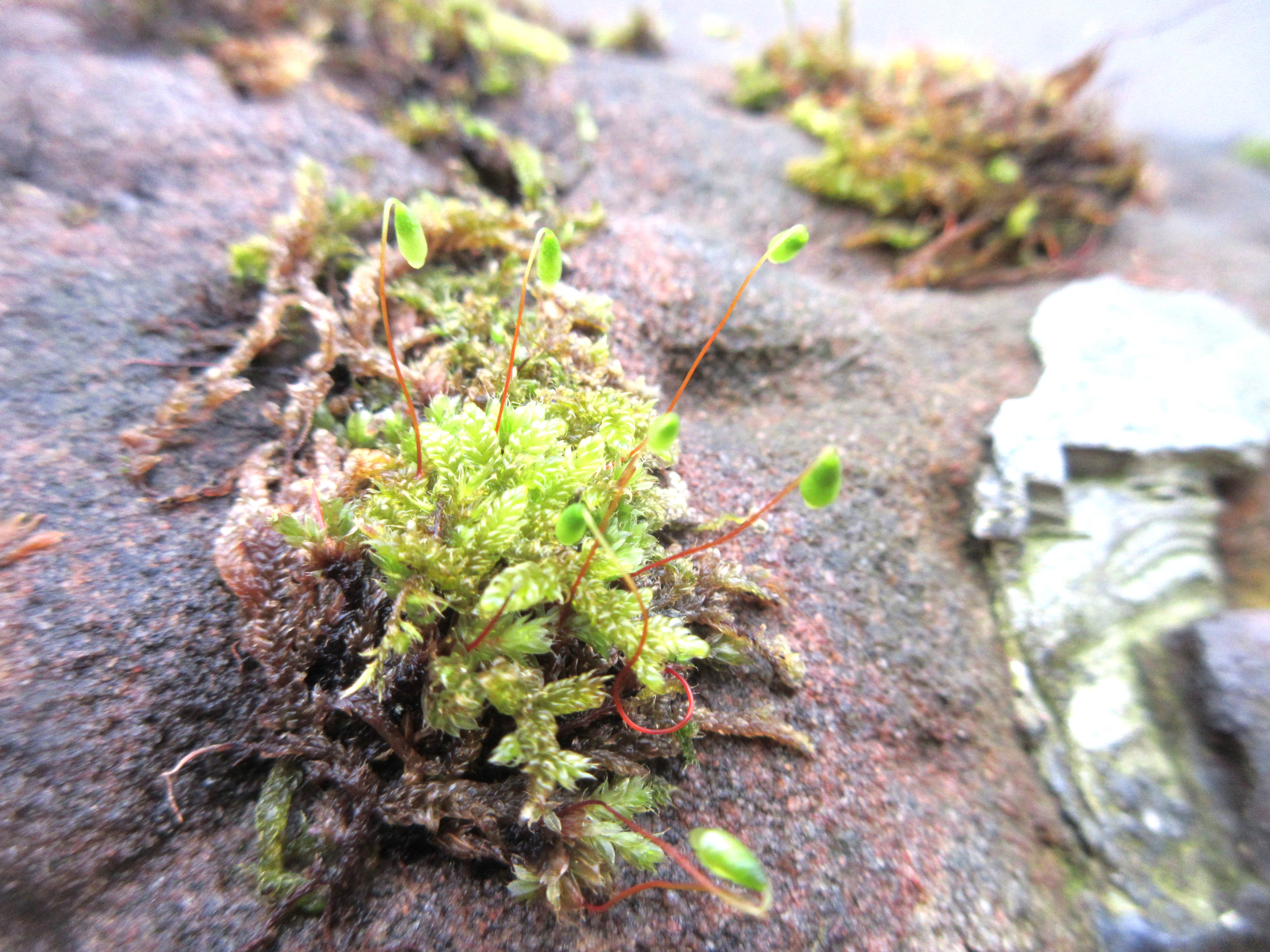
Moss Blooms – Elephants Don’t

While walking our collie dog, I was astonished to see blooms on clumps of moss growing on rock fences. I never knew moss bloomed. The fragile spear-topped stalks opened up miniature magic for viewing—a minuscule journey into a tiny parallel world.

And I thought: moss blooms. Elephants don’t. Yet both reproduce their kind and exist on this beautiful wide planet that God made. And that’s the point.

The theory of evolution cannot explain this wonder, nor can the big bang theory. But God? The infinite and precise creations of an intelligent Creator with a design and a plan—that explains it. How can anyone study the miniature world of a clump of moss and touch an elephant—and believe they were haphazard happenings. That takes more faith than I have.

I looked up moss blooms. Scientists say they are not actually blooms, and moss does not have flowers. They have an explanation; the “blooms” are spores. Spores are not seeds and produce no flowers.

But many of these same scientists also discount creation and herd academics and anyone else they can bend to fit into their agendas into accepting their theories of a big bang and evolution. I will stick to moss blooms and elephants.

“In the beginning God created the heavens and the earth…and God saw that it was good.” Genesis 1:1

Amazon.com: Stephanie Parker McKean: books, biography, latest update

Moss Blooms – Elephants Don’t

While walking our collie dog, I was astonished to see blooms on clumps of moss growing on rock fences. I never knew moss bloomed. The fragile spear-topped stalks opened up miniature magic for viewing—a minuscule journey into a tiny parallel world.

And I thought: moss blooms. Elephants don’t. Yet both reproduce their kind and exist on this beautiful wide planet that God made. And that’s the point.

The theory of evolution cannot explain this wonder, nor can the big bang theory. But God? The infinite and precise creations of an intelligent Creator with a design and a plan—that explains it. How can anyone study the miniature world of a clump of moss and touch an elephant—and believe they were haphazard happenings. That takes more faith than I have.

I looked up moss blooms. Scientists say they are not actually blooms, and moss does not have flowers. They have an explanation; the “blooms” are spores. Spores are not seeds and produce no flowers.

But many of these same scientists also discount creation and herd academics and anyone else they can bend to fit into their agendas into accepting their theories of a big bang and evolution. I will stick to moss blooms and elephants.

“In the beginning God created the heavens and the earth…and God saw that it was good.” Genesis 1:1

Amazon.com: Stephanie Parker McKean: books, biography, latest update

Saving Mouse

Mouse came to us approximately two years ago during the pandemic. That is to say that Mouse showed up on our little back deck and sat quietly eating seed with the birds. Mouse was a polite little friend and never attempted to breach house etiquette by coming inside. Mice outside are cute. Mice inside are not.

Enter Cat. Stalking Mouse. Not our cat—we don’t have one. This large black and white cat claimed our back deck for his convenience when we first moved here four years ago—but he comes and goes and we don’t know who he owns. He’s been mostly gone the past two years and we’ve seen him around the neighborhood crossing the street and sitting on the top of rock fences in different locations. Since he doesn’t seem interested in hurting the birds that feed on our deck we’ve made him feel welcome. I even went out and pet him this morning since I hadn’t seen him in a long time.

Then we realized why the large black and white not-our-cat was back. He was stalking Mouse. The dilemma. We like our little mouse with polite manners—and our deck is a place of sanctuary. We don’t want carnage on our back porch. There’s too much of that in the world already. Cat had to go. First we opened the door and stepped out on the porch a few times knowing that Cat likes privacy—but Cat liked stalking Mouse more than privacy. Next we decided to engage nature by employing Dog. Dog ran out the door barking furiously, took one look at cat and fled back inside the house nearly knocking me down. In her defense, Cat is big—and with his back arched and fur standing up—Cat is really big and Dog was really scared.

Mouse remained in danger because Cat crouched back down next to the planter waiting for Mouse to make an appearance. What to do…we wanted Cat to leave, but we didn’t want to hurt Cat either. Our porch is a sanctuary.

Enter Husband who is being stalked by a couple of physical conditions—which no doubt gives him even more empathy for Mouse. He suggested throwing a glass of water in Cat’s direction. I didn’t want to do this after petting Cat—so he did. Cat vanished over the edge of the porch to find a dry (since it isn’t raining today) fence where he can sit and preside over neighborhood affairs. Mouse is on the deck quietly sharing food with the birds.

“Have you not known? Have you not heard? The everlasting God, the LORD, the Creator of the ends of the earth neither faints nor is weary. His understanding is unsearchable. He gives power to the weak.”

Sometimes to save a mouse—one must throw water.

Amazon.com: Stephanie Parker McKean: Books, Biography, Blog, Audiobooks, Kindle