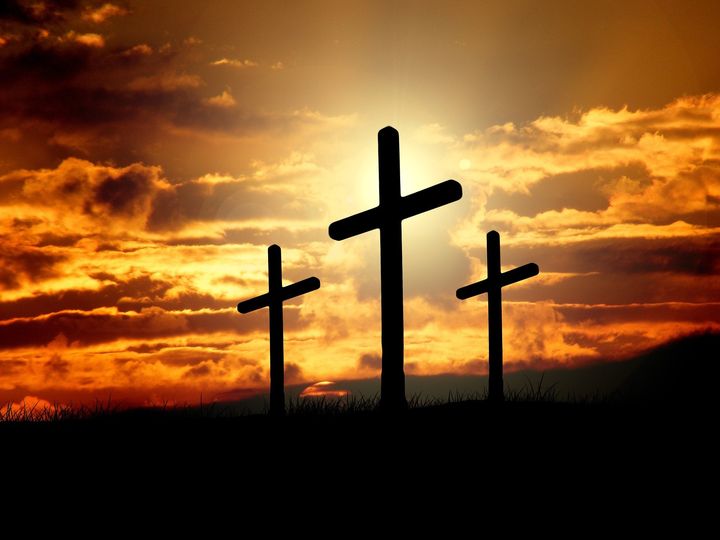
Christmas First

I’ve had a blog written to share for a couple of weeks. Ironically, it is about all the hindrances that have come against the publication of my new book—which still has not been released. But, that’s okay—because Christmas should come first.

The Christmas Story, as told in Luke, Chapter 2, is matchless.

And it came to pass in those days that a decree went out from Caesar Augustus that all the world should be taxed. So all went to be taxed, everyone to his own city. Joseph went up from Galilee to Bethlehem with Mary, his betrothed wife, who was great with child.

So it was that while they were there the days were completed for her to be delivered and she bought forth her firstborn Son and wrapped Him in swaddling cloths and laid Him in a manger because there was no room for them in the inn.

Now there were in the same country shepherds living out in the fields keeping watch over their flock by night. And behold, an angel of the Lord stood before them, and the glory of the Lord shone around them, and they were greatly afraid.

Then the angel said to them, “Do not be afraid, for behold, I bring you good tidings of great joy which will be to all people. For there is born to you this day in the city of David a Savior who is Christ the Lord. And this will be a sign to you, you shall find a Babe wrapped in swaddling cloths lying in a manger.”

And suddenly there was with the angel a multitude of the heavenly host praising God and saying, “Glory to God in the highest, and on earth peace, goodwill toward men!”

And no book, no blog, no surfeit of words that I can write could compete with that beautiful story. God came down to earth so we can go to heaven.

Merry Christmas. God bless all of y’all.

Amazon.com: Stephanie Parker McKean: books, biography, latest update

When Tomorrow Comes

A woman who clawed her way to fame and fortune by becoming ‘the human Barbie Doll’ spent $42,000 on 27 plastic surgeries. She is dead at 31.

Global basketball icon Kobe Bryant died in a helicopter crash in 2020, at age 41.

TV icon Steve Irwin died in 2006, at 44, after he was stung by a stingray.

Princess Diana died in 1997, at age 36, in a vehicle crash.

Actor River Phoenix died in 1993, of a heroin overdose. He was 23.

Musician Kurt Cobain died in 1994, from a self-inflicted gunshot wound. He was 27.

They chased tomorrow. Tomorrow came. Youth, beauty, fame, riches—nothing kept them from death.

Nor will wisdom, education, and learning defeat death when tomorrow comes.

Karl Patterson Schmidt, 67, was a world renowned herpetologist. He had handled thousands of snakes over forty years and traveled around the world presenting lectures and identifying snakes. He excelled in wisdom, education and learning.

Schmidt was contacted in 1957, to identify a small, colorful snake that no one else could identify. When he saw it, Schmidt immediately knew what it was; a juvenile boomslang, deadly in adulthood but usually harmless as a juvenile. The snake’s fangs were located in the rear of its mouth and its mouth couldn’t open wide enough to inflict a bite on a person—so Schmidt calmly explained as he handled the venomous reptile. The snake bit Schmidt. Twenty-four hours later—he was dead.

The popular cliché “tomorrow never comes” is false. Tomorrow comes. So does death.

Nothing we can accomplish in this life on earth can stop tomorrow. Beauty will not paralyze it. Money will not purchase relief from it. Fame will not faze it. Knowledge, wisdom, and education will not outsmart it.

Our victory over tomorrow is to outlast it by living for God so that when tomorrow comes it brings the sweet victory and relief of heaven with it.

“And this is the testimony; that God has given us eternal life, and that life is in His Son Jesus. He who has Jesus has life; he who does not have the Son of God does not have life.” 1 John 5:11.

Amazon.com: Stephanie Parker McKean: books, biography, latest update

Raincoats on Dogs

Growing up in rural Georgia in the 1960s, folks were too poor for a lot of things. I daresay that if any of us had seen a raincoat on a dog—we would have laughed. Where we lived, people could not afford raincoats even for themselves.

Many pet owners never took their animals to the vet. They couldn’t afford that either. Our 4-H Club sponsored a rabies clinic once a year so folks could get their animals vaccinated. For a lot of dogs it was the only time in their lives that they saw a vet.

It probably stems from the “Lassie” TV series we watched as kids, but I have a lifelong love for collies. As a child, the closest I ever came to owning a collie was a neighbor’s black and white border collie that kept following me home until the owners finally let me keep it.

Then there was Prince, a part-collie stray dog that showed up at our house and stayed. He saved my life when the Hester’s horned cow cornered me against the side of the barn and charged. Prince leaped between us with ferocious growls and frenzied barking and bit the cow on her nose.

Along with “Kicker,” the killer cow, the Hesters were given a gorgeous tri-colored collie. I was jealous. I had wanted a collie dog like “Big Boy” for as long as I could remember. Somehow, Big Boy got hit by a car. He survived, but with a limping gait and an ugly cut across the end of his nose. Big Boy wasn’t my dog, but I loved him. He was a collie. I knew he needed veterinary attention, but the Hesters didn’t have money for that. In fact, in all the years I knew them none of the Hesters went to a doctor either. Their solution for injured animals was to spit tobacco juice on the wound or cover it with purple horse liniment. I begged my parents to let me take Big Boy to the vet since the Hesters couldn’t afford it. But my parents couldn’t afford it either.

People wearing ruined blue jeans that they purchased that way new confounds me. In my 1960s rural Georgia, we wore jeans like that because we couldn’t afford anything else. We wore our clothes until the holes would no longer hold a patch. I often went to school wearing tennis shoes that were held together with the thick rubber bands off the Sunday newspaper. It wasn’t “cool” or fashionable to wear jeans with holes in them—we were embarrassed—but we wore them anyway because it was all we could afford.

How times change. Nowadays, folks choose to wear ruined clothes—and pay big bucks for them—and dogs wear raincoats.

It is comforting to know that not everything changes. “For I am the LORD, I do not change.” Malachi 3:6.

Amazon.com: Stephanie Parker McKean: books, biography, latest update
Walk Quickly

Walk quickly past my window

Do not stop.

Walk quietly past my window

Do not make a sound.

I do not want to see you in your ruined clothes of ice and death.

I do not want to hear your shouts of anger and chaos.

Walk quickly, quietly past my window so I will not know

That winter is here again.

“To everything there is a season, a time for every purpose under heaven.” Ecclesiastes 3:1.

Amazon.com: Stephanie Parker McKean: books, biography, latest update

Problems with Facebook

A lot of folks complain about Facebook. I never have. It’s free. Why should I complain about something when I’m not contributing to it?

I don’t know when it changed, because with writing new books and taking care of a husband who has blood cancer, Parkinson’s, and vascular dementia and is unable to weight-bear—plus walking a dog since we have no yard—I stay rather occupied. Sometimes it takes me several days to find enough free time to cut my fingernails.

The point is that I suddenly noticed that Facebook had changed my profile from author to “digital creator.” Now that is funny. Computers are as much of a mystery to me as math. What I know about computers is how to turn them on—and even that is iffy if it isn’t my computer—write a book, save it, and email it to my editor. I can even download the cover the illustrator sends me and send it to the editor. That’s all. I only visit internet sites if I am researching for a book. I don’t download anything on my 15-year-old laptop computer—which is running out of memory—and I don’t have a mobile phone, “smart,” or otherwise.

When I noticed the FB shift, I decided to rectify it immediately. Back to why it was so funny to designate me as a digital creator. I didn’t know how to change the change. Before I knew it, FB had changed it itself. It decided I was a government agency. With everything that is going on in the world at the moment, that’s not funny—it’s scary.

Changing it again was no easier than the first time because the computer program running Meta had no category for author. Authors must be an endangered species.

Now I finally have a working profile that fits me better—writer. I’ve dreamed of being an author all my life—at least from the time I was eight—so it seems a bit disappointing to settle for “writer” rather than “author”—but at least I’m not looking over my shoulder because I’m listed as a government agency—so I will return to not complaining about FB in spite of the seemingly random and unnecessary changes it makes constantly.

I have a new book coming out in a few weeks. A powerful, hard-hitting mystery that does not ignore the correlation between child abuse and crime. My FB label—writer or author—really doesn’t matter just so readers buy the book.

Labels change. People change their ideas about labels. One thing never changes. God. People give Him many labels, but He is the Lord God, Creator of the universe.

“He knows the way that I take; When He has tested me, I shall come forth as gold. He is unique, and who can make Him change?” Job 23:10 & 13.

No matter what label anyone or anything attaches to me, it can’t change what God created when He made me and called me to write books.

Amazon.com: Stephanie Parker McKean: books, biography, latest update
A Matter of Perspective

As a three-year-old, I made an amazing discovery. The old, worn, torn, smelly couch on the debris pile next to my house hid the most delicious, desirable treats; brightly colored orbs with chocolate inside. I didn’t know what chocolate was—I just knew I loved it. I didn’t know the name of the candies—M&Ms.

An adult would have been scandalized to see me digging the candy out of a couch on a trash pile and eating it. They would have screamed words at me that I wouldn’t have understood—nasty, germs, bacteria. To me the candies were delicious and delightful. A matter of perspective.

I worked at a Christian preschool with a woman named Norma. Norma was just over six-feet tall and weighed close to four-hundred pounds. Her daughter, 12, nearly hit the six-foot mark and weighed close to two-hundred pounds. Norma drove a little Ford Courier pickup truck. One day Norma pulled into the parking lot and the tire on the driver’s side exploded. Instead of being embarrassed by his severely overweight wife and daughter, Norma’s husband laughed gleefully. “Look at that!” he exclaimed. “My wife and my daughter just popped a tire.” A matter of perspective.

When son Luke was eleven and we lived in the Nevada desert, I sat on the kitchen floor crying on Thanksgiving Day. People all around the country would celebrate the special holiday with turkey and all the trimmings. Thanksgiving was the only meal that Luke—a picky eater—really liked. He loved it. But as a single parent—I had no money for a Thanksgiving meal. We would have peanut butter and jelly sandwiches.

There was a knock on the door. Our next door neighbor, a woman in her eighties, invited us to share Thanksgiving Dinner with her family. I was ecstatic. So was Luke.

Luke and I helped Mrs. Merca set the table and put the finishing touches on the feast. Enter her family; parents swigging cans of beer and toting 12-packs because Mrs. Merca didn’t drink; their son and daughter with wildly colored hair and metal junk sticking out of unrealistic places. This was nearly 40 years ago. I had never seen “body jewelry” before. The boy had a row of safety pins in both ear lobes. Luke couldn’t quit staring at him.

However, it wasn’t the outward appearance of Mrs. Merca’s family that was so shattering—it was their actions and attitudes. They barely bothered to greet their mother/grandmother. They piled onto the couch and turned on a football game. No effort or offer to help the 85-year-old carry heavy dishes to the table. And when the food was on the table, they converged on it like starving wildlife—no prayer, no mention of things for which to be thankful. They filled their plates, and plopped back down on the couch to watch the ballgame leaving Mrs. Merca at the table with Luke and me.

When we got home after helping clean up after the meal, Luke was sad and pensive. I asked what was wrong. “Well, Mom. It was nice for Mrs. Merca to invite us to Thanksgiving and everything, but I wish we had stayed home and had our peanut butter and jelly sandwiches so we could have prayed and thanked God.” A matter of perspective.

“Make a joyful shout to the LORD…Serve the LORD with gladness; come before His presence with singing. Know that the LORD, He is God; it is He who made us, and not we ourselves; we are His people and the sheep of His pasture. Come into His gates with thanksgiving, and into His courts with praise.” Psalm 100.

Amazon.com: Stephanie Parker McKean: books, biography, latest update

Dysfunctional Memories

With the buzz word “dysfunctional families” so popular, nearly everyone can either claim to have come from a dysfunctional family or to know someone who has. With the childhood sexual abuse we girls suffered, my family was not dysfunctional—it was dystopian. It’s my memories that are dysfunctional.

As I walk Savannah and let my mind wander—it takes such strange, serpentine paths that I wonder why I remember those things. I can’t think of any way they have enriched my life or taught me valuable life lessons. So why do I remember them? Yet, I do, and somehow they have woven themselves together to form the fabric of Me.

For example, although I was born in Texas my earliest childhood memories begin in California. I remember my “pet” scorpion when I was about three. When my father realized what it was—he lobbed the can as far away as he could and until he explained how dangerous my “pet” was—I was shocked and heartbroken.

As a five-year-old child walking home from school I rushed into people’s yards and recovered drowned moles. Much to the distress of my grandmother who lived with us, I lugged the dead critters home and lined them up on the porch rail in the sunshine. I was convinced that when they dried out—they would wake up and live again.

One day I brought home the much run over carcass of a black cat. It was dry and nearly paper thin, but I couldn’t bear to leave it in the street to be run over by more cars. Grandmother came unglued. She lectured me about the danger of rabies and described the horrible disease to me. For weeks after that when my younger sister Leslie (brilliant and talented author Leslie P Garcia) and I were alone in a room, I ran around on my hands and knees growling and barking and telling her that I would bite her and she would get rabies. She was terrified. I hope she has since forgiven me.

I remember the boy my age who let bees land on his hands, the boy slightly older than me who ate broken glass to show off, the boy with the bloodied nose that I took home for Grandmother to help after he was attacked walking home from school, the way the Santa Anna winds blew dirt into our faces and blew the girls dresses up over their heads.

I remember the burro we had that hated women and terrorized Mom, Grandmother, and me. The olive grove we had and how many hours it took to prepare the olives and fill jars with them. Chasing down rabbits with our Great Dane. She would chase them into metal culverts and I would tip the culverts up into a wooden box and keep the wild rabbits as pets. I remember climbing the mountain in back of the house and bringing down cactus to plant in my cactus garden.

For some reason—which I now realize must have had to do with some major crime he had committed that was never discovered, my father loaded up a U-Haul trailer full of chickens and jars of olives behind a Ford wooden paneled station wagon and drove my grandmother, me, two cats, and one Great Dane dog from California to the Florida Everglades where lovely birds lined up around the lagoon morning and evening, and wild animals including bear, boars, Key deer, raccoons, lizards, alligators, and snakes filled the wild places. It was an idyllic location—albeit dangerous—for an adventurous child who loved animals. However, we were so poor that all we had to eat every day was peanut butter sandwiches or pancakes. Every. Single. Day. Every. Single. Meal. To this day—I do not eat pancakes.

Then on to Splendora, Texas, where we continued to live out of the station wagon while my father built a log house in the pine woods. Grandmother continued cooking pancakes over an open fire and helped with the construction. My job was to mix mud and fill the cracks between the logs. When I finished filling the day’s cracks I mixed different colors of clay and fed my stick dolls. I didn’t have even one real toy, but I spent many blissful hours feeding my pretend stick family.

Mom finally arrived to join us and brought my sister Leslie, brother Gregory, and sister Vicky with her. Vicky was just a baby and doctors had given her penicillin not knowing she was allergic to it. Grandmother spent the rest of the day and the night holding Vicky in her arms and walking with her to keep her alive.

The cabin had no door or windows. It was only roofed halfway and when a hurricane roared up the coast and hit close to Splendora, our chickens and three goats sought shelter inside with us. Water rose up to the level of the bed. Our parents had gone somewhere and left us with Grandmother. All of us were on top of the bed to stay dry. Grandmother stood on a chair cooking pancakes over an old gas stove—we had no electricity. Grandmother was deathly afraid of snakes, but when a cottonmouth (poisonous) snake floated in on top of the water, Grandmother jumped down from the chair and went after the snake with a broom.

So many more memories—but I don’t live in the past and I don’t re-live the horrific ones like the childhood sexual abuse. Long ago I crammed it into a closet and locked the door. It can’t get out unless I unlock it…and I seldom do.

Dysfunctional, disjointed memories. Yet, somehow God collected them and wove them into the fabric that is me. Reminds me of Psalm 139, “For You formed my inward parts; You covered me in my mother’s womb. I will praise You, for I am fearfully and wonderfully made.”

Somehow God drew all the dysfunction into a working order. Except for math. God is perfect. I’m not.Amazon.com: Stephanie Parker McKean: books, biography, latest update
Learning to Walk Again at 73

I’m thankful for my elementary school education. I had excellent English teachers and since all I ever wanted to do since I was a kid is to write books—that was the most important thing for me. However, I also learned things that proved detrimental.

I was taught in school that Pluto was the ninth planet. One of our class projects was to draw the nine planets in their orbits, but in 2006, Pluto lost its status as a planet and was re-labeled “dwarf planet.” Learning that Pluto was a planet when it isn’t hasn’t hurt me. I don’t care. It’s too far away to have an impact on my life.

Being taught in school that snakes don’t come out at night might have harmed me—because they do—especially in the desert, and I used to run through the woods and fields carelessly at night with confidence that venomous snakes were tucked into their beds.

What has negatively impacted me in life is the teaching of my ninth-grade gym teacher. She taught us to “walk like Indians” toe first with one foot in front of the other and bragged about how silently we could walk like that. Her style of walking is great for balance beams and narrow ledges, but detrimental for every day walking as I have learned through painful falls resulting in broken bones.

Due probably to the back, hip, and knee surgeries I’ve had—or perhaps a childhood injury—I’ve developed something called “drop foot.” I’ve included the condition of drop foot in the book I’m working on now. My natural gait is to step forward toe-first as I walk. Frequently, however, one of my feet (and it can be either one) suddenly dips down and digs into the pavement. I’ve had some painful falls as a result.

So now at age 73, I am learning to walk again. It’s tough. My muscles rebel at the physical strain of putting my feet down heel first instead of toe first. I’ve walked toe-first for 60 years.

For the first 23 years of my life I was taught that God is not real. I was taught that God doesn’t exist. I even wrote an essay supporting that fact when I was in my first year of college. The professor gave me an A+ on the paper. I was wrong and he was wrong.

Some folks believe that the key to improving the world is found in education and learning. Falsehoods can be both taught and learned.

The answer is found in the mystery of God, “both of the Father and of Christ, in whom are hidden all the treasures of wisdom and knowledge.” Colossians 2:3.

A person can learn to walk through their life again at any age as long as they reach out and touch the mystery of God.

Amazon.com: Stephanie Parker McKean: books, biography, latest update

I Don’t Want To Go Back

Often I hear folks say, “Oh, to be twenty again.” “If only I could go back and live my life again—I’d do it differently. I’d get it right this time.”

I don’t want to go back.

For the first time in my almost 74 years of life—I like myself. For the first time in almost 74 years I even like my fly-away baby-fine hair that is immune to attempts to style or “fix” it. For the first time in nearly 74 years of life I can look into a mirror and not be disappointed by the reflected image.

Because now I know—now I understand the truth of Psalm 139:14, “I will praise You, for I am fearfully and wonderfully made.”

It’s been a long hard road. For those of us who were sexually abused as children it is difficult to navigate the self-blame and self-loathing because we feel somehow guilty for what happened to us. Especially me since the perpetrator who had no medical training performed two backwoods abortions on me to hide his crime and I nearly bled to death both times. I survived. The babies didn’t. Abortion is murder.

I took my one and only writing course when I was 23. It only lasted a few weeks, but I never forgot the teacher’s advice on the first day: write about what you know. Hard advice for me at twenty-three—I didn’t know anything. I had only been a Christian for a few days, but that was long enough to know that I should pray about things so I asked God to give me something to write about.

God answers prayer. Now I know.

I know what it’s like to live with an alcoholic, abusive spouse. I know what it’s like to live with a drug-addicted spouse and attempt to help him. I know what it’s like to go through divorce when you don’t believe in divorce and don’t want it. I know what it’s like to be a single mom and work two and three jobs to support myself and my child. I know what it’s like to help a new spouse battle cancer, to take care of him until he died, and then speak at his memorial service.

I know what it’s like to bury my child.

I know what it’s like to undergo back surgery, knee replacement, and a hip replacement, and to spend three months in the hospital after the hip replacement became infected. I wrote and published three books while I was in the hospital.

Now I know. Now I have things to write about. My life experiences are sprinkled through my 48 published books, some sprinkled more liberally than others. The book I’m working on right now draws from the painful chapter of childhood sex abuse.

Go back to another time and a younger age? I don’t want to go back. I’ve lived through it once. Once is enough.

I’m ready to go forward to heaven where there is no sin, sadness, illness, sorrow, pain, or parting.

Don’t feel sorry for me. I’ve loved my life. I wouldn’t exchange even one day of it for someone else’s. Even the hardest places and the most disappointing moments have been spun into the greatest blessings by the hand of the God who spun the stars into the universe and spins the earth upon nothing.

I’ve lived in and visited states all over the U.S. and lived in two different countries. I’ve lived in Bandera, Texas, home of my heart—and cowboy capital of the world. I’ve spent years working on several different newspapers as a staff writer. I’ve cuddled wild animals; a fox, raccoon, jaguarondi, African lion, raven, snakes, skunk, possums, dogs, cats, horses. I’ve been bitten on my stomach by an African lion.

I’m ready for the unending chapter in my life—heaven. The Bible describes it as having streets of gold, but all I want in heaven is a rock wall with flowers growing over it and animals coming to visit me. And to be with my son Luke again.

I’ve lived in the desert with Luke, who taught me to see—really see—the wind. I’ve danced through tumbleweed circuses and followed porcupines and coyotes to see where they were going. I’ve panned for gold, wet-washed for gold, metal detected for gold. With Luke’s help I’ve rescued possums and ravens and had remarkable dogs.

I’ve had a blast. And it’s given me something to write about. Now I’m a caregiver for my husband who is dying of cancer. I’ve got silver strands mixed into the brown of my hair. I’ve got puffy circles under my eyes from fatigue. I frequently pull muscles moving Alan about since he can’t weight-bear and must be pulled up and moved with equipment. But the joy of the Lord is my strength and nothing can steal my joy.

That’s why I can look at myself in the mirror and like what I see. I can see myself through God’s eyes. He loves me. He loves you also. So when you look into a mirror, like what you see and repeat, “I will praise You, for I am fearfully and wonderfully made.” Psalm 139:14

No one in the world can be you. God created you for a plan and a purpose that only you can fulfill. You are a poor imitation of anyone else. You are a true you.

Amazon.com: Stephanie Parker McKean: books, biography, latest update

The Falling of Fall

Fall was my mother’s favorite time of the year. Mine is spring…and summer. I hate fall when daylight draws in like a Victorian lady in her girdle and cold fingers creep over the landscape treating everything they touch to shivery coldness.

My mother loved the bright colors of fall. With seven children in the house, Mom got very little time for the things she loved—reading, putting puzzles together, and doing paint-by-number paintings. Our family favorite was an autumn landscape she did. Poor Mom. I don’t remember her painting ever winning the accolade of a frame, but it hung in our living room for many years.

Mom eschewed housework and cooking. She was no good at either. But she was great at the things she loved. And unless it came to Democrats, Mom lived by what she preached: “If you can’t think of anything good to say—don’t say anything at all.”

It’s funny how falling leaves rain down memories. Perhaps because it takes my mind off cold and misery and the relentless approach of winter—the one season of the year I truly hate. I hate cold. I hate being cold. They say that some things “grow” on a person. Winter and fall will never grow on me—they’ve had their chance since childhood.

When I get through writing books, I’m going back to oil painting. Perhaps winter will grow on me then. Meanwhile, fall is falling and I’m doing my best to praise the Lord anyway and remember: This is the day the Lord has made. I will rejoice and be glad in it.Amazon.com: Stephanie Parker McKean: books, biography, latest update