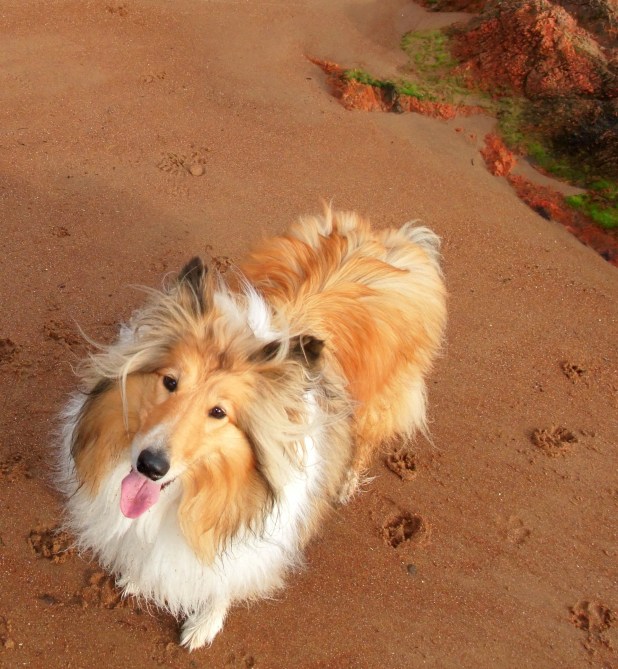
Nothing and no one ever replaces a friend or family member who transfers their address from Earth to Heaven. We didn’t want another rough collie to replace Angel Joy—there is no replacement for her—but we did want another collie.
Our choice was a rescue collie. There were none. So we looked for collie puppies, which were scarce.
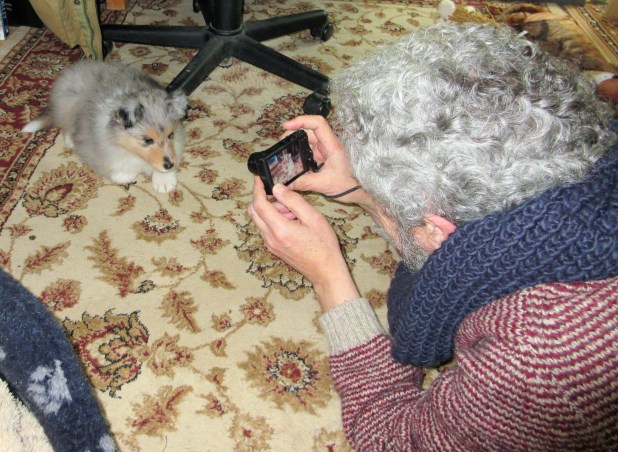
We knew God had selected the right puppy for us when we visited her in Edinburgh, held her, and told her she was Savannah. When we left, I said, “Savannah,” and out of all the puppies—she was the only one to look up.

Collecting her meant a ferry ride in such high winds and wild sea that they brought in big-boy ferry. That meant climbing up two flights of wet metal steps to get to the deck. It also meant getting soaked from the thrashing rain-snow mix. After disembarking, it meant taking a bus to Edinburgh. We wound up with a bus driver who was apparently adverse to windshield wipers. By the time he finally found the switch for the wipers, the windshield was so fogged up that the view was still obscured. The race-car-want-to-be driver had two mottos: never leave a vehicle unpassed, and test the brakes often.
We should have expected to get lost. Alan and I are directionally challenged. We got off the bus in plenty of time to meet the sweet lady who was going to take us to get our Savannah. Alan picked out that name and we both love it. To save money, we decided to walk the short distance from the bus stop to the park-and-ride instead of taking the tram. Rather than following the tram man’s directions, we followed the signs. We turned one street too soon and had to follow it to the end, back up again, then around the other side until we finally found the park-and-ride—which was huge. We had to walk to the back of the parking lot to get to the tram terminal. We got a lot of exercise. A. Lot.
Then we waited and Sweet Lady never came. We were getting desperate when she finally showed up. She wasn’t late. She wasn’t in the wrong place—we were.
After we put Savannah in the box for the trip home, Sweet Lady dropped us off at the tram terminal. Tickets come from boxes on stands. But we didn’t know how to get the tickets, so we watched trams passing us on both sides while we stood beside the tracks fiddling with said box on stand.
Once we finally got on the tram, we got off one stop too soon. That meant repeating the whole process while carrying puppy-in-a-box. When the tram dropped us off at the train, we discovered it ended at the wrong train station in Glasgow. That meant carrying puppy-in-a-box several blocks and down several streets to get to the right train station. Did I mention that we got a lot of exercise? A. Lot. Being on the right train was not the end of our adventure. We still had to catch the ferry back across the water, then carry poor-puppy-in-a-box in the car to our house. By the time we got home it was 8:30 p.m. We left home at 7:30 a.m., and hadn’t eaten since 11 a.m.
We didn’t notice until we were almost home with her that one of Savannah’s eyes is blue!
Lesson learned from this adventure: God cares about the little things in our lives that make us happy. Psalm 68:6 says that “God sets the solitary in families.” He did that, both for us, and for Savannah.

https://www.amazon.com/Stephanie-Parker-McKean/e/B00BOX90OO/ref=dp_byline_cont_ebooks_1




 Photo by Nuno Campos on Pexels.com